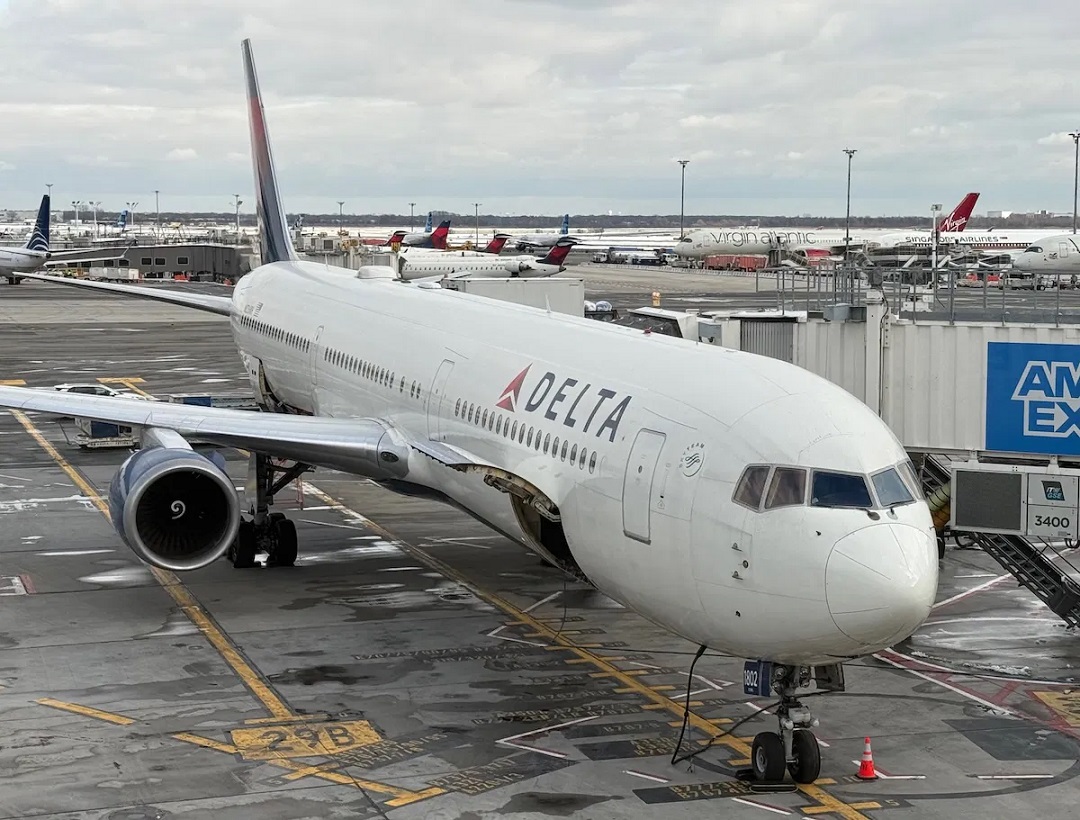
Delta Air Lines markets its premium business class product as Delta One, a brand synonymous with luxury on international long-haul routes. On select premium transcontinental routes, such as the six-hour flight from New York (JFK) to Los Angeles (LAX), Delta deploys its Boeing 767-400ER aircraft, configured with a Delta One cabin. This review, based on a recent transcontinental flight, evaluates the experience, highlighting both its strengths and shortcomings. While Delta excels in certain areas, such as lounge access, entertainment, and amenities, the onboard hard product and catering fall short of expectations, particularly when compared to competitors like American Airlines and JetBlue. This analysis provides a comprehensive look at the Delta One experience on the 767-400ER, noting distinctions between transcontinental and long-haul configurations, and offers insights into how Delta’s premium product measures up in the competitive U.S. airline market.
The Delta One experience is a study in contrasts, blending high-end touches like Missoni amenity kits and complimentary Wi-Fi with disappointing elements like narrow seats and subpar beverage options. This review covers the cabin layout, seat comfort, entertainment, amenities, food and drink service, and crew performance, providing a balanced perspective for travelers considering Delta One on this aircraft. With a word count exceeding 3,000, the article delves into each aspect, drawing comparisons with competitors and assessing whether Delta One delivers on its premium promise.
Cabin Configuration and Seat Design
Layout and Seating Arrangement
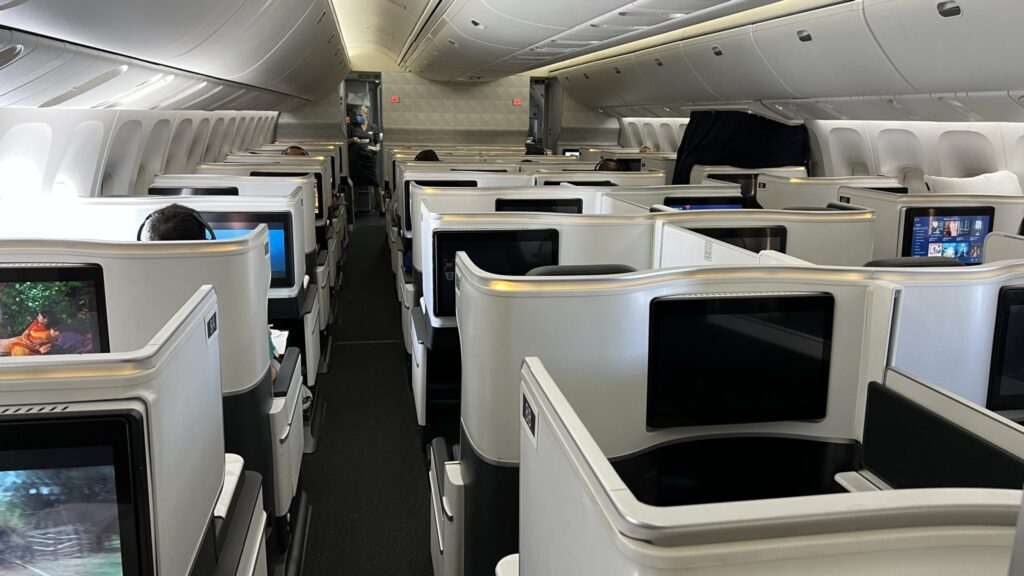
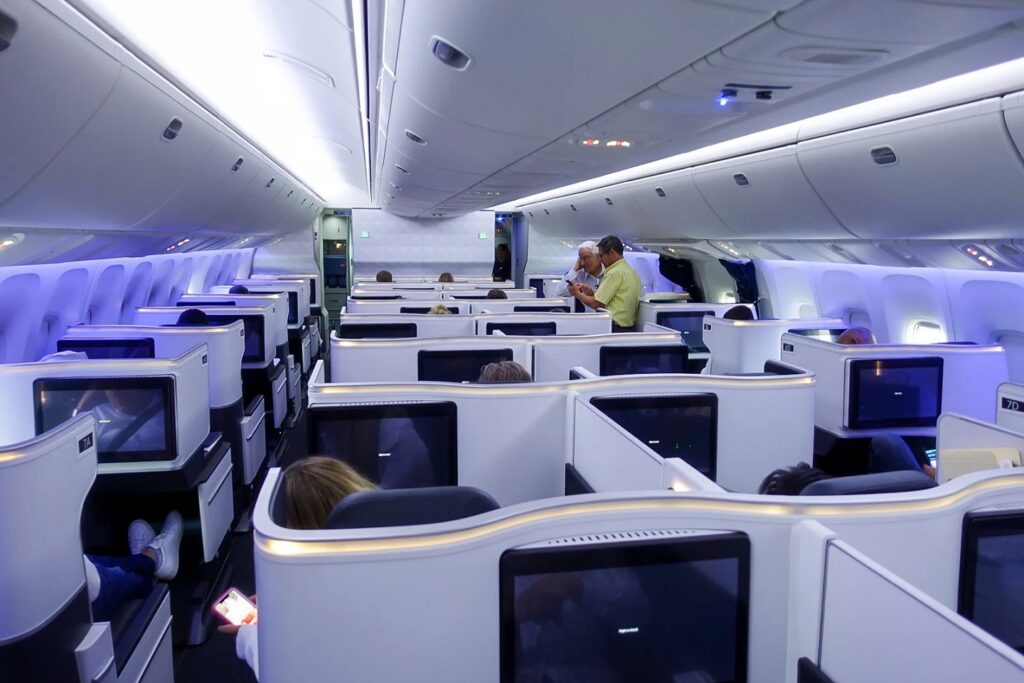
Delta’s Boeing 767-400ER features a Delta One cabin with 34 business class seats, arranged in a 1-2-1 staggered configuration across nine rows, occupying the space between the aircraft’s first and second set of doors. Each seat offers direct aisle access, a hallmark of modern business class cabins. The staggered layout alternates between “true” window seats, which are closer to the window and offer greater privacy, and seats closer to the aisle, which feel more exposed. For this transcontinental flight, a true window seat provided optimal privacy and a sense of separation from the aisle traffic.
The cabin’s design is sleek and modern, with updated finishes reflecting Delta’s recent investment in refreshing its 767-400ER fleet. Overhead bins are spacious, and the cabin feels airy due to the aircraft’s wide-body design. However, the layout’s efficiency comes at the cost of seat width, a critical factor for comfort, especially on long-haul routes.
Seat Comfort and Functionality
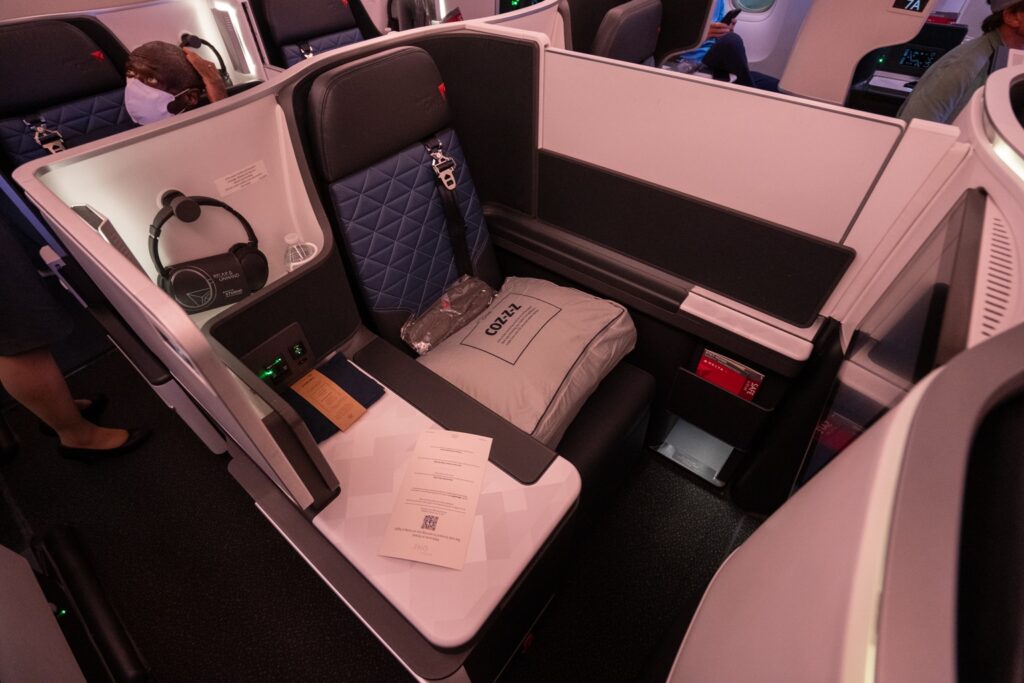
Each Delta One seat measures approximately 20 inches wide, significantly narrower than competitors’ wide-body business class seats, such as those on American Airlines’ Boeing 777 or United Airlines’ Boeing 787. The seats recline into a fully flat bed, suitable for transcontinental flights but less competitive for long-haul journeys. In bed mode, the seat’s narrow footprint restricts movement, making it challenging to find a comfortable sleeping position. The cushioning feels firm, often described as akin to an ironing board, lacking the plushness found in newer business class products like United’s Polaris or JetBlue’s Mint.
Additional features include a small storage compartment, a reading light, a universal power outlet, and a USB port. The tray table is sturdy but modest in size, adequate for a laptop or meal tray but not expansive. A privacy divider is available for passengers in the center seats, though its effectiveness is limited. For a six-hour transcontinental flight, the seat is functional and competitive with domestic first-class offerings. However, Delta deploys these aircraft on premium long-haul routes, such as Atlanta (ATL) to London (LHR), where the narrow seats and limited space fall short of industry standards set by American’s 777 or United’s 767 Polaris cabins.
Comparison with Other Aircraft in Delta’s Fleet
Delta operates a fleet of over 60 Boeing 767s, including both the 767-400ER and the older 767-300ER. The 767-300ER, which constitutes two-thirds of the fleet, features an even less competitive business class product, with outdated seats and a less refined cabin. The 767-400ER’s Delta One seats, while updated, still lag behind the airline’s Airbus A350 business class, which offers wider seats and a more spacious layout due to the aircraft’s larger fuselage. The A350’s economy cabin has nine seats per row, compared to the 767’s seven, allowing for more generous business class dimensions. This discrepancy highlights Delta’s inconsistent hard product across its fleet, particularly on long-haul routes where passenger expectations are higher.
Lavatory Facilities
Availability and Accessibility
The 767-400ER’s Delta One cabin is served by two lavatories: one at the front, shared with the pilots, and one at the rear, shared with the 20 premium economy passengers. With only two lavatories for 34 business class passengers, plus additional users, the ratio is suboptimal. During the flight, queues frequently formed, particularly for the rear lavatory, disrupting the premium experience. The lavatories are standard in size for a wide-body aircraft, equipped with basic amenities like hand soap and lotion, but they lack the enhanced features (e.g., larger mirrors or premium toiletries) found in some competitors’ business class cabins.
For transcontinental flights, the lavatory situation is manageable but inconvenient. On long-haul flights, where passengers are more likely to need frequent access, the limited facilities could become a significant drawback, especially during peak times like after meal service.
In-Flight Entertainment and Connectivity
Delta Studio Entertainment System
Delta’s in-flight entertainment, branded as Delta Studio, is a highlight of the Delta One experience. The system, accessible via a high-resolution seatback screen, offers an extensive library, including 473 movies, 74 TV series, 141 audio options, and additional content like podcasts and games. The selection spans new releases, classics, and international titles, catering to diverse tastes. The interface is intuitive, with responsive touch controls and clear categorization, making it easy to navigate.
Complimentary Wi-Fi
Delta provides free Wi-Fi for SkyMiles members on this route, powered by Viasat. The connection proved reliable, with speeds sufficient for streaming, browsing, and messaging. Non-members can purchase Wi-Fi at a reasonable cost, but the complimentary access for SkyMiles members enhances the premium feel. This feature is consistent across Delta’s domestic and international routes, setting it apart from competitors like American, which often charges for Wi-Fi on transcontinental flights.
Competitive Context
Delta’s entertainment and connectivity offerings are among the best in the U.S. market. JetBlue’s Mint provides a robust entertainment system but lacks free Wi-Fi for all passengers. American’s Flagship Business offers a comparable selection of movies and TV shows but trails in Wi-Fi reliability. United’s transcontinental product, while not branded as Polaris, includes free Wi-Fi on some routes but with less consistent speeds. Delta’s investment in this area reflects its focus on enhancing the passenger experience through technology.
Amenities and Comfort
Bedding and Comfort
Despite being a transcontinental flight, Delta One includes full international business class amenities. The bedding, featuring a plush pillow and a thick duvet, provides a cozy experience, particularly in bed mode. The materials are high-quality, comparable to those on Delta’s long-haul routes, ensuring passengers can rest comfortably during the six-hour flight.
Missoni Amenity Kit
A standout feature is the Missoni amenity kit, a collaboration with the luxury Italian fashion brand. The kit includes premium toiletries (e.g., lip balm, hand cream, and an eye mask), a toothbrush, and Delta-branded socks, which add a playful yet practical touch. The stylish design and high-quality contents elevate the experience, aligning with Delta’s premium branding. Slippers, another thoughtful addition, enhance comfort, particularly for passengers wishing to relax during the flight.
Comparison with Competitors
Delta’s amenities are a strong point, surpassing American’s Flagship Business, which offers simpler kits and bedding, and matching JetBlue’s Mint, which includes curated kits but less luxurious bedding. United’s transcontinental product, not marketed as Polaris, provides minimal amenities, making Delta’s offering more competitive. On long-haul routes, Delta’s amenities remain consistent, ensuring a premium experience regardless of flight duration.
Food and Beverage Service
Meal Service Overview
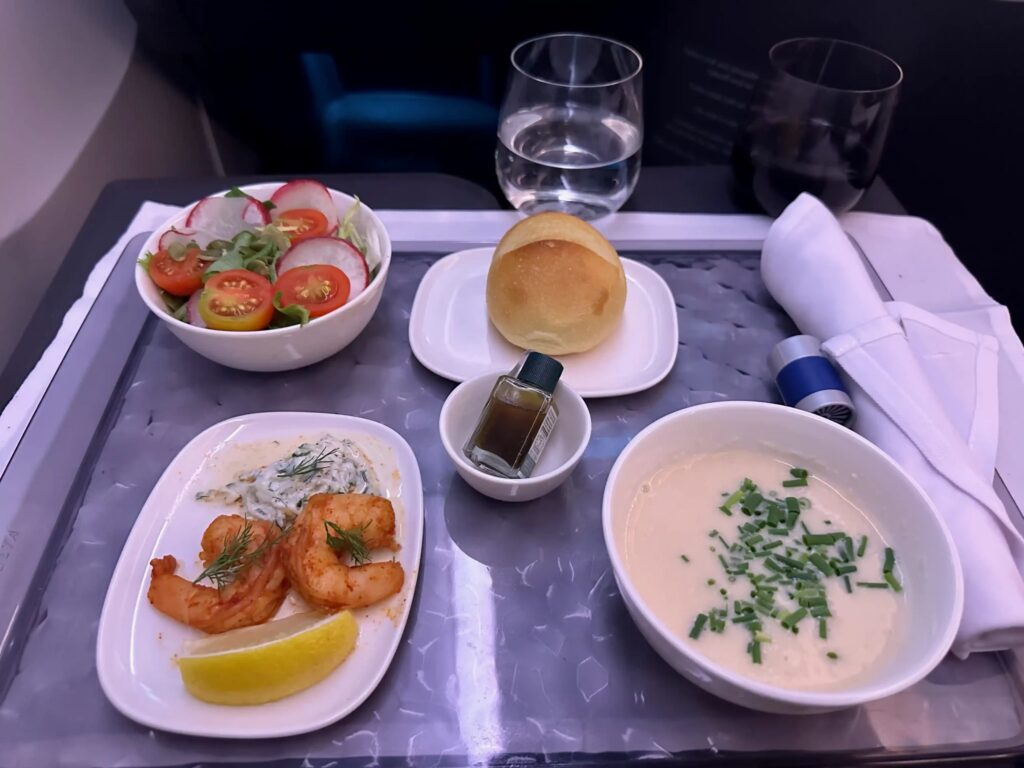
The catering on this Delta One transcontinental flight was a significant disappointment, undermining the premium branding. Unlike international Delta One flights, which feature multi-course meals and printed menus, the transcontinental service lacks menus and delivers all courses (salad, appetizer, and main) on a single tray. Options included vegetable lasagna, turkey meatballs, or beef short rib, all of which were decent in flavor but resembled domestic first-class fare rather than a business class experience. Dessert choices were limited to a cheese plate or an upside-down pineapple cake, both uninspiring compared to the gourmet offerings in Delta One Lounges.
Beverage Selection
The beverage service was particularly underwhelming. The sparkling wine, marketed as “champagne,” was Gambino Sparkling Wine Brut, retailing for $9.99 per bottle—a stark contrast to the higher-quality options offered by competitors like JetBlue Mint (which serves premium sparkling wines) or American Flagship Business (with curated wine lists). The overall alcohol selection was limited, lacking the sophistication expected in a premium cabin. Non-alcoholic options, such as juices and soft drinks, were standard but unremarkable.
Competitive Comparison
JetBlue Mint excels in transcontinental catering, offering printed menus, multi-course meals, and barista-style coffee, creating a restaurant-like experience. American’s Flagship Business provides printed menus and a multi-course service, aligning more closely with international standards. United’s transcontinental product, while not branded as Polaris, offers a simpler but more reasonably priced service. Delta’s decision to market this flight as Delta One creates an expectation of international-quality catering, which the onboard experience fails to deliver. This discrepancy is less pronounced on long-haul Delta One flights, where catering aligns more closely with premium branding.
Crew Service and Experience
Flight Attendant Performance
The crew on this flight, led by a Los Angeles-based flight attendant named Jaylen, was a highlight. The service was warm, attentive, and professional, with frequent check-ins and a genuine interest in passenger comfort. Delta’s flight attendants consistently receive high marks for friendliness, and this flight was no exception. The crew’s engagement helped offset some of the hard product and catering shortcomings, creating a positive onboard atmosphere.
Comparison with Industry Standards
Delta’s service quality is a competitive advantage, often surpassing American and United, where crew performance can be inconsistent. JetBlue’s Mint service is also known for its friendliness, but Delta’s larger network and training programs ensure a more uniform experience. On long-haul flights, Delta’s crew performance remains a strength, contributing significantly to the overall Delta One experience.
Competitive Landscape on Premium Transcontinental Routes
JetBlue Mint
JetBlue’s Mint product, available on transcontinental routes like JFK to LAX, offers a superior hard product with wider, more comfortable lie-flat seats and a 1-2-1 configuration on its Airbus A321 aircraft. The catering is a standout, with printed menus, fresh ingredients, and a curated beverage list. Free Wi-Fi and a robust entertainment system match Delta’s offerings, but Mint’s overall consistency makes it a stronger contender for premium travelers.
American Airlines Flagship Business
American’s Flagship Business, typically operated on Boeing 777 or 787 aircraft for transcontinental routes, features wider seats and a more spacious cabin than Delta’s 767-400ER. The catering includes printed menus and multi-course meals, aligning with international standards. While Wi-Fi can be less reliable, American’s lounge access (e.g., Flagship Lounges) and consistent service make it a competitive alternative.
United Airlines Transcontinental Service
United does not market its transcontinental flights as Polaris, its international business class brand, resulting in a more modest product. Operated primarily from Newark (EWR), United’s service includes lie-flat seats on Boeing 757 or 767 aircraft, with simpler catering and no complimentary Wi-Fi for all passengers. However, United’s pricing is often more competitive, appealing to cost-conscious travelers.
Strengths and Weaknesses of Delta One on the 767-400ER
- Lounge Access: Delta One passengers enjoy access to the exceptional Delta One Lounges at JFK and LAX, featuring gourmet dining, premium cocktails, and luxurious amenities.
- Entertainment and Wi-Fi: The Delta Studio system and free Viasat Wi-Fi provide a top-tier entertainment and connectivity experience.
- Amenities: Missoni amenity kits, high-quality bedding, and slippers enhance the premium feel, even on transcontinental routes.
- Crew Service: Friendly and attentive flight attendants elevate the onboard experience, aligning with Delta’s reputation for strong service.
Weaknesses
- Narrow Seats: The 767-400ER’s seats are cramped and uncomfortable, particularly for long-haul flights, trailing competitors’ wide-body offerings.
- Subpar Catering: The lack of printed menus, single-tray service, and low-quality beverages (e.g., $9.99 sparkling wine) undermine the Delta One brand.
- Lavatory Shortages: Only two lavatories for 34 business class passengers, shared with pilots and premium economy, lead to queues and inconvenience.
- Inconsistent Product: Delta’s marketing of this flight as Delta One sets high expectations that the onboard hard product and catering fail to meet.
Applicability to Long-Haul Flights
On long-haul routes, such as ATL to LHR, the 767-400ER’s shortcomings are magnified. The narrow seats and limited lavatory access become more significant issues during 8-10 hour flights, where comfort and convenience are paramount. While the entertainment, Wi-Fi, and amenities remain consistent, the catering on long-haul Delta One flights is typically more robust, with multi-course meals and printed menus. However, the 767-300ER, used on many long-haul routes, features an even less competitive hard product, further highlighting Delta’s inconsistent fleet standards.
Frequently Asked Questions
What is the seat configuration in Delta One on the Boeing 767-400ER?
The Delta One cabin on the 767-400ER features 34 seats in a 1-2-1 staggered layout, offering direct aisle access but narrower seats compared to competitors.
How does the catering on Delta One transcontinental flights compare to long-haul flights?
Transcontinental flights lack printed menus and serve meals on a single tray, resembling domestic first-class fare, while long-haul Delta One flights offer multi-course meals with printed menus.
What amenities are provided in Delta One on the 767-400ER?
Passengers receive Missoni amenity kits, plush bedding, slippers, and access to Delta One Lounges, enhancing the premium experience on transcontinental and long-haul routes.
Is Wi-Fi available on Delta One 767-400ER flights?
Free Wi-Fi, powered by Viasat, is available for SkyMiles members, with reliable speeds for streaming and browsing, consistent across Delta’s routes.
How does Delta One on the 767-400ER compare to competitors like JetBlue Mint or American Flagship Business?
Delta One offers superior lounge access and amenities but lags in seat comfort and catering, with JetBlue Mint and American Flagship Business providing wider seats and better dining.
Conclusion
Delta One on the Boeing 767-400ER offers a mixed experience, excelling in areas like lounge access, entertainment, amenities, and crew service while falling short in seat comfort and catering. For a transcontinental flight, the product is adequate, benefiting from Delta’s ground services and onboard perks. However, its deployment on premium long-haul routes reveals its limitations, with narrow seats and insufficient lavatories trailing competitors like American and United. The $9.99 sparkling wine, marketed as “champagne,” encapsulates Delta’s high-low approach: promising a premium experience but delivering inconsistency onboard. Travelers choosing Delta One on the 767-400ER should temper expectations, particularly for long-haul journeys, and weigh the value of lounge access and amenities against the onboard shortcomings. As Delta continues to invest in its premium product, addressing these gaps—particularly in seat design and catering—will be crucial to maintaining its competitive edge in the U.S. airline market.
