The United States airline industry is experiencing a significant shake-up with the proposed “Blue Sky” partnership between United Airlines and JetBlue Airways. This strategic alliance aims to offer benefits such as reciprocal frequent flyer perks, potential slot exchanges, and enhanced connectivity across domestic and international routes.
As this collaboration begins to materialize, not all industry players are supportive. Spirit Airlines has emerged as a vocal critic, filing an official complaint with the Department of Transportation (DOT) and raising serious concerns about the potential implications for fair competition, consumer choice, and market accessibility.
Overview of the Blue Sky Partnership
What Is the Blue Sky Alliance?
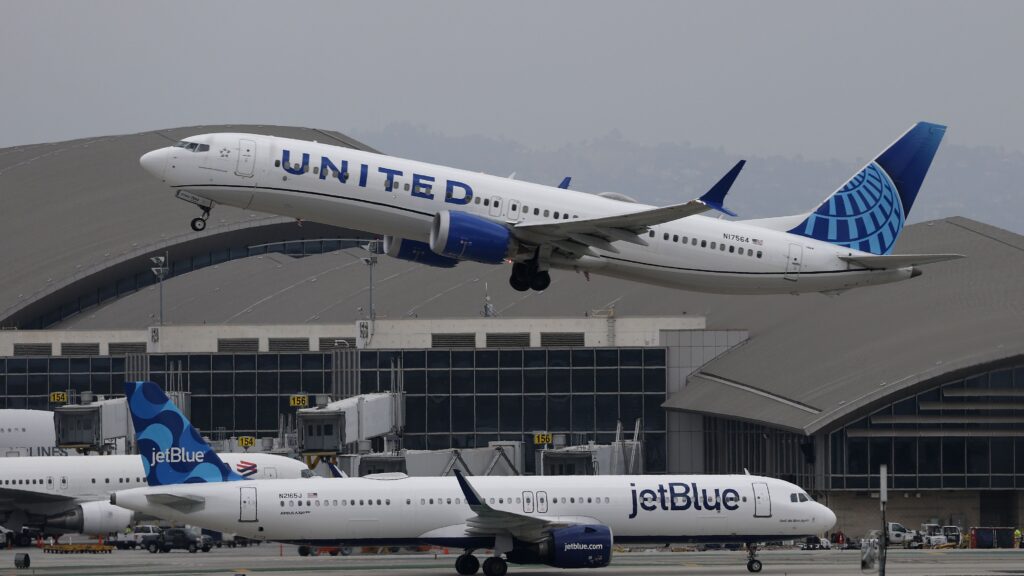
JetBlue Airways and United Airlines have announced plans to form a cooperative arrangement known as “Blue Sky.” This alliance includes:
- Frequent flyer reciprocity between the two carriers
- Possible coordination on high-value corporate accounts
- A long-term vision for slot exchanges at major hub airports
- Enhanced network connectivity through joint scheduling and capacity planning
Although the partnership is still in its early phases, both airlines have expressed intentions to gradually expand cooperation over time. The goal is to offer greater value and convenience to their customers through improved route coverage and loyalty benefits.
Timeline and Future Goals
The alliance is expected to evolve incrementally, with deeper integration likely beginning around 2027. One major future component includes United’s anticipated return to New York’s John F. Kennedy International Airport (JFK), a move that could reshape air traffic patterns in one of the country’s busiest aviation hubs.
Read More: The 10 Longest Nonstop Flights Globally: A Points and Miles Guide
Spirit Airlines’ Formal Objection
Spirit’s Complaint to the DOT
Spirit Airlines has officially petitioned the Department of Transportation to:
- Extend the review period for the proposed partnership
- Ensure full transparency by making all agreement details public
- Allow for a public comment period to assess implications
According to Spirit, the “Blue Sky” partnership raises serious competition-related issues that deserve in-depth regulatory scrutiny. The low-cost carrier argues that this alliance, if approved, could undermine fair market practices and limit consumer options.
Drawing Parallels to the Northeast Alliance
Spirit’s objection is not without precedent. The airline cites the example of the now-defunct Northeast Alliance (NEA) between JetBlue and American Airlines, which was ultimately dismantled due to antitrust concerns. Spirit points out that United itself had previously advocated for full transparency and public review of that agreement.
Spirit insists that the same level of oversight is warranted in the current scenario. It warns that failure to scrutinize the Blue Sky alliance could result in similar anticompetitive consequences, undermining the progress made through the NEA’s dissolution.
Allegations of Anticompetitive Conduct
In its filing, Spirit claims that JetBlue stands to become a “vassal” of United Airlines, relying heavily on United’s far-reaching global network. This dependency, Spirit argues, will diminish JetBlue’s autonomy in making network decisions, even if both carriers claim to retain independent pricing and scheduling.
The complaint outlines key concerns, including:
- JetBlue’s potential need to purchase United MileagePlus points to offer connectivity benefits
- Higher operational costs for JetBlue, possibly passed on to consumers through elevated fares
- Reduced competition in key markets such as New York and Boston
- Limited airport access for smaller carriers due to entrenched control by legacy airlines
Spirit warns that the partnership could weaken independent, value-driven airlines like itself by diminishing their appeal to cost-conscious travelers who value loyalty program perks and route flexibility.
Competitive Dynamics in the U.S. Airline Market
Power of Loyalty Programs
One of the foundational concerns in Spirit’s complaint centers on airline loyalty programs. The financial strength of these programs—often fueled by co-branded credit card partnerships—gives legacy carriers like United a substantial competitive advantage.
Loyalty programs enable airlines to retain high-value customers, offer aspirational rewards, and unlock billions in ancillary revenue. In contrast, low-cost carriers struggle to replicate these benefits at scale, placing them at a distinct disadvantage.
Industry Consolidation and Its Effects
Over the past two decades, the U.S. airline industry has undergone substantial consolidation. Mergers involving Delta and Northwest, United and Continental, and American and US Airways have reshaped the market into what is now often referred to as the “Big Four.”
These airlines—United, American, Delta, and Southwest—control a majority of the domestic market, bolstered by extensive route networks, global alliances, and dominant positions at major hubs.
Spirit’s complaint highlights the growing difficulty for smaller carriers to remain viable in this environment, especially when large airlines form exclusive partnerships that exclude other players from critical markets and frequent flyer ecosystems.
Evaluation of Spirit’s Arguments
Are Spirit’s Concerns Justified?
Spirit Airlines is not wrong in raising questions about competition and market fairness. The alliance between two large carriers naturally invites scrutiny, particularly when the partnership has the potential to influence fare structures, network decisions, and airport access.
Concerns about fare increases tied to the purchasing of United miles by JetBlue may appear speculative. However, there is validity to the argument that JetBlue’s network decisions could be indirectly shaped by United’s strategic priorities.
Moreover, any agreement that limits slot availability for new entrants or smaller incumbents at congested airports like JFK or Boston Logan could unfairly suppress competition.
The Issue of Slot Swaps
A particularly critical area for regulators to watch will be any slot exchanges between United and JetBlue. If United regains access to JFK through this alliance, it may come at the expense of market diversity and disrupt the limited opportunities available to other carriers.
Slot allocation at high-demand airports has long been a contentious issue. Legacy carriers have often been accused of “slot hoarding,” preventing newcomers from offering low-fare alternatives. Spirit’s concern that the Blue Sky partnership could entrench this pattern deserves close examination.
Limitations of Spirit’s Position
While Spirit makes some strong points, not all of its arguments are compelling. The suggestion that frequent flyer reciprocity alone is inherently anticompetitive oversimplifies the broader consumer benefits of such collaborations.
Many passengers appreciate the ability to earn and redeem miles across multiple carriers, especially when it improves connectivity and enhances travel flexibility. Loyalty partnerships are increasingly common in global aviation and are not, in themselves, grounds for antitrust concern.
The Broader Debate: Competition vs. Consumer Convenience
Balancing Market Fairness and Operational Efficiency
The airline industry faces an ongoing challenge: striking a balance between maintaining healthy market competition and delivering seamless, convenient travel experiences to consumers.
Alliances like Blue Sky can deliver tangible benefits—shared lounges, improved connectivity, and better loyalty perks. However, they can also concentrate power in the hands of a few dominant players, limiting choices for budget-conscious travelers.
The Fate of Value Carriers
Low-cost carriers such as Spirit, Frontier, and Allegiant face increasing pressure to remain competitive in a landscape dominated by high-margin loyalty programs and sprawling route networks.
Without alliances or deep-pocketed credit card partners, these airlines often operate on razor-thin margins. Spirit’s objection highlights this growing imbalance and calls attention to the need for a regulatory framework that supports both innovation and inclusivity.
Regulatory Outlook and Industry Implications
What Comes Next for the Blue Sky Proposal?
The Department of Transportation is now tasked with reviewing Spirit’s complaint. This process may involve:
- Evaluating the transparency and public availability of the agreement’s terms
- Conducting a market impact analysis, particularly in New York and Boston
- Consulting stakeholders and opening the floor to public comments
- Determining whether the proposed partnership violates antitrust or fair competition standards
Regulators will likely examine historical precedent, including the legal challenges faced by the Northeast Alliance, and assess whether similar dynamics exist in the Blue Sky proposal.
Potential Industry Impact
Should the DOT or the Department of Justice (DOJ) intervene, the outcome could have wide-reaching consequences for alliance formation and airline partnerships in the U.S.
A ruling against the partnership may deter future collaborations that cross competitive boundaries. Alternatively, approval with conditions—such as slot divestitures or restricted codesharing—could strike a balance between promoting competition and enabling growth.
FAQS
What is the Blue Sky partnership between United Airlines and JetBlue Airways?
The Blue Sky partnership is a proposed alliance between United Airlines and JetBlue Airways that includes frequent flyer reciprocity, potential slot swaps, and joint coordination on corporate travel, designed to improve connectivity and enhance loyalty program value.
Why is Spirit Airlines objecting to the Blue Sky partnership?
Spirit Airlines has filed a formal objection with the Department of Transportation, citing concerns that the partnership is anticompetitive and may reduce consumer choice, increase fares, and restrict airport access for low-cost carriers.
What specific actions has Spirit requested from regulators?
Spirit has asked the Department of Transportation to extend the review period for the Blue Sky partnership, disclose all agreement details for public scrutiny, and open a period for public comment to ensure transparency and accountability.
How is this similar to the JetBlue-American Northeast Alliance (NEA)?
Spirit argues that the Blue Sky partnership mirrors the anti-competitive dynamics of the NEA, which was eventually dismantled. Both alliances involve network coordination that may limit competition and centralize market power among larger carriers.
What are the potential anticompetitive risks of the Blue Sky alliance?
Spirit believes that the partnership could make JetBlue dependent on United, leading to higher costs, reduced autonomy in network planning, and diminished competition in major markets such as New York and Boston.
Could this alliance result in higher fares for passengers?
Spirit claims that JetBlue may be forced to increase fares to offset the cost of purchasing United MileagePlus points, potentially impacting price-sensitive travelers and reducing access to low-cost travel options.
How might the Blue Sky partnership affect airport slot availability?
The partnership could lead to slot swaps that favor United’s return to JFK Airport, potentially limiting slot access for smaller carriers and making it harder for them to expand or maintain competitive operations.
Are frequent flyer program collaborations always considered anticompetitive?
Not necessarily. Frequent flyer partnerships can benefit consumers by offering greater flexibility and rewards. However, when combined with route coordination and slot control, they may raise regulatory concerns.
What role do loyalty programs play in airline competition?
Loyalty programs are a major revenue source for large airlines, often backed by credit card partnerships. These programs give legacy carriers a competitive edge that smaller carriers struggle to match, impacting market fairness.
What could be the outcome of Spirit’s complaint?
Regulators may approve, deny, or modify the proposed partnership. They could impose conditions to protect competition or conduct further investigation into its long-term impact on the airline industry and consumer choice.
Conclusion
Spirit Airlines’ objection to the United–JetBlue “Blue Sky” partnership is a flashpoint in the broader discussion about consolidation, market power, and consumer choice in the airline industry. While some elements of the complaint may overstate the risks, Spirit raises valid concerns about access, fare dynamics, and the long-term viability of value-focused carriers.
This case underscores the need for vigilant regulatory oversight in an increasingly interconnected aviation market. The challenge for policymakers lies in enabling innovation and scale without sacrificing diversity and competition.
As this story unfolds, both consumers and competitors will be watching closely to see whether the partnership strengthens the travel experience or consolidates control in ways that diminish long-term value for the flying public.
