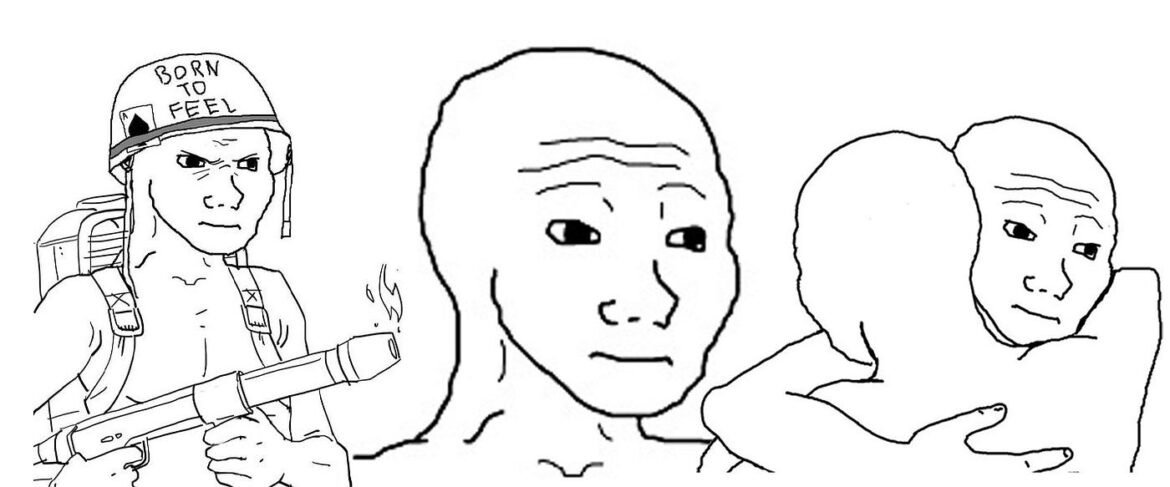
As summer fades and young people prepare for the new school year, their focus often shifts to tangible items like trendy backpacks (North Face remains a favorite) and water bottles (Stanley reigns supreme). This transitional period offers a quieter moment in youth culture, providing an ideal opportunity to delve into a cornerstone of internet meme culture: the Wojak. Over the past 15 years, Wojak Internet memes have evolved from simple, relatable drawings into a complex pictographic language that resonates deeply with online communities. For those less familiar with internet subcultures, Wojaks can seem cryptic, yet they serve as a versatile tool for expressing emotions, stereotypes, and social commentary. This guide explores the origins, evolution, and significance of Wojak memes, offering a comprehensive look at their role in digital communication.
Origins and Evolution of Wojak Internet Memes
Wojak, derived from the Polish word for “soldier,” emerged around 2009 as a simple, minimalist drawing of a bald, nondescript character. Initially shared on platforms like 4chan, the original Wojak was designed to represent the “everyman”—an anonymous, relatable figure navigating the internet’s emotional and social landscape. Its neutral expression and unremarkable features made it a blank canvas for early Internet meme creators, who used it to convey shared experiences, often accompanied by captions like “I know that feel” to express empathy or camaraderie.
The simplicity of Wojak’s design fueled its rapid proliferation. By the early 2010s, internet users began modifying the original drawing to create variations that represented specific emotions, archetypes, or societal groups. These adaptations transformed Wojak into a versatile tool for commentary, humor, and satire. Unlike other Internet meme formats that rely on specific characters or pop culture references, Wojak’s strength lies in its adaptability, allowing it to evolve alongside internet culture. Today, Wojak memes encompass a wide range of characters, each with distinct visual traits and cultural connotations, forming a visual language that is instantly recognizable to those immersed in online spaces.
Defining Characteristics of Wojak Internet Memes
Wojak Internet memes are characterized by their simplicity and expressiveness. The core design—a basic human face with minimal features—allows for easy modification, enabling creators to convey nuanced ideas through slight changes in expression, accessories, or context. Wojaks typically serve one of two purposes: reacting to a situation or representing a specific type of person or stereotype. When used as a reaction, a Wojak might express sadness, frustration, or smugness in response to an online discussion or event. When used to depict a stereotype, Wojaks are combined with other characters or text to create narratives, often comparing one group to another.
The power of Wojak Internet memes lies in their relatability and universality. The original Wojak’s neutral design allowed users to project their own experiences onto it, while later variations introduced specific archetypes that resonate with niche online communities. These memes thrive in environments like Reddit, Twitter (now X), and 4chan, where users engage in rapid-fire exchanges of ideas and humor. The lack of a centralized authority dictating Wojak’s use ensures that new variations emerge organically, driven by the creativity of the internet’s “hive mind.”
Major Wojak Variants and Their Meanings
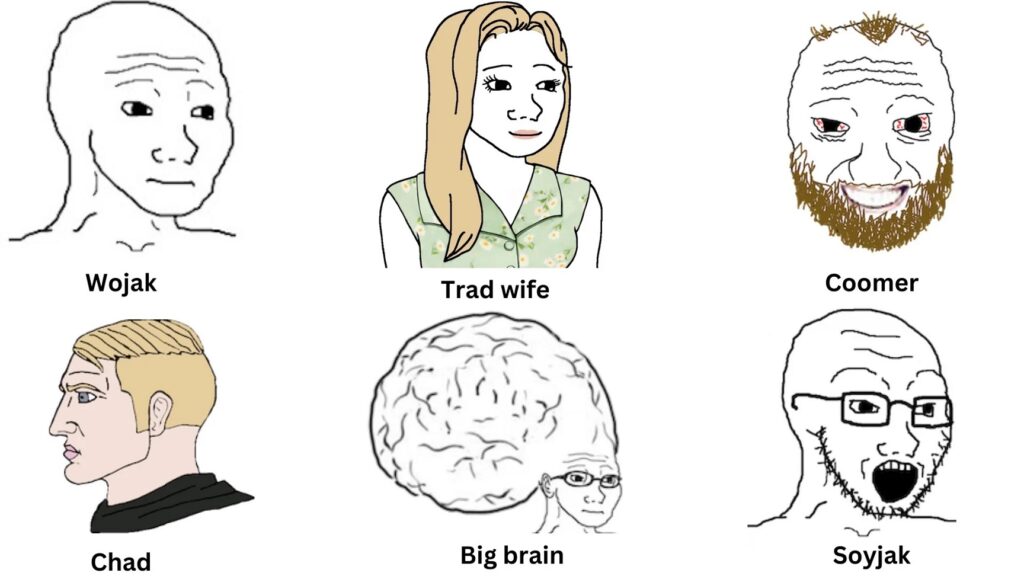
The Wojak universe has expanded to include numerous variants, each representing a distinct archetype or emotional state. Below are some of the most prominent Wojak categories, along with their cultural significance:
Original Wojak
The foundational Wojak depicts a bald, expressionless figure, symbolizing the average internet user or “everyman.” Used in early Internet memes like “Feels Guy,” it conveys a sense of shared struggle or empathy, often paired with captions like “I know that feel.” Its neutrality makes it a versatile stand-in for the meme creator or viewer.
Crying Wojak
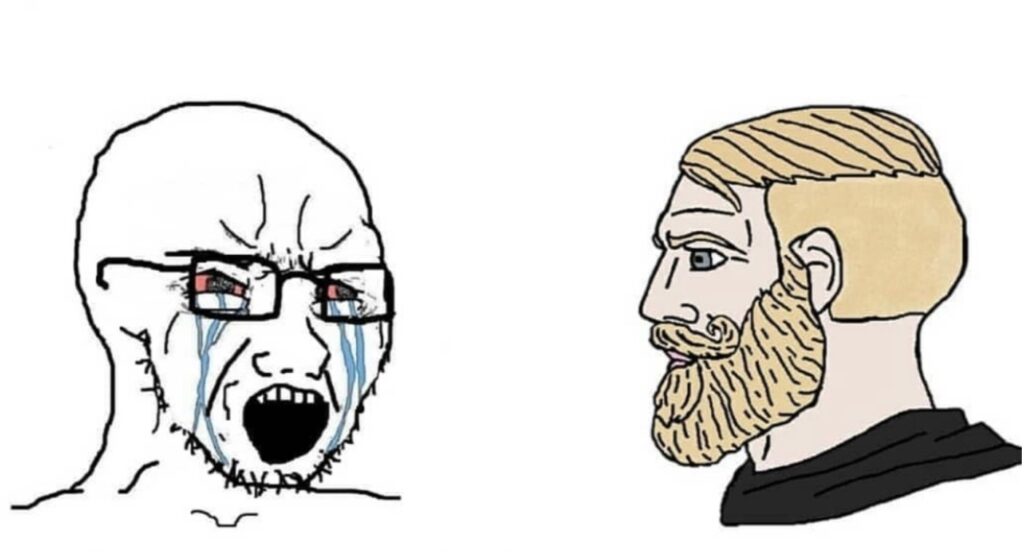
This variant features a tearful Wojak, representing sadness, frustration, or disappointment. Often used to depict someone who feels defeated or is “not getting their way,” Crying Wojak appears in Internet memes about personal setbacks or societal critiques, such as unrequited love or perceived injustices.
NPC Wojak
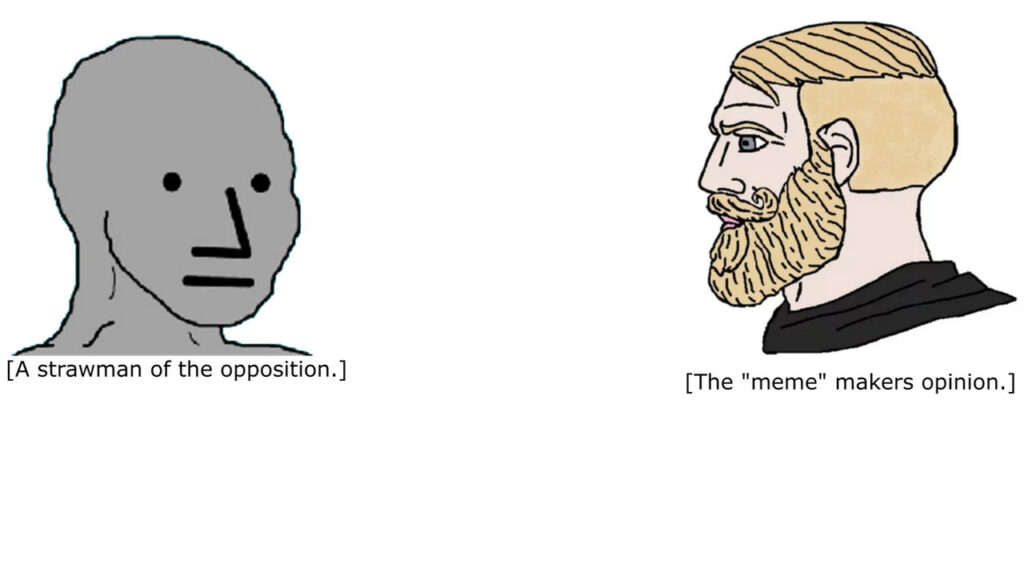
Introduced around 2018, the NPC (Non-Player Character) Wojak, inspired by video game terminology, portrays a blank-faced figure with a simplistic expression. It symbolizes individuals perceived as lacking independent thought or blindly following mainstream narratives. The NPC Wojak gained traction during political debates, particularly to critique conformist behavior.
Coomer
The Coomer Wojak is a caricature of someone obsessed with pornography or excessive masturbation, often depicted with disheveled hair and an exaggeratedly muscular right arm. This variant mocks compulsive behavior and is frequently used in discussions about internet addiction or hedonism.
Doomer
The Doomer Wojak embodies nihilism or existential despair, often shown with a somber expression, wearing a hoodie or beanie. Popularized in the late 2010s, it reflects the anxieties of younger generations facing economic, environmental, or social challenges, often paired with dark humor or fatalistic captions.
Chad
The Chad Wojak, characterized by a chiseled jawline and confident demeanor, represents an idealized, attractive, and socially successful male. Often contrasted with other Wojaks, Chad is used to depict someone who effortlessly succeeds where others fail, embodying charisma and dominance.
Soyjak
The Soyjak, a wide-mouthed, bespectacled Wojak, serves as the antithesis of Chad. It portrays a stereotypical “beta-male” or overly sensitive individual, often mocked for perceived weakness or adherence to progressive ideals. The term “soy” derives from internet slang associating soy consumption with effeminacy.
Big-Brain Wojak
This variant, with an exaggeratedly large forehead or brain, is used ironically to mock pseudo-intellectuals or those who overestimate their intelligence. A popular version shows the Wojak sitting on their own brain, symbolizing self-important or convoluted thinking.
CHUD Wojak
Originally a satirical depiction of alt-right individuals (derived from the film C.H.U.D.), the CHUD Wojak was later embraced by some alt-right communities. It typically features a grotesque, exaggerated face and is used to critique or mock extreme political views.
Trad-Wife Wojak
The Trad-Wife Wojak depicts a woman adhering to traditional gender roles, often shown in a dress with a serene expression. It is used both earnestly by traditionalist communities and satirically to critique idealized notions of domesticity.
Masked Wojak
A Crying Wojak wearing a smug or neutral mask represents someone hiding their true emotions behind a facade. This variant comments on hypocrisy or the pressure to appear unaffected in online spaces, often used in debates about authenticity.
These variants are not exhaustive, as the Wojak universe continues to expand with new iterations. Successful variants gain traction by resonating with online audiences, while less relatable ones fade away.
Read More: Loaded Fire TV Sticks-Legal, Ethical & Security Risks
The Cultural Significance of Wojak Internet Memes
Wojak Internet memes serve as a mirror to internet culture, reflecting the emotions, rivalries, and ideologies of online communities. Their evolution from a humble “everyman” to a diverse cast of archetypes illustrates the internet’s ability to create shared symbols that transcend language barriers. Wojaks are particularly effective in expressing complex ideas succinctly, often combining humor with biting social commentary. For example, a meme contrasting a Chad with a Soyjak might highlight perceived differences in confidence or social status, while a Doomer Wojak paired with optimistic text could critique societal denial of systemic issues.
The versatility of Wojaks allows them to serve multiple purposes. They can be self-deprecating, as in early “Feels Guy” memes, or used to mock others, as seen in NPC or Soyjak variants. This duality makes Wojaks a powerful tool for both community-building and tribalism, as they often reinforce in-group identities by contrasting “us” (e.g., Chads or Doomers) with “them” (e.g., NPCs or Soyjaks). The shift from the original Wojak’s humility to the Chad’s dominance reflects broader trends in Internetmeme culture, where irony and superiority have become prevalent themes.
How Wojak Internet Memes Are Used
Wojak Internet memes are employed in various contexts, from casual online banter to pointed social critique. Their primary uses include:
- Reaction Memes: Wojaks like Crying Wojak or Smug Wojak are used to respond to posts or events, conveying emotions like sadness, smugness, or frustration in a single image.
- Stereotype Commentary: Variants like Chad, Soyjak, or NPC are combined to create narratives about societal groups, often exaggerating traits for humorous or satirical effect. For instance, a meme might depict a Chad succeeding where a Soyjak fails, reinforcing stereotypes about masculinity.
- Philosophical or Political Statements: Doomer or Big-Brain Wojaks are used to comment on existential or intellectual topics, often with an ironic or critical tone. These memes can critique societal norms, political ideologies, or cultural trends.
- Self-Expression: The original Wojak and its emotional variants allow users to project their feelings onto a meme, fostering a sense of shared experience. For example, a Crying Wojak might accompany a post about personal struggles, inviting empathy from others.
The adaptability of Wojaks ensures they remain relevant across platforms, from Reddit’s meme-heavy subreddits to X’s fast-paced discussions. Their simplicity allows even novice meme creators to modify them, ensuring a constant stream of new content.
Challenges in Understanding Wojak Internet Memes
For those unfamiliar with internet culture, Wojak Internet memes can be difficult to decipher. Their meaning often depends on context, requiring knowledge of online slang, subcultural references, and current events. For instance, understanding a Soyjak meme may require familiarity with terms like “beta-male” or debates about masculinity in online spaces. Similarly, NPC Wojaks reference gaming culture and political polarization, which may confuse outsiders.
The rapid evolution of Wojak variants also poses a challenge. New iterations emerge frequently, and their meanings can shift over time. For example, the CHUD Wojak’s adoption by the alt-right flipped its original satirical intent, illustrating how memes can be co-opted by different groups. To navigate this complexity, newcomers can explore platforms like Know Your Meme, which document the origins and meanings of Wojak variants, or engage with online communities to learn through context.
Wojaks in the Broader Context of Internet Meme Culture
Wojak Internet memes are part of a larger ecosystem of internet memes, sharing similarities with formats like Pepe the Frog or Rage Comics. Like Pepe, Wojaks have been adopted by diverse groups, from mainstream meme enthusiasts to fringe subcultures, leading to varied interpretations. Unlike Rage Comics, which rely on exaggerated facial expressions, Wojaks use subtle design changes to convey meaning, making them more versatile but less immediately accessible.
The rise of Wojaks also reflects broader trends in digital communication. As online interactions increasingly rely on visual shorthand,Internet memes like Wojaks serve as a universal language for expressing complex ideas quickly. Their ability to evolve organically ensures they remain relevant, even as internet culture shifts. For example, the Doomer Wojak’s popularity surged during the late 2010s amid growing discussions about mental health and societal decline, demonstrating how memes can capture the zeitgeist.
Practical Tips for Engaging with Wojak Internet Memes
For those looking to understand or use Wojak Internet memes, the following strategies can help:
- Explore Meme Databases: Websites like Know Your Internet Meme or Encyclopedia Dramatica provide detailed explanations of Wojak variants and their origins, offering a starting point for newcomers.
- Participate in Online Communities: Engaging in subreddits like r/memes or r/wojak can provide context for how Wojaks are used in real-time discussions.
- Experiment with Meme Creation: Tools like Meme Generator or Photoshop allow users to create their own Wojak memes, fostering a deeper understanding of their versatility.
- Stay Updated on Trends: Following meme accounts on X or Instagram can keep you informed about new Wojak variants and their cultural significance.
- Understand the Context: Pay attention to the captions, images, or discussions accompanying Wojak Internet memes to grasp their intended meaning, as context is critical.
FAQS
What is a Wojak Internet meme, and where did it come from?
Wojak Internet memes are simple drawings of a bald, nondescript character used to express emotions, stereotypes, or social commentary online. Originating around 2009 on platforms like 4chan, the term “Wojak,” meaning “soldier” in Polish, initially represented an “everyman” figure. Over time, variations emerged to depict specific archetypes, such as Chad or Doomer, becoming a versatile visual language in meme culture.
What are the most common types of Wojak memes and their meanings?
Common Wojak variants include the Original Wojak (an average person), Crying Wojak (sadness or frustration), Chad (confident, attractive male), Soyjak (stereotypical “beta-male”), Doomer (nihilistic or depressed), and NPC (conformist or unthinking person). Each variant conveys a specific emotion or archetype, often used to react to events or mock societal groups in online discussions.
How are Wojak memes used in online communication?
Wojak memes serve as reaction images or narrative tools. They express emotions like sadness or smugness in response to posts, or depict stereotypes to comment on social, political, or cultural issues. For example, a meme might contrast a Chad with a Soyjak to highlight perceived differences in confidence, using humor or satire to engage online audiences.
Why are Wojak memes so popular in internet culture?
Wojak memes are popular due to their simplicity, adaptability, and relatability. Their minimalist design allows easy modification, enabling users to create new variants that reflect current trends or emotions. They resonate with online communities by capturing shared experiences or critiquing societal norms, thriving on platforms like Reddit, X, and 4chan.
How can someone unfamiliar with Wojak memes learn to understand them?
To understand Wojak memes, explore meme databases like Know Your Meme for detailed explanations of variants and origins. Engage with online communities on Reddit or X to see Wojaks in context. Pay attention to captions and accompanying images, as their meaning often depends on the discussion or event they reference.
Conclusion
Wojak memes represent a dynamic and enduring facet of internet culture, evolving from a simple “everyman” drawing into a rich tapestry of archetypes and emotions. Their versatility, simplicity, and relatability have made them a staple of online communication, used to express everything from personal struggles to biting social satire. For those outside the “very online” sphere, Wojaks may seem perplexing, but their significance lies in their ability to capture the complexities of digital life. By understanding the major variants—such as Crying Wojak, Chad, Soyjak, and Doomer—and their cultural roles, anyone can gain insight into the internet’s ever-evolving visual language. As meme culture continues to shape how we communicate online, Wojaks remain a testament to the creativity and connectivity of the digital age.
