
Delta Air Lines has always held a strong position in the domestic premium cabin space. With the introduction of the Airbus A321neo, Delta brought a fresh look and a new seat design to its domestic first class offering. This new product was designed to raise the bar in terms of style, innovation, and passenger comfort. Following my recent journey from Los Angeles (LAX) to Fort Lauderdale (FLL), it became evident that while there are notable improvements, there are also some design miscalculations that cannot be overlooked.
The A321neo represents Delta’s commitment to updating its fleet and delivering better onboard experiences. From an aesthetic standpoint, the new first class cabin looks impressive. The darker tones, polished finishes, and lighting cues combine to present a high-end feel. Compared to older cabins or competitor aircraft, Delta’s version of the A321neo definitely stands out visually. However, appearance only tells part of the story.
Layout and Seat Configuration in the First Class Cabin
The layout of the A321neo first class consists of 20 seats arranged in a standard 2-2 configuration. Despite being a common format for narrow-body aircraft, Delta has implemented enhancements to elevate the overall experience. These include modern seat designs, new materials, and an evolved cabin structure.
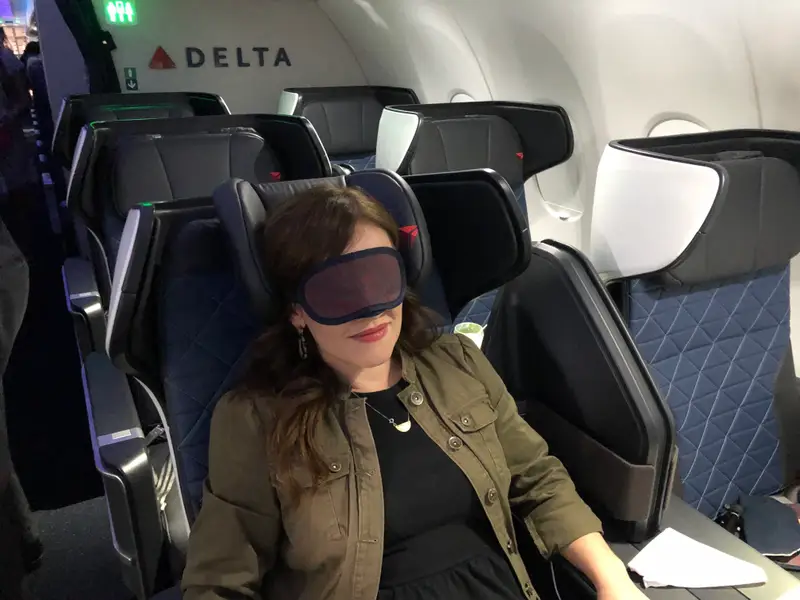
Seat dimensions remain within the typical range of domestic first class offerings, with a width of about 21 inches and pitch around 36 to 37 inches. This places Delta close to its competitors in terms of space allocation. However, the introduction of various design features, such as built-in partitions and side “wings,” alters the perceived space available to passengers.
The Airspace cabin of the A321neo is known for enhanced overhead bin capacity, improved ambient lighting, and noise reduction. These features subtly boost passenger comfort, contributing to an overall quieter and more relaxing atmosphere during the flight.
Design Appeal and Stylish Cabin Atmosphere
Visually, Delta’s first class cabin on the A321neo creates a strong first impression. The airline has managed to blend futuristic elements with modern luxury through careful selection of materials, seat contours, and ambient lighting.
Seat backs are sleek, tray tables are large and sturdy, and everything appears more refined than previous iterations. The overall aesthetic leans toward a business-oriented, high-end ambiance rather than a generic domestic airline feel. Darker navy tones with silver and chrome accents contribute to this atmosphere.
Mood lighting and the overall cleanliness of the design help the cabin feel more premium. Screens are embedded smartly, and control panels blend with the modern styling. There is a deliberate effort to communicate sophistication through every design choice.
Functional Improvements Over Previous Seats
The first noticeable improvement is the semi-private nature of the seating. While full privacy isn’t possible in a 2-2 layout, Delta introduced small partitions and angled headrests with side “wings.” These wings provide a place to lean while sleeping and help reduce peripheral distractions from neighboring passengers.
Storage enhancements are another notable feature. Each seat includes a center console area with built-in bottle holders and a front-facing vertical compartment. While the vertical storage space doesn’t allow for large bags, it accommodates small personal items such as phones, wallets, or headphones. This type of convenience has not been standard in domestic first class until now.
The tray tables, claimed to be 25% larger than previous designs, add functionality. They feel sturdier and allow more comfortable use for laptops or meal trays. The movement and deployment of the table is also smooth, giving passengers confidence in the durability of the materials.
Power Access and Connectivity Options
Delta placed power outlets in an accessible and user-friendly location. Instead of hiding ports under armrests or deep within the seat console, they are easily reachable. Each seat has two USB-A outlets and one standard AC power outlet.
Although USB-C outlets are absent, which is somewhat surprising given the newness of the aircraft, the inclusion of multiple USB-A ports helps accommodate older devices. Wireless charging is also not included, though this is more of a luxury add-on rather than a functional necessity.
Wi-Fi connectivity remains consistent with Delta’s standards, providing reliable access for browsing, email, and streaming. This complements the entertainment options provided by the seat-back screens.
Entertainment and Screen Quality Enhancements
Each first class seat on the A321neo includes a 10-inch high-resolution personal screen. The screen clarity is excellent, and Delta’s user interface is responsive and modern. Bluetooth audio support is a welcome addition, allowing passengers to use their own headphones.
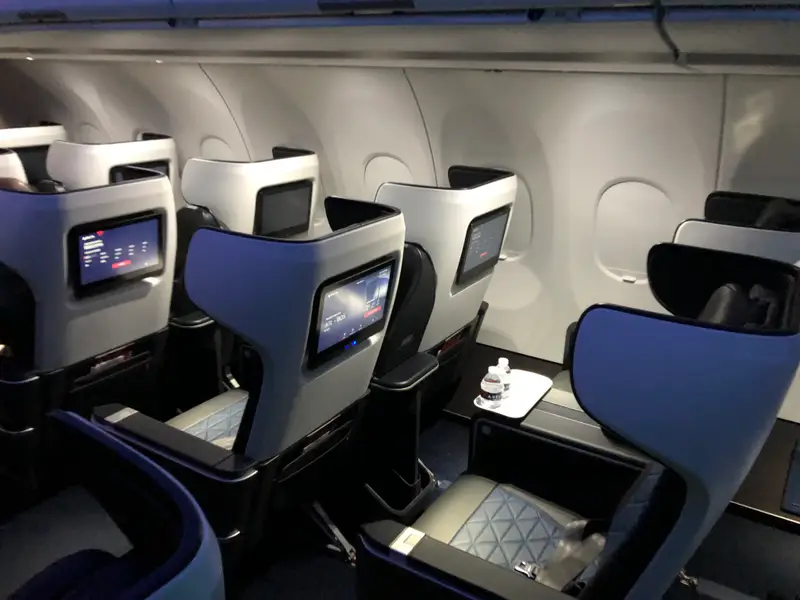
Entertainment content includes a large selection of movies, TV shows, music, and games. Delta’s catalog competes well against industry leaders and supports binge-watching or passing time on cross-country flights. The UI features clear navigation and fast response times, enhancing user experience.
A consistent and polished entertainment interface contributes to the perception of modernity in the A321neo cabin. Even if passengers prefer working or sleeping, the presence of quality screens makes a strong visual impression.
Seat Bulk and Spatial Limitations
One of the more controversial aspects of the new design lies in the balance between aesthetics and functionality. Although the seats look premium, they are bulkier than their predecessors. The combination of rigid partitions, center consoles, and side wings eats into available personal space.
Seat pitch hasn’t increased compared to older Delta aircraft. With more fixed elements around the seat, passengers can feel boxed in. This is particularly noticeable for those in window seats, where access to the aisle becomes more restricted if the seat in front is reclined.
The reclining function on Delta’s first class seats is generous. While this enhances comfort for those leaning back, it restricts room for passengers seated behind them. Combined with the fixed center storage compartment, the limited legroom becomes apparent.
Sleep and Rest Features for Overnight Flights
For a redeye flight like the one from LAX to FLL, sleep comfort is a significant consideration. The new headrest design with its fixed side “wings” offers decent head support, helping passengers rest without needing a travel pillow. This is a noticeable improvement over flatter headrests in older aircraft.
However, seat padding remains firm, and with limited space to stretch out, sleep quality remains dependent on body posture and personal tolerance for reclined seating. Unlike lie-flat configurations seen in transcontinental or international business class, these seats are only marginally optimized for overnight rest.
Lighting and cabin noise are controlled well on the A321neo, helping create a calming environment. The smoothness of the aircraft’s flight characteristics also adds to rest quality, even without fully flat beds.
Comparison With Competitor Aircraft Cabins
Compared to American Airlines’ A321neo or United’s 737 MAX first class, Delta’s cabin clearly stands out in design language. While competitors also offer polished finishes and decent legroom, the innovation in Delta’s new seat feels more tangible.
That said, the visual advantages do not entirely offset the practical shortcomings. United’s first class seats, for example, may offer slightly more perceived space due to fewer embedded features. American’s A321neo interiors, while less stylish, maintain a more open seat layout.
Delta positions its A321neo product to appeal to both business travelers and leisure flyers, but the bulk of the seats may deter some passengers who prioritize space over flair.
Cabin Crew Service and Delta’s Brand Touchpoints
Service remains one of Delta’s strong points. On this flight, the crew was attentive, well-trained, and efficient, even under pressure due to an onboard medical emergency. Despite the disruption, meal service was handled professionally, and updates were communicated effectively.
Delta includes small touches like bottled water at boarding, quality headphones, and paper menus on longer flights. These additions reinforce the airline’s branding and distinguish it from more bare-bones carriers.
Cleanliness, speed of boarding, and gate announcements are also generally handled better by Delta, adding to the overall customer experience. These strengths help offset minor shortcomings in seat design and space.
Traveler Type Suitability and Use Cases
The A321neo first class seat is well-suited to solo business travelers who value connectivity, entertainment, and visual appeal. For leisure travelers or couples, the semi-private design adds a premium feel, although the limited space might feel constraining on longer flights.
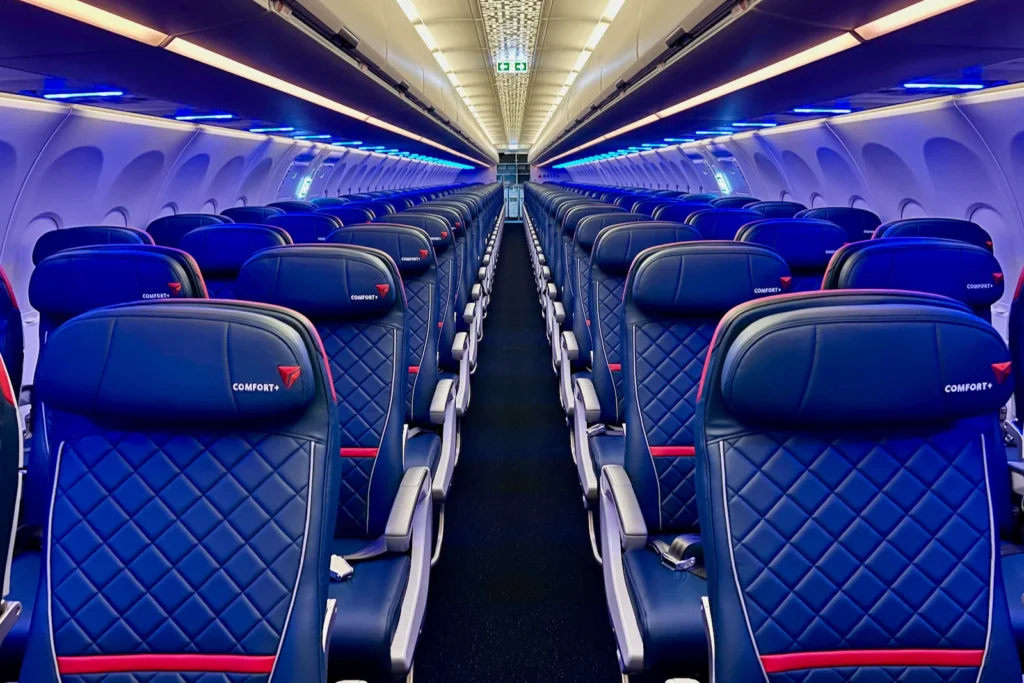
Families or those with mobility challenges may find the center storage column and rigid wings inconvenient. Access to the aisle, especially in window seats, is restricted by design, which can become a hassle during mid-flight movements.
Ultimately, the seats strike a balance between innovation and practicality, but they lean more heavily into the former. The appeal is strongest to those who value style, personalization, and modern in-flight technology.
Final Thoughts on Cabin Comfort and Innovation
Delta’s introduction of the A321neo first class seat signals a deliberate shift toward offering a more upscale domestic experience. Aesthetic upgrades, improved media systems, better storage solutions, and smart power port placements all represent steps forward in design evolution.
However, the lack of increased space and the added bulk from various design elements detract from overall comfort. While the cabin feels luxurious at first glance, repeated use reveals that form may have overtaken function in some areas.
Passengers accustomed to wider seats or open layouts may find the experience slightly underwhelming. The new seat offers clear benefits but also introduces some challenges not present in more spacious, older designs.
Summary and Overall Impression
Delta’s A321neo first class product succeeds in delivering a modernized and stylish domestic flying experience. It introduces thoughtful features such as partitioned headrests, accessible power ports, enhanced tray tables, and impressive entertainment screens. These improvements reflect a forward-thinking design philosophy.
However, the tight configuration and added bulkiness of seats create spatial limitations that reduce comfort for some passengers. Delta chose to innovate within a restricted footprint, and while the attempt is commendable, the results are mixed.
Passengers will appreciate the upgrade if prioritizing media quality, visual design, and tech integration. For those focused on stretch-out space, open layouts, and seat flexibility, the product may fall slightly short.
