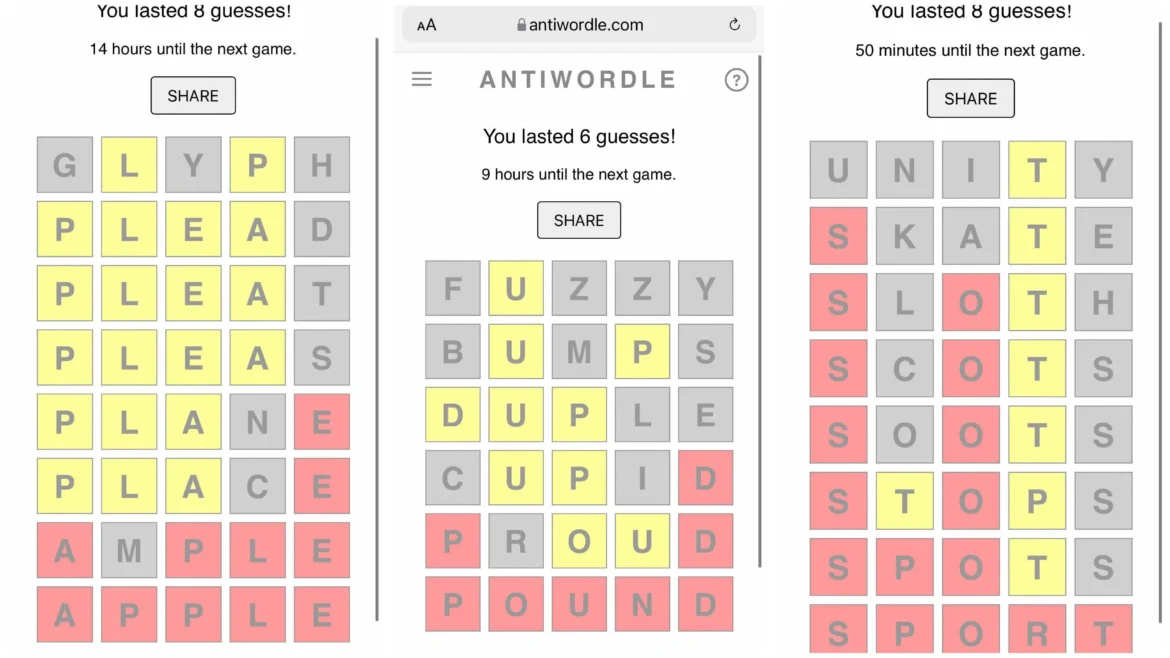
Antiwordle is one of those games that people either love or love to hate. For me, it falls squarely into the latter category, yet I find myself playing it every single morning. Unlike traditional word games that reward progress and skill, Antiwordle flips the rules, forcing players to guess words while avoiding obvious hints. The frustration it brings is real, but so is the strange satisfaction that comes with every near miss and unexpected victory. Morning routines often require something to wake up the mind, and Antiwordle provides a combination of challenge, surprise, and mental exercise. Despite the irritation it causes, it has become an essential part of starting my day, sharpening focus, and injecting a tiny dose of chaos into an otherwise predictable schedule. Over time, the game’s blend of difficulty and unpredictability becomes oddly addictive, proving that hate and habit can coexist.
Why Antiwordle Is So Frustrating
Unpredictable Gameplay
Every round of Antiwordle challenges expectations by reversing familiar rules, which keeps the mind constantly on edge.
Mental Gymnastics
The game requires players to think differently, often forcing strategies that contradict typical word-game logic.
Emotional Rollercoaster
The combination of surprise losses and rare wins triggers a mix of frustration and satisfaction that keeps players hooked.
The Morning Routine Connection
Brain Warm-Up
Playing Antiwordle in the morning sharpens cognitive skills and improves focus before starting the day.
Habit Formation
Daily engagement creates a routine, making it almost impossible to skip a session despite its frustration.
Advantages of Morning Play
- Boosts alertness and concentration
- Provides a unique mental challenge
- Offers a structured start to the day
Why I Keep Coming Back
Compulsive Curiosity
The unpredictability of each puzzle encourages repeated attempts to see what comes next.
Challenge Addiction
Every failure motivates trying again, seeking small victories that feel hard-earned.
Psychological Hook
Antiwordle’s mix of difficulty, humor, and surprise creates a compelling loop that players can’t easily resist.
Social Aspects of Antiwordle
Shared Frustration
Players often bond over the game’s challenges, sharing memes, tips, and hilarious fails online.
Competitive Comparison
Seeing friends struggle or succeed provides motivation and a sense of community.
Benefits of Social Play
- Encourages conversation and engagement
- Provides a sense of belonging in niche gaming circles
- Turns frustration into shared amusement
Strategies That Actually Work
Avoid Predictable Words
Skipping common guesses often prevents immediate losses and keeps the game interesting.
Plan Ahead
Anticipating possible pitfalls while staying flexible improves success rates over time.
Tips for Better Play
- Focus on lateral thinking and creativity
- Accept losses as part of the experience
- Experiment with unconventional approaches
Lessons Learned From Hating the Game
Patience and Persistence
Repeated failures teach players to remain calm and keep trying despite setbacks.
Adaptability
Constantly changing strategies encourages flexibility in thinking and problem-solving.
Unexpected Joys
The rare victories and small successes bring a surprising sense of accomplishment and amusement.
Read more; 6 Best Apps to Sell Used Clothing and Household Items
FAQs
Is Antiwordle harder than regular word games? Yes, the reversed rules make it uniquely challenging and unpredictable.
Why do people enjoy a game they hate? Frustration combined with rare rewards creates a compelling loop that keeps players engaged.
Can Antiwordle improve cognitive skills? Yes, it encourages lateral thinking, memory recall, and problem-solving under unusual constraints.
Is it suitable for all ages? While generally safe, its difficulty may frustrate younger players who prefer traditional games.
Should I play it every morning? Regular play can sharpen focus, but balance it with other activities for overall well-being.
Conclusion
Antiwordle is a paradoxical game that frustrates and entertains in equal measure. Its reversed rules and unpredictable outcomes make it difficult, yet the challenge is exactly what makes it addictive. Playing every morning has become more than just a habit; it’s a mental warm-up, a test of patience, and a way to inject unpredictability into the day. Despite hating its irritating twists, I appreciate the cognitive exercise and rare victories that bring unexpected satisfaction. The game proves that even disliked activities can provide value when approached with curiosity, persistence, and a sense of humor. By embracing the frustration, players discover a unique blend of challenge and enjoyment that keeps them coming back.
