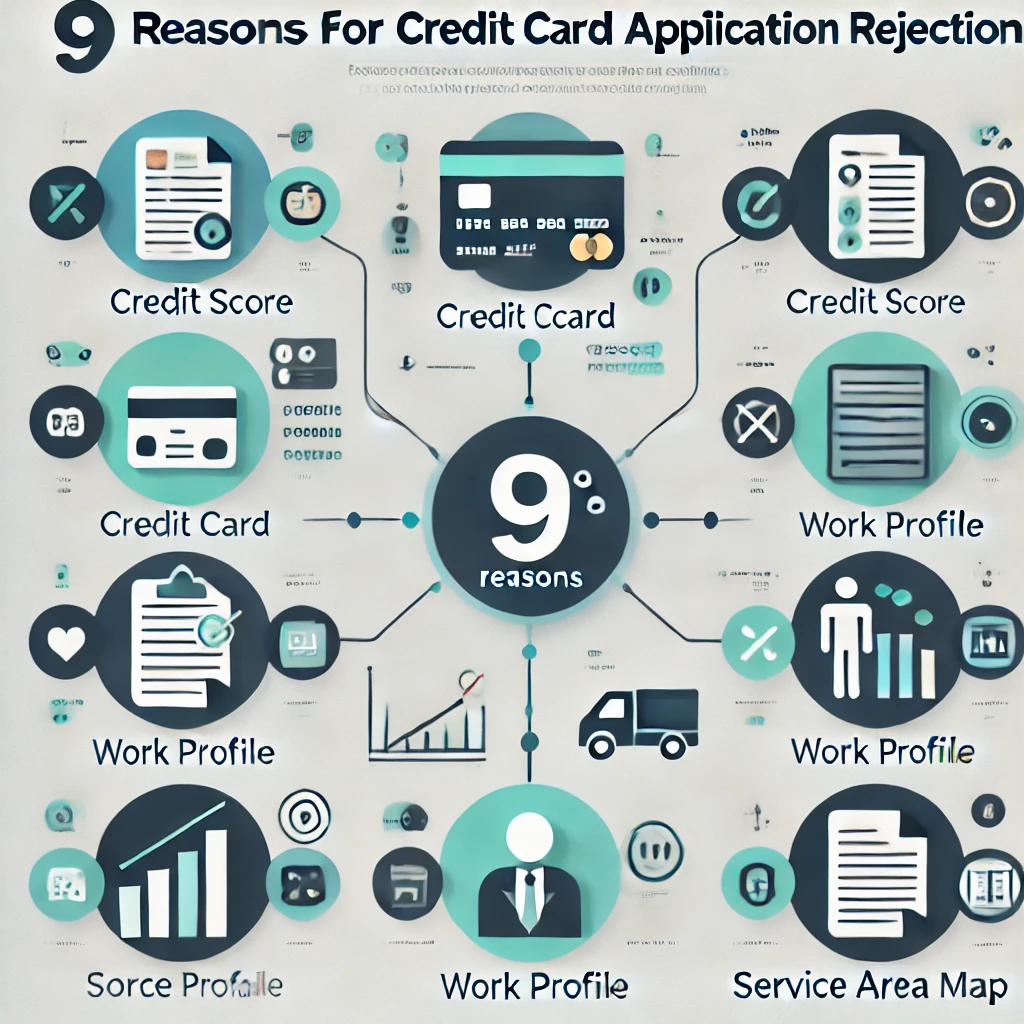
A credit card application can be rejected if you apply without careful consideration. In this article, I’ll highlight some of the key reasons for rejection and offer solutions to help you become eligible for approval in the future.
No Credit History
If you’ve never applied for a loan or credit card, you won’t have a credit history, which means no credit score. Without any credit history, banks may hesitate to approve your application. However, some banks do offer credit cards to individuals new to credit.
To start building your credit, consider applying for a secured credit card, backed by a Fixed Deposit (FD). Keep in mind that the credit limit will typically be around 80% of the FD amount, so opting for a larger FD will help you secure a higher credit limit, which will increase your chances of qualifying for better cards in the future.
Low CIBIL Score
A CIBIL score below 750 can significantly reduce your chances of approval. A low score can result from various factors such as a high credit utilization ratio, multiple applications in a short time, poor repayment history, and more.
To improve your chances, focus on lowering your credit utilization ratio (ideally below 30%). Avoid making multiple applications in a short period, as this can make you appear desperate for credit. Also, ensure that the address on your application matches the one listed in your CIBIL report, as discrepancies can lead to delays or rejection.
Eligibility Criteria
Each bank has its own eligibility criteria for credit cards, which may include income verification or a minimum credit limit from another bank. It’s essential to meet these requirements to avoid being rejected based on eligibility.
Multi-Carding
While some banks allow you to hold multiple credit cards, it’s important to know each bank’s limit before applying for a second card with your preferred lender. This can help you avoid rejection based on exceeding the allowed number of cards. You can find a list of banks and their card limits in the TechnoFino Community.
Too Many Credit Cards
Certain banks, like HSBC, ICICI, Axis, and Citi, may hesitate to approve new applicants who already hold substantial credit limits from other banks relative to their income. It’s generally advisable to apply for these cards earlier in your credit journey to improve your chances.
Non-Serviceable Area
To qualify for a credit card, you must reside in a serviceable area as defined by the bank. If your postal code falls outside the bank’s service area, your application will be automatically rejected.
Work Profile
Your occupation plays a crucial role in your eligibility. Many banks, particularly foreign ones, prefer salaried individuals for credit cards. Self-employed professionals or individuals working from home may face challenges, especially if their home address is used as the office address or if they lack a formal office setup.
For salaried individuals, providing a salary slip and an official email address can strengthen your application. However, if you’re employed by a blacklisted company, your application may be rejected.
Physical Verification
Some banks conduct physical verification of both your residential and official addresses. Ensure that the information you provide on your application is accurate to avoid complications during the verification process.
Relationship with the Bank
While a banking relationship isn’t mandatory for approval, it can improve your chances. Having a positive relationship with a bank, including a strong net relationship value (NRV), can help your application move forward more quickly.
Frequently Asked Questions
What are the common reasons for a credit card application rejection?
Credit card applications can be rejected due to low credit scores, insufficient income, high existing debt, errors on the credit report, or inconsistent financial history.
How does my credit score affect my credit card application?
A low credit score is one of the primary reasons for rejection. Credit card issuers use your score to assess your creditworthiness, and if it’s too low, they may deny your application.
Can applying for multiple credit cards lead to rejection?
Yes, applying for too many credit cards within a short period can lead to rejection. Multiple inquiries may signal to issuers that you’re a high-risk applicant.
Does a high debt-to-income ratio affect my chances of getting approved?
Absolutely. A high debt-to-income ratio suggests that you may struggle to repay additional debt, which could lead to rejection of your credit card application.
Can mistakes on my credit report cause my application to be rejected?
Yes. Errors such as incorrect account details, missed payments, or outdated information can negatively affect your credit report and lead to a rejected application. It’s essential to review your report regularly.
Conclusion
Applying for a credit card without understanding the factors that influence approval can lead to rejection. By addressing the key reasons, such as lacking a credit history, having a low CIBIL score, failing to meet eligibility criteria, or submitting inaccurate information, you can significantly improve your chances of being approved. Other factors like holding too many cards, residing in a non-serviceable area, and having an unfavorable work profile can also hinder your approval process.
By taking proactive steps—such as building your credit score, avoiding multiple applications, and ensuring all information is accurate—you can better position yourself for approval. Additionally, cultivating a relationship with your bank and adhering to its policies will increase your chances of success. Understanding these reasons and solutions will help you navigate the credit card application process more effectively and enhance your eligibility for future approvals.
