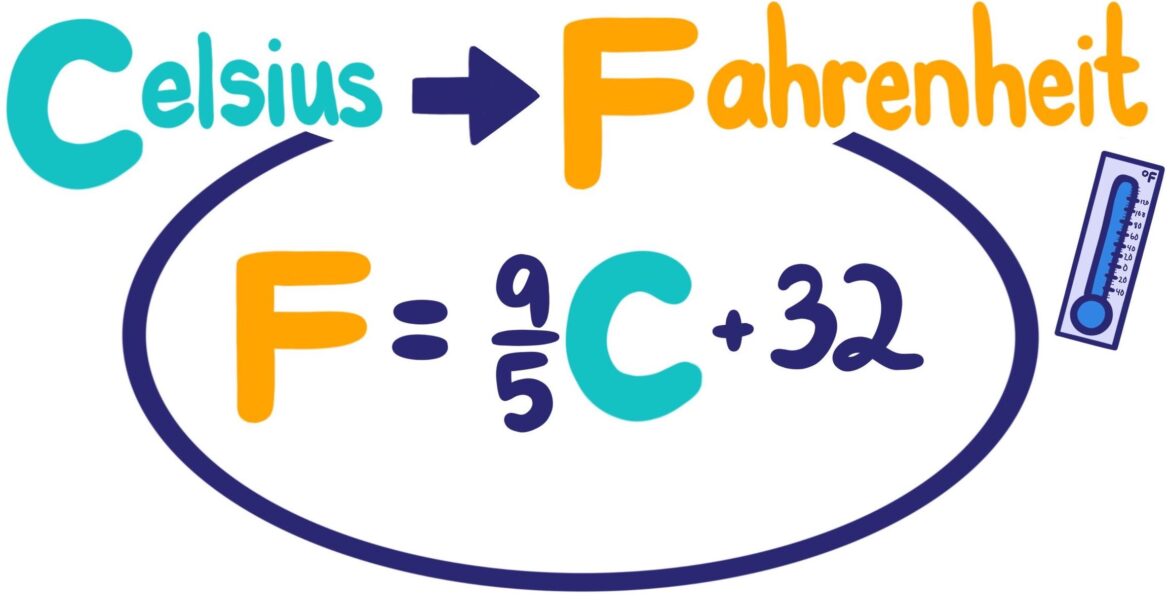
Converting between Celsius and Fahrenheit can feel like a daunting task for many, especially if you’re used to one system but encounter the other while traveling, reading international weather forecasts, or engaging in scientific discussions. Unlike other unit conversions, such as pounds to kilograms, temperature conversions are tricky because the two scales—Celsius and Fahrenheit—use different baselines and unit sizes. However, with a few clever tricks, you can master these conversions without relying on complex formulas or a calculator. This comprehensive guide will walk you through the nuances of temperature conversion, provide three practical methods to make it easier, and offer additional insights to deepen your understanding. Whether you’re a traveler, a student, or simply curious, this guide will equip you with the tools to convert temperatures confidently.
Why Converting Celsius to Fahrenheit Is Challenging
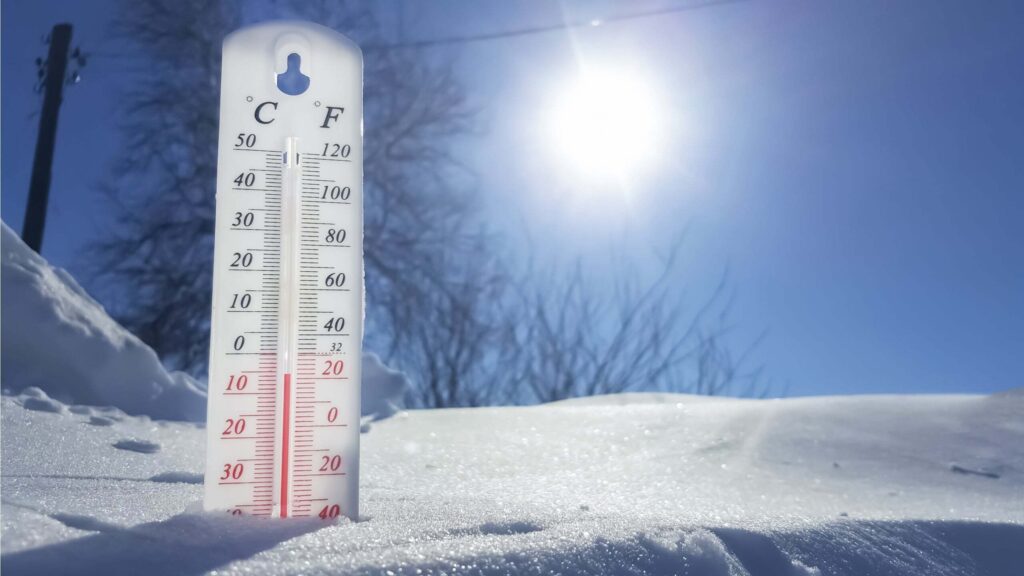
To understand why temperature conversions are more complicated than other unit conversions, let’s break down the differences between the Celsius and Fahrenheit scales:
- Different Unit Sizes: Each degree Celsius represents a larger temperature interval than a degree Fahrenheit. Specifically, one Celsius degree is equivalent to 1.8 Fahrenheit degrees. This means that a change of 10°C corresponds to a change of 18°F.
- Different Baselines: The zero points of the two scales are not aligned. Celsius is based on the properties of water:
- 0°C is the freezing point of water.
- 100°C is the boiling point of water (at standard atmospheric pressure).
In contrast, Fahrenheit is designed around human comfort and historical benchmarks:
- 0°F is a bitterly cold temperature, equivalent to approximately -18°C.
- 100°F is a swelteringly hot temperature, equivalent to about 38°C.
- 32°F is the freezing point of water, and 212°F is its boiling point.
Because of these differences, converting between Celsius and Fahrenheit requires a two-step process: adjusting for the different unit sizes (multiplying or dividing) and accounting for the baseline shift (adding or subtracting). For comparison, converting pounds to kilograms is simpler because both scales start at zero, requiring only a single multiplication or division (by approximately 2.2).
Official Conversion Formulas
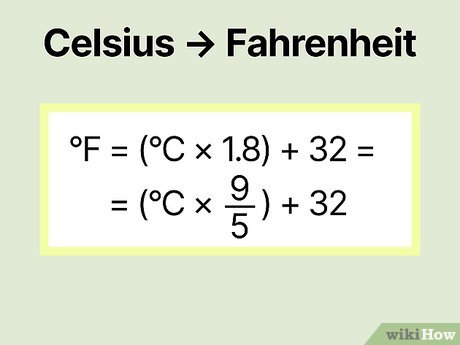
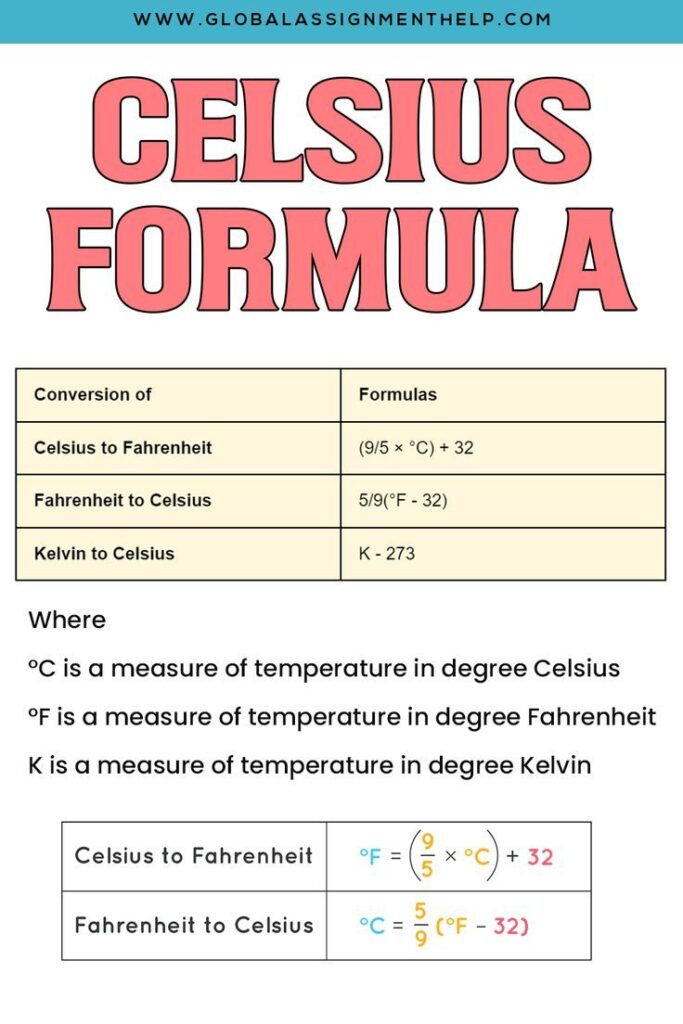
For precise conversions, the standard formulas are:
- Celsius to Fahrenheit:
[( \text{Celsius} \times 1.8) + 32 = \text{Fahrenheit}] - Fahrenheit to Celsius:
[( \text{Fahrenheit} – 32) \times 0.5556 = \text{Celsius}]
Note that 1.8 is equivalent to ( \frac{9}{5} ), and 0.5556 is ( \frac{5}{9} ). These fractions are exact, but for simplicity, many use the decimal approximations (1.8 and 0.55 or 5/9) since calculators or smartphones are readily available. However, memorizing these formulas and performing the math in your head can be cumbersome. Fortunately, there are easier, more intuitive methods to estimate temperatures without heavy calculations.
Three Practical Methods for Temperature Conversion
Below are three methods to convert Celsius to Fahrenheit (and vice versa) with minimal effort. These range from a math-free mnemonic to a simplified formula requiring only basic arithmetic. Each method has its strengths, depending on your preference for precision, ease, or memorability.
Method 1: Memorize a Poem for Math-Free Conversion
If math isn’t your thing, this poetic mnemonic offers a quick, intuitive way to gauge Celsius temperatures in Fahrenheit terms without any calculations:
“30 is hot, 20 is nice, 10 is chilly, and zero is ice.”
This rhyme provides approximate Fahrenheit equivalents for key Celsius temperatures:
- 0°C (ice) = 32°F (freezing point of water).
- 10°C (chilly) = 50°F (light jacket weather).
- 20°C (nice) = 68°F (comfortable, mild weather).
- 30°C (hot) = 86°F (beach or summer weather).
The beauty of this method is its simplicity. You don’t need to perform any math—just remember the poem and associate the Celsius temperatures with their corresponding weather conditions. For example:
- If you hear a forecast of 15°C, it’s between “chilly” (10°C = 50°F) and “nice” (20°C = 68°F), so expect something like 59°F—pleasant but maybe warranting a sweater.
- If it’s 35°C, it’s hotter than “hot” (30°C = 86°F), so prepare for temperatures in the low 90s Fahrenheit.
Bonus Fact: At -40°C, the Celsius and Fahrenheit scales converge, meaning -40°C equals -40°F. This is a handy trivia tidbit for extreme weather discussions, such as Arctic vacations or scientific contexts.
This method is ideal for quick, ballpark estimates, especially when traveling or listening to a foreign weather report. It’s not precise, but it’s practical for everyday scenarios.
Method 2: Use the “Reverse Digits” Trick for Specific Temperatures
For those who prefer numbers over words but still want to avoid complex math, this method leverages a pattern in certain Celsius-Fahrenheit pairs. By memorizing four specific temperatures, you can reverse their digits to convert between scales. Here are the key pairs:
- 04°C = 40°F (chilly, light jacket weather).
- 16°C = 61°F (cool, hoodie weather).
- 28°C = 82°F (warm, balmy, summer-like).
- 40°C = 104°F (extremely hot, stay indoors with air conditioning).
How it works:
- The Celsius value is the smaller number in each pair. For example, 16°C corresponds to 61°F.
- To convert the other way, start with the Fahrenheit temperature and reverse the digits to get the Celsius equivalent. For instance, 61°F reverses to 16°C.
- Notice that the Celsius temperatures increase by 12°C each time (4 + 12 = 16, 16 + 12 = 28, 28 + 12 = 40). This pattern can help you extrapolate nearby temperatures.
Example:
- If the forecast is 32°C, it’s between 28°C (82°F) and 40°C (104°F). Since 32 is closer to 28 than 40, estimate around 90°F (actual: 89.6°F).
- For 61°F, reverse the digits to get 16°C, which is exact.
Caveat: The “04” pair (04°C = 40°F) is slightly less intuitive because of the leading zero, but it fits the pattern. For other temperatures, you can estimate by interpolating between these benchmarks. This method is quick, memorable, and works both ways, making it versatile for travelers or students.
Method 3: Simplified Formula with Minimal Math
For those comfortable with basic arithmetic, this method simplifies the official formulas by replacing the precise 1.8 and 0.5556 with doubling and halving. The approximate formulas are:
- Celsius to Fahrenheit: Double the Celsius temperature and add 32.
- Fahrenheit to Celsius: Subtract 32 from the Fahrenheit temperature and divide by 2.
Examples:
- 20°C to Fahrenheit:
( 20 \times 2 = 40 ), then ( 40 + 32 = 72°F ).
(Actual: ( 20 \times 1.8 + 32 = 68°F )). The estimate is close enough for most purposes. - 72°F to Celsius:
( 72 – 32 = 40 ), then ( 40 \div 2 = 20°C ).
(Actual: ( (72 – 32) \times 0.5556 = 22.22°C )). Again, the result is reasonably accurate.
Tip: If you prefer even quicker math, use 30 instead of 32 for the addition or subtraction. For example:
- 20°C to Fahrenheit: ( 20 \times 2 + 30 = 70°F ) (still close to 68°F).
- 70°F to Celsius: ( 70 – 30 = 40 ), then ( 40 \div 2 = 20°C ) (actual: 21.11°C).
This method sacrifices a bit of precision for simplicity but is versatile enough to work for any temperature. It’s perfect for quick mental calculations when you need a rough estimate on the fly.
Choosing the Right Method for You
Each method has its strengths:
- Poem (Method 1): Best for those who want a math-free, intuitive approach. Ideal for casual use, like understanding weather forecasts while traveling.
- Reverse Digits (Method 2): Great for those who prefer memorizing specific numbers and want a quick, bidirectional trick. Useful for students or frequent travelers.
- Simplified Formula (Method 3): Best for those comfortable with basic math who want a flexible method that works for any temperature. Suitable for everyday use or when precision isn’t critical.
If you need exact conversions, use the official formulas with a calculator or smartphone app. For most real-world scenarios, however, these tricks will get you close enough to make informed decisions about clothing, activities, or comfort.
Practical Applications of Temperature Conversion
Understanding Celsius-to-Fahrenheit conversion is valuable in various contexts:
- Travel: International weather forecasts often use Celsius, so knowing how to convert to Fahrenheit helps you pack appropriately.
- Cooking: Many recipes, especially from Europe, list oven temperatures in Celsius, while American ovens use Fahrenheit.
- Science and Education: Students in physics, chemistry, or meteorology often need to switch between scales for experiments or data analysis.
- Health: Body temperature readings (e.g., 37°C normal body temperature = 98.6°F) may be reported in either scale, especially in medical contexts abroad.
FAQs
Why do Celsius and Fahrenheit use different baselines?
Celsius is based on the physical properties of water (0°C for freezing, 100°C for boiling at standard pressure), making it intuitive for scientific applications. Fahrenheit, developed earlier, was calibrated to human comfort and historical reference points, with 0°F and 100°F reflecting cold and hot conditions, respectively.
Is there a temperature where Celsius and Fahrenheit are the same?
Yes, at -40°C, the Fahrenheit temperature is also -40°F. This is the only point where the two scales are equal.
How accurate are the simplified conversion methods?
The poem and reverse-digits methods provide ballpark estimates, typically within 5–10°F of the actual value. The simplified formula (double and add 32) is slightly more accurate but may still be off by a few degrees. For precise conversions, use the official formulas.
Can I use these tricks for extreme temperatures, like in scientific experiments?
The simplified methods are less reliable for extreme temperatures (e.g., below -40°C or above 100°C) because small errors in estimation can lead to larger discrepancies. For scientific purposes, always use the official formulas or a conversion tool.
Are there apps or tools to help with temperature conversion?
Yes, many weather apps, calculator apps, and online converters (e.g., Google’s unit converter) can perform instant Celsius-to-Fahrenheit conversions. However, learning these tricks is useful when you don’t have access to digital tools.
Conclusion
Converting between Celsius and Fahrenheit doesn’t have to be a headache. By understanding the differences between the two scales and using one of the three methods outlined—memorizing a poem, leveraging the reverse-digits trick, or applying a simplified formula—you can quickly estimate temperatures without a calculator. These techniques are practical for travelers, students, cooks, or anyone navigating a world where both scales are used. Whether you’re packing for a trip, setting your oven, or simply curious about the weather, these tools will help you bridge the gap between Celsius and Fahrenheit with confidence. Practice these methods, and you’ll soon find yourself converting temperatures as naturally as you convert miles to kilometers or pounds to kilograms.
