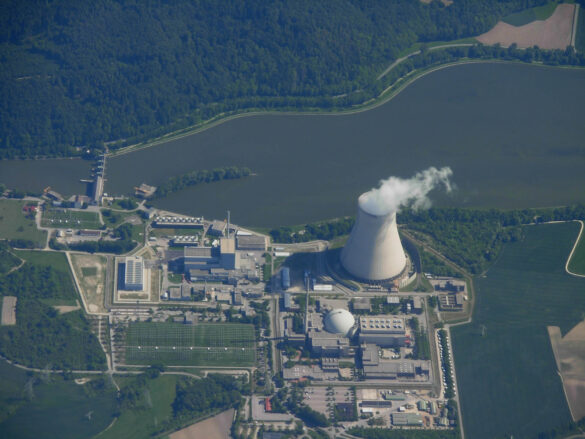
The United States is grappling with a growing energy crisis fueled by the explosive expansion of data centers supporting AI and cloud computing. Nuclear power is being considered a viable solution due to its capacity and reliability. However, safety concerns persist. Incidents like the Chornobyl and Fukushima disasters continue to weigh heavily on public consciousness, prompting concerns about how safe it is to live near these power stations. How close is too close?
Palisades Reopening Signals a Turning Point for U.S. Nuclear Energy
In a significant move, Holtec International is set to bring the Palisades Nuclear Power Plant in Southwest Michigan back online. Originally shut down in 2022, the facility could resume operations as early as October 2025. If successful, it would be the first nuclear power plant in the U.S. to be reopened, potentially paving the way for similar revivals across the country.
With a capacity of 800 megawatts, Palisades aligns with Michigan’s renewed push toward clean energy. The state has allocated $150 million in its 2025 budget to support the reopening, and the federal government has extended a conditional $1.5 billion loan to Holtec.
However, the Nuclear Regulatory Commission (NRC) has flagged concerns. During a September 2024 inspection, damage was found in 1,000 steam generator tubes. While the NRC has approved a repair method using reinforced coatings—already applied thousands of times at other plants—some residents feel that fixing rather than replacing these components compromises safety.
Public Hesitation in a Nuclear-Dependent State
Michigan has long been a stronghold for nuclear energy, historically sourcing 30% of its electricity from nuclear plants. As of 2024, that figure stands at 24.9%—still higher than the national average of 19.1%. However, this reliance has sparked debates about long-term safety, especially as more facilities are considered for revival or expansion.
Why Nuclear Energy Remains in the Spotlight
Despite the haunting memory of major nuclear accidents like Three Mile Island (1979), Chornobyl (1986), and Fukushima (2011), meltdowns remain rare. Only one occurred in the U.S., and most of the world’s nuclear power plants operate without incident. Statistically, the nuclear sector is safer than fossil fuel industries, prompting renewed interest in reopening decommissioned plants.
As demand surges—driven by energy-hungry data centers—renewables alone are struggling to keep pace. Solar and wind energy, while sustainable, are not consistently available. Nuclear offers a dependable alternative.
Still, the legacy of past accidents halted progress for decades. Most American reactors are now over 40 years old, and while many have been decommissioned, the U.S. still has the largest number of operational plants globally.
Why Reopening Plants Might Be the Practical Choice
Building new reactors is a costly and time-consuming endeavor. The Vogtle nuclear plant in Georgia, which came online in April 2024, illustrates the challenges: it was completed seven years late and went $17 billion over budget. Given these financial and logistical setbacks, reopening older, decommissioned facilities like Palisades could prove to be a more feasible path forward.
Nuclear Waste: A Lingering Concern for Local Communities
Nuclear waste, a highly radioactive by-product, presents long-term environmental and health risks. The U.S. has already accumulated around 90,000 metric tons, and while current protocols involve on-site storage or underground containment, not all methods are created equal.
Historically, the U.S. government once disposed of waste by dumping it into the ocean—a practice now outlawed. Still, some companies attempt questionable strategies. Holtec, for example, proposed discharging 1.1 million gallons of treated radioactive water from the decommissioned Pilgrim Nuclear Power Station into Cape Cod Bay. Although the plan was ultimately rejected, it provoked strong backlash from residents and raised alarm about corporate responsibility.
Read More: Premium Bonds Calculator
The Health Risks of Living Near a Nuclear Plant
Even without a meltdown, radiation exposure remains a major concern. Nuclear fission releases ionizing radiation, which can lead to serious health consequences over time. While regulatory dose limits exist, the prevailing scientific consensus supports the “linear no-threshold” model: no amount of radiation is entirely safe.
A meta-analysis of 47 epidemiological studies covering 175 plants, 480,000 workers, and 7.5 million residents found significant health risks. For example, workers within dose limits had a 5.53 times higher chance of developing mesothelioma. Residents living within 18.5 miles of a plant experienced a 9% increase in leukemia risk and a 17% increase in thyroid cancer.
Although some studies may overestimate risks due to unaccounted confounding factors, subsequent research, such as from the International Agency for Research on Cancer, confirmed similar patterns. Even minimal radiation exposure over decades can have measurable impacts.
A Non-Zero Risk of Meltdown in the Digital Age
As nuclear plants increasingly rely on digital systems, cybersecurity has emerged as a new threat vector. Cyberattacks targeting critical infrastructure—sometimes by state-sponsored actors—are becoming more common.
In March 2022, the U.S. Department of Justice indicted Russian operatives for cyberattacks on the Wolf Creek Nuclear Operating Corporation in Kansas. Although the control systems were not breached, the business network was compromised, highlighting the vulnerability of nuclear infrastructure.
Manual control systems offer a safeguard against hacking but increase the risk of human error. In either scenario, the potential for catastrophe—however small—remains real.
Buffer Zones Could Reduce Exposure Risk
Given the proven health impacts of even low-dose radiation exposure, establishing larger buffer zones around nuclear facilities may be a practical safeguard. Though nuclear plants occupy relatively small footprints, allowing residential communities to develop within close proximity has led to increased cancer risk in several studies. Expanding these zones could help mitigate long-term exposure and improve public trust.
Conclusion
Nuclear energy presents a paradox. On one hand, it offers a reliable, carbon-free power source capable of meeting the escalating demands of AI and cloud-driven data centers. On the other, it carries significant risks—from radioactive waste and health hazards to cyber vulnerabilities. The reopening of the Palisades Nuclear Plant may mark a new era for U.S. energy policy, but it also reignites critical discussions about safety, trust, and the true cost of powering the future.
