Jack, a young entrepreneur, was ecstatic when he got approved for an Amex Gold Card. “Unlimited spending! No preset limit!” he thought. Meanwhile, his best friend, Sarah, had a premium credit card with a high limit of $50,000. “Isn’t that the same thing?” she asked. Both swiped their cards freely, but when Jack tried a big-ticket purchase, his card declined. “Wait, what?” he was puzzled.
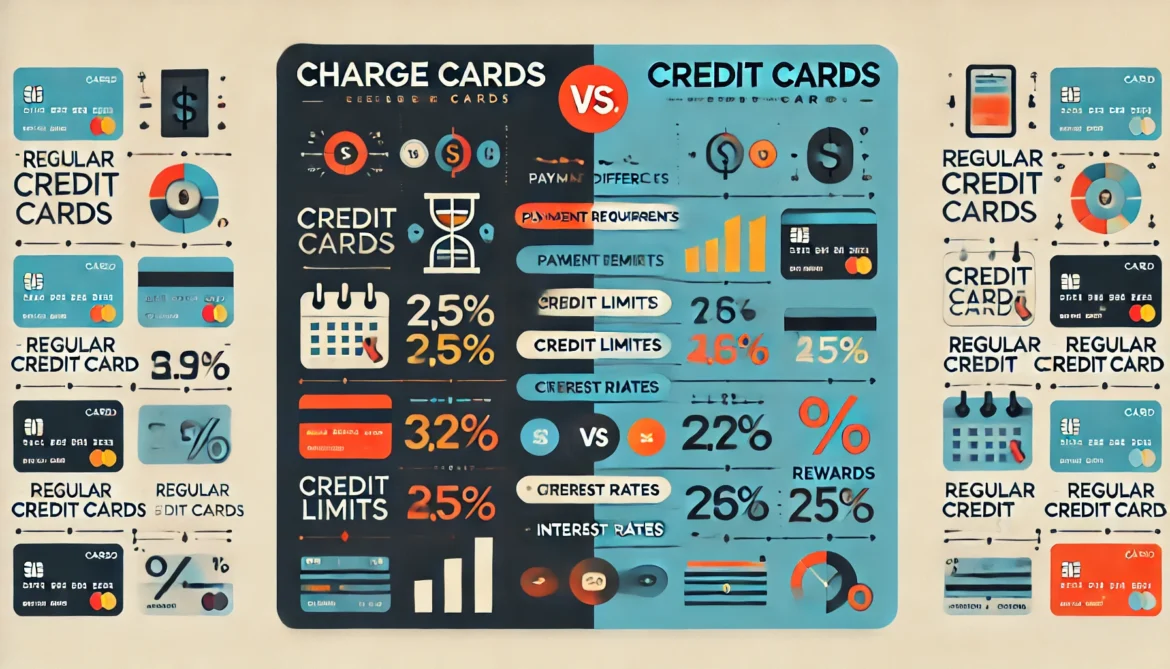
Charge Card vs Regular Credit Card: So, what really sets a charge card apart from a regular credit card? If both have spending limits, dynamic adjustments, and pre-approval for big purchases, is there a real difference? Let’s break it all down.
What is a Charge Card?
A charge card is a payment card that requires the full balance to be paid off every month. Unlike a traditional credit card, it doesn’t have a fixed spending limit but rather an adjustable limit based on your spending habits, income, and history with the issuer.
Key Features of a Charge Card:
- No preset spending limit (but not unlimited)
- Full balance due each month
- No interest charges since you can’t carry a balance
- Higher approval standards and stricter eligibility requirements
- Exclusive rewards & benefits (e.g., airport lounge access, concierge services)
Popular charge cards include:
- American Express Gold Card
- American Express Platinum Card
What is a Regular Credit Card?
A credit card allows users to borrow money up to a fixed credit limit and repay it over time, either in full or through minimum monthly payments. Unlike charge cards, credit cards allow revolving credit, meaning you can carry a balance month-to-month while accruing interest.
Key Features of a Regular Credit Card:
- Fixed spending limit (e.g., $5,000, $10,000, or even $50,000+ for premium cards)
- Minimum payments allowed (carry a balance if needed)
- Interest charges apply if the balance isn’t paid in full
- Flexible repayment options
- Limit enhancements available based on income and credit score
Popular credit cards include:
- Chase Sapphire Reserve
- Citi Prestige Card
- Capital One Venture X
Charge Card vs. Credit Card: The Key Differences
| Feature | Charge Card | Credit Card |
|---|---|---|
| Spending Limit | No preset limit (but transactions can still be declined) | Fixed limit (can be increased on request) |
| Repayment Requirement | Full balance due monthly | Minimum payments allowed |
| Interest Charges | None (since balance must be paid off) | Yes (if balance is carried over) |
| Overlimit Facility | Dynamic limits based on spending | Overlimit spending may be allowed for a fee |
| Rewards & Perks | Premium rewards, luxury benefits | Wide range of rewards & cashback options |
| Approval Standards | Stricter, higher income & credit requirements | Varies, from basic to premium tiers |
Why Do Charge Cards Have ‘No Preset Spending Limit’?
Here’s where things get tricky. Many charge card holders believe they can spend infinitely, but in reality, charge cards do have shadow limits. This means:
- If you suddenly spend way more than usual, the transaction may be declined.
- You can pre-authorize large purchases, but that’s not much different from requesting a credit limit increase on a regular card.
- Spending limits adjust dynamically based on usage, history, and income—again, similar to how some premium credit cards offer overlimit spending flexibility.
Step-by-Step Guide: Which One is Right for You?
Evaluate Your Spending Habits
- If you always pay your balance in full, a charge card might be ideal.
- If you sometimes need to carry a balance, a credit card is better.
Consider Interest Rates & Fees
- Charge cards charge no interest, but they have higher annual fees.
- Credit cards let you pay over time, but interest can add up quickly.
Think About Your Credit Score
- Charge cards require excellent credit.
- Credit cards have options for all credit levels.
Look at Rewards & Perks
- Charge cards often have premium benefits (e.g., lounge access, concierge services).
- Credit cards offer varied rewards like cashback, travel points, and statement credits.
Determine Your Income Stability
- Charge cards require consistent high income since balances must be paid in full.
- Credit cards allow flexibility with minimum payments if needed.
The Verdict: Charge Card vs. Credit Card – Which One Wins?
It all comes down to your financial lifestyle:
- If you never carry a balance, love rewards, and have high income, go for a charge card.
- If you prefer flexibility and occasional financing, a credit card is better.
- If you love rewards but also want balance-carrying options, a premium credit card might be your best bet.
Frequently Asked Questions
What is the main difference between a charge card and a regular credit card?
A charge card requires you to pay off the entire balance in full each month, whereas a regular credit card allows you to carry a balance and pay it off over time with interest charges.
Can I carry a balance with a charge card?
No, charge cards do not allow you to carry a balance. The full balance must be paid off by the due date, or you may face late fees or penalties.
Do charge cards have a credit limit?
Charge cards typically don’t have a preset spending limit, but this doesn’t mean unlimited spending. The amount you can spend is based on factors like your payment history and income. Regular credit cards, on the other hand, have a specific credit limit.
Are the rewards and benefits different for charge cards and regular credit cards?
Both charge cards and regular credit cards offer rewards like cashback, points, or travel miles, but charge cards may offer more exclusive perks, such as access to premium services or better reward rates, especially for high-spending customers.
Which is better for building credit: a charge card or a regular credit card?
Both types of cards can help build credit when used responsibly. However, since charge cards require timely full payments, they can be a good way to demonstrate financial discipline. Regular credit cards may offer more flexibility with monthly payments, but carrying a balance could negatively impact your credit score.
Conclusion
Both charge cards and regular credit cards serve as convenient payment methods, but they have key differences in terms of payment requirements, fees, and usage flexibility. A charge card requires full payment of the balance each month, making it ideal for those who can pay off their balances in full and avoid interest charges. However, it may come with higher annual fees and lack of preset spending limits, which can benefit individuals who frequently make large purchases.
On the other hand, a regular credit card offers more flexibility by allowing users to carry a balance and make minimum payments over time, though it typically comes with interest charges. Credit cards are often more accessible due to lower annual fees and easier approval requirements.
