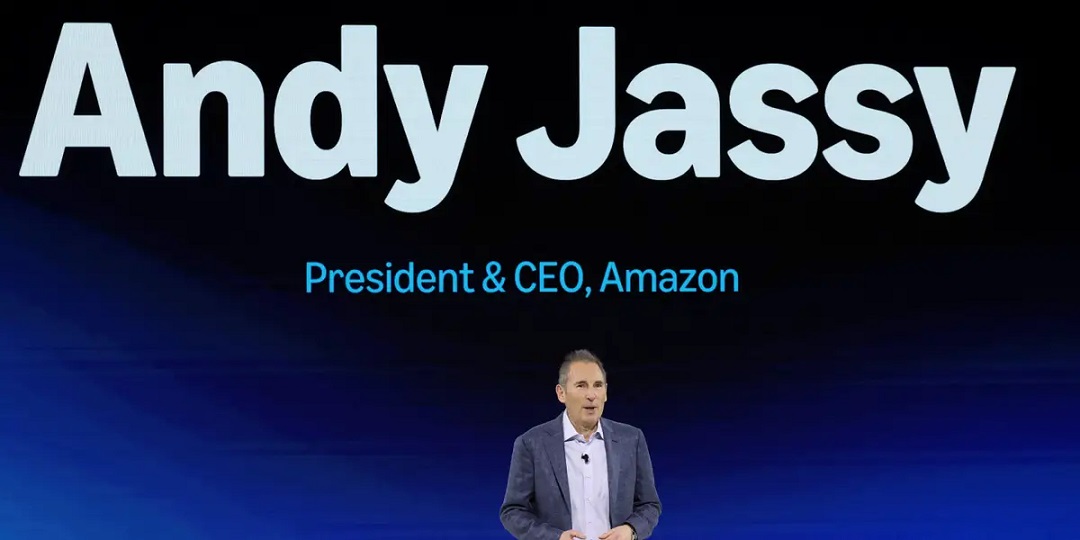
Executive Pay Reflects Amazon’s Market Strength and Long-Term Incentive Structure
Amazon CEO, Andy Jassy, earned a total compensation of $40.1 million in 2024, a 37% increase from the $29.2 million reported in 2023, according to the company’s annual proxy statement filed in April 2025. This significant rise was driven primarily by a sharp increase in the value of vested stock awards, fueled by a robust 40% surge in Amazon stock price during 2024. The company’s stock performance outpaced broader market indices, reflecting strong investor confidence in Amazon’s diverse business segments, including e-commerce, Amazon Web Services (AWS), Amazon Prime, Alexa, logistics, and its growing emphasis on artificial intelligence (AI). This analysis explores Jassy’s compensation structure, its alignment with Amazon CEO strategic priorities, and the broader context of the company’s operations from its Seattle headquarters.

Breakdown of Jassy’s 2024 Compensation
Jassy’s compensation package in 2024 comprised several components, with the majority tied to the vesting of stock awards from a 2021 equity grant. Below is a detailed breakdown of the compensation elements:
- Stock Awards: The largest portion, $38.5 million, came from the vesting of 211,000 shares in 2024, down from 225,340 shares in 2023. Despite vesting fewer shares, the value of these awards increased significantly from $27.8 million in 2023 due to Amazon’s stock price appreciation. The stock surged over 40% in 2024, driven by strong performance in AWS and optimism about Amazon’s AI initiatives.
- Base Salary: Jassy’s base pay remained steady at $365,000, consistent with the previous year. This relatively modest salary aligns with industry norms for tech CEOs, where the bulk of compensation comes from equity.
- 401(k) Contributions: Amazon contributed $6,900 to Jassy’s 401(k) plan, a standard benefit for executives.
- Security Costs: Personal security expenses for Jassy totaled $1.12 million in 2024, up from $986,164 in 2023. These costs reflect the heightened security measures required for a high-profile CEO leading a global corporation.
- HSR Filing Fee: Amazon covered a $105,000 fee related to the Hart-Scott-Rodino (HSR) Act on Jassy’s behalf, a new expense in 2024 tied to regulatory requirements for certain stock transactions.
The structure of Jassy’s compensation, particularly the reliance on stock awards, ties his financial incentives to Amazon’s long-term performance. The 2021 equity grant, valued at $212 million when awarded, vests over a 10-year period through 2031. The vesting schedule is designed to decrease the number of shares awarded each year, assuming stock price growth over time, which aligns executive rewards with shareholder value creation.
Context of the 2021 Equity Grant
When Jassy succeeded Jeff Bezos as Amazon’s CEO in July 2021, he received a substantial equity grant to secure his leadership through a transformative period for the company. Valued at $212 million at the time, this grant was structured to vest over a decade, with no performance-based conditions attached. This approach has drawn criticism from some shareholders and proxy advisory firms, who argue that tying vesting to specific financial or operational milestones could better align executive incentives with company performance. However, Amazon’s board has defended the structure, emphasizing that it encourages long-term strategic focus over short-term gains.
The reduction in vested shares from 225,340 in 2023 to 211,000 in 2024 reflects the deliberate design of the grant, which front-loads vesting in earlier years and tapers off over time. This structure assumes that rising stock prices will offset the declining number of shares, maintaining or increasing the total value of the awards. In 2024, this assumption proved correct, as Amazon’s stock rally significantly boosted the value of Jassy’s vested shares.
Amazon’s Stock Performance and Market Context
stock climbed more than 40% in 2024, outperforming the S&P 500 and Nasdaq indices. This rally was underpinned by several factors:
- AWS Growth: Web Services, the company’s cloud computing arm, continued to dominate the global cloud market, competing fiercely with Microsoft Azure and Google Cloud. AWS reported strong revenue growth in 2024, driven by demand for cloud infrastructure and AI-related services.
- AI Investments: Advancements in AI, particularly through AWS’s AI and machine learning offerings, bolstered investor optimism. The company’s focus on generative AI and partnerships with AI startups further enhanced its market position.
- E-commerce Resilience: Despite macroeconomic challenges, Amazon’s e-commerce segment maintained its leadership in online retail, supported by innovations in logistics and fulfillment.
- Amazon Prime and Digital Services: Growth in Prime memberships and engagement with digital services like Prime Video and Alexa contributed to diversified revenue streams.
Stock faced volatility in early 2025, declining more than 13% year-to-date as of April 2025. This dip followed broader market turbulence, including a sharp sell-off triggered by tariff announcements from President Trump. While the stock partially recovered, the volatility underscores the challenges of sustaining 2024’s gains in a shifting economic landscape.

Pay Ratio and Employee Compensation
Amazon’s proxy statement included a pay ratio disclosure, as required by the U.S. Securities and Exchange Commission (SEC). Using the SEC’s formula, Jassy’s non-equity compensation (base salary, security costs, and the HSR fee) totaled $1,596,889 in 2024. This figure was compared to the median employee compensation of $37,181, which includes full- and part-time permanent and temporary employees worldwide, excluding the CEO. The resulting pay ratio was 43:1, up from 37:1 in 2023, driven by increased security costs and the HSR fee.
In the U.S., median annual compensation rose to $47,990 in 2024, up from $45,613 in 2023, reflecting incremental wage improvements. While Amazon has faced criticism for its labor practices, particularly in warehouses, the company has emphasized investments in employee wages, benefits, and safety initiatives. The pay ratio, while high, is lower than some peers in the tech industry, where ratios often exceed 100:1 due to larger equity grants.
Comparison with Peer CEOs
To contextualize Jassy’s compensation, consider the 2024 pay packages of other tech and retail CEOs, excluding unvested stock awards:
- Satya Nadella (Microsoft): Realized compensation of $51.9 million, driven by Microsoft’s strong cloud and AI performance.
- Doug McMillon (Walmart): Earned $34.9 million, reflecting Walmart’s focus on retail and e-commerce growth.
- Sundar Pichai (Alphabet/Google): Received $164.2 million, bolstered by Alphabet’s dominance in search and cloud.
Jassy’s $40.1 million places him in the middle of this group, though his total compensation is heavily tied to stock performance, unlike some peers with larger cash or bonus components. The absence of new stock grants in 2024 further distinguishes Jassy’s package, as it relies entirely on the 2021 grant.
Amazon’s Strategic Landscape in 2024
From its hometown in Seattle, Amazon operates a sprawling empire that spans e-commerce, cloud computing, digital services, logistics, and devices. Below is an in-depth look at the company’s key business segments and their contributions to its 2024 performance.
E-commerce: The Core of Amazon’s Business
Amazon’s e-commerce platform remains the world’s largest, with a vast selection of products, competitive pricing, and rapid delivery. In 2024, the company continued to optimize its fulfillment network, leveraging advanced robotics and AI to streamline warehouse operations. Investments in same-day and next-day delivery capabilities strengthened Amazon’s competitive edge against rivals like Walmart and Shopify. The e-commerce segment also benefited from growth in third-party seller services, which generate high-margin revenue through fees and advertising.
Amazon Web Services (AWS): The Profit Engine
AWS, Amazon’s cloud computing division, remains the company’s most profitable segment. In 2024, AWS maintained its leadership in the global cloud market, with a share estimated at 31%, ahead of Microsoft Azure (20%) and Google Cloud (10%). The division’s growth was driven by demand for cloud infrastructure, data analytics, and AI services. AWS’s Bedrock platform, which enables customers to build and deploy generative AI models, saw significant adoption, positioning Amazon as a key player in the AI race.
Amazon Prime: Driving Customer Loyalty
Amazon Prime, with over 200 million global subscribers, is a cornerstone of the company’s ecosystem. In 2024, Prime continued to drive customer retention through benefits like free shipping, Prime Video, and exclusive deals. The service’s value proposition expanded with enhancements to Prime Video’s content library and integrations with Alexa-enabled devices. Prime’s high renewal rates and cross-selling opportunities bolstered Amazon’s revenue diversification.
Alexa and Devices: Smart Home Innovation
Alexa, Amazon’s voice assistant, powers a growing ecosystem of smart home devices, including Echo speakers, Fire TVs, and Ring security products. In 2024, Amazon expanded Alexa’s capabilities with AI-driven features, such as improved natural language processing and personalized recommendations. The company also launched new devices, including updated Echo models and a refreshed Kindle lineup, reinforcing its presence in the consumer electronics market.
Logistics: Redefining Delivery
Amazon’s logistics network, encompassing fulfillment centers, delivery vans, and cargo planes, is a competitive moat. In 2024, the company expanded its Amazon Air fleet and invested in electric delivery vehicles to enhance sustainability. Innovations like drone delivery, piloted through Amazon Prime Air, progressed toward commercial scalability, with trials expanding in select U.S. markets. These efforts reduced delivery times and costs, further solidifying Amazon’s dominance in last-mile logistics.
AI and Emerging Technologies
Amazon’s investments in AI have become a strategic priority, with applications across its business units. In e-commerce, AI powers product recommendations and inventory management. In AWS, AI services like SageMaker and Bedrock drive enterprise adoption. Alexa’s AI enhancements improve user interactions, while logistics benefits from AI-optimized routing and warehouse automation. Amazon’s partnership with Anthropic, an AI startup, and its development of custom AI chips (e.g., Trainium and Inferentia) underscore its commitment to leading in AI innovation.
Challenges and Criticisms
Despite its successes, Amazon faced challenges in 2024. Labor controversies, including unionization efforts at warehouses, continued to draw scrutiny. Regulatory pressures also intensified, with antitrust investigations in the U.S. and Europe examining Amazon’s marketplace practices and data usage. The company’s environmental impact, particularly its carbon footprint, remained a point of contention, though Amazon has committed to net-zero carbon emissions by 2040 through initiatives like The Climate Pledge.
Jassy’s compensation structure also attracted criticism. The lack of performance-based vesting in his 2021 equity grant raised concerns among some investors, who argued that tying awards to metrics like revenue growth or sustainability goals could better align executive and shareholder interests. Proxy advisory firms like ISS and Glass Lewis have flagged similar concerns, though Amazon’s board maintains that the long-term vesting schedule incentivizes sustained value creation.
Economic and Market Outlook for 2025
Amazon’s stock performance in early 2025 reflects broader market uncertainties. The 13% year-to-date decline as of April 2025 was partly driven by tariff announcements from President Trump, which raised concerns about increased costs for imported goods. While Amazon’s diversified revenue streams provide resilience, potential trade disruptions could impact its e-commerce margins. AWS’s growth trajectory, however, is expected to remain strong, as demand for cloud and AI services continues to rise.
Jassy’s leadership will be critical in navigating these challenges. His prior role as AWS’s founding CEO equips him to drive innovation in cloud and AI, while his focus on operational efficiency—demonstrated by cost-cutting measures in 2023—positions Amazon to weather economic headwinds. The company’s investments in AI, logistics, and sustainability are likely to shape its trajectory in 2025 and beyond.
FAQs
What was Andy Jassy’s total compensation in 2024, and what drove the increase from 2023?
Andy Jassy’s total compensation in 2024 was $40.1 million, a 37% increase from $29.2 million in 2023. The primary driver was the increased value of vested stock awards, which rose to $38.5 million from $27.8 million due to a 40% surge in Amazon’s stock price. Despite vesting fewer shares (211,000 in 2024 vs. 225,340 in 2023), the higher stock value significantly boosted his compensation. Other components included a $365,000 base salary, $6,900 in 401(k) contributions, $1.12 million in security costs, and a $105,000 HSR filing fee.
How is Jassy’s compensation structured, and why has it faced criticism?
Jassy’s compensation is heavily tied to a $212 million equity grant awarded in 2021 when he became CEO, vesting over 10 years through 2031. In 2024, $38.5 million of his compensation came from vested shares. The grant’s lack of performance-based conditions has drawn scrutiny from shareholders and proxy advisory firms, who argue it should be tied to specific financial or operational metrics. Amazon’s board defends the structure, stating it incentivizes long-term value creation aligned with stock price growth.
How does Amazon’s stock performance in 2024 relate to Jassy’s compensation?
Amazon’s stock rose over 40% in 2024, outpacing broader market indices, due to strong growth in AWS, advancements in AI, and resilience in e-commerce and Prime services. This rally directly increased the value of Jassy’s vested stock awards, which accounted for 96% of his 2024 compensation. However, the stock declined over 13% in early 2025, reflecting market volatility from tariff announcements, which could impact future vesting values.
How does Jassy’s compensation compare to other tech CEOs, and what is Amazon’s pay ratio?
Jassy’s $40.1 million compensation in 2024 is moderate compared to peers like Microsoft’s Satya Nadella ($51.9 million), Walmart’s Doug McMillon ($34.9 million), and Alphabet’s Sundar Pichai ($164.2 million). Amazon’s 2024 pay ratio, per SEC requirements, was 43:1, comparing Jassy’s non-equity compensation ($1,596,889) to the median employee’s ($37,181). The ratio rose from 37:1 in 2023 due to higher security costs and an HSR fee, though it remains lower than some tech industry peers.
What role did Amazon’s business segments play in its 2024 success, influencing Jassy’s compensation?
Amazon’s 2024 stock rally, which boosted Jassy’s compensation, was driven by strong performance across its segments: AWS led with robust cloud and AI growth, e-commerce maintained dominance through logistics innovations, Amazon Prime grew subscriptions, and Alexa/devices advanced with AI enhancements. These successes, particularly AWS’s market leadership and AI investments, increased investor confidence, elevating the stock price and, consequently, the value of Jassy’s vested shares.
Conclusion
Andy Jassy’s $40.1 million compensation in 2024 reflects Amazon’s strong stock performance and strategic progress across its diverse business units. The vesting of his 2021 equity grant, combined with a modest base salary and other benefits, ties his financial rewards to the company’s long-term success. From its Seattle headquarters, Amazon continues to lead in e-commerce, cloud computing, digital services, and logistics, with AI emerging as a transformative force. While challenges like labor disputes and regulatory scrutiny persist, Jassy’s leadership and Amazon’s operational strengths position the company for continued growth. The compensation structure, though debated, underscores Amazon’s commitment to aligning executive incentives with shareholder value in a competitive and dynamic market.
