According to Psychology Today, up to three-quarters of bereaved people report some form of after-death communication—dreams, feelings, hearing a favorite song, or seemingly random signs. While the most likely explanation is that grief tricks our minds into seeking comfort, let’s entertain the possibility that communication with the afterlife could be real.
If it’s possible, the methods are varied, hazy, and widely debated. Here’s a playful look at different ways people attempt to connect with the departed, complete with arbitrary “usefulness” ratings.
Ouija Board
Sold since the 1890s, Ouija boards straddle the line between toy and occult tool. Skeptics blame the ideomotor effect—tiny unconscious movements—but believers swear by spooky results.
- How to try: Buy one from Parker Brothers, follow the instructions, and invite another participant.
- Warnings: Some claim it invites demons. Unlikely—ghosts probably have better things to do.
- Rating: 4/10 – Fun if you’re curious, but setup and coordination are tricky.
Mirror Gazing / Psychomanteum
From crystal balls to obsidian “shew-stones,” reflective surfaces have long been tied to occult practices. Modern mirror rituals, popularized by Raymond Moody, involve sitting in a dimly lit room, focusing on a loved one, and hoping for a vision.

- Pro tip: Avoid saying “Bloody Mary” three times.
- Rating: 6/10 – More atmospheric than effective, but possibly entertaining.
Hiring a Medium
Paying a psychic is widely discouraged. Charlatans have exploited grief for centuries, and spirits, humorously, apparently refuse to work for free.
- Rating: 0/10 – Guaranteed disappointment.
Séances
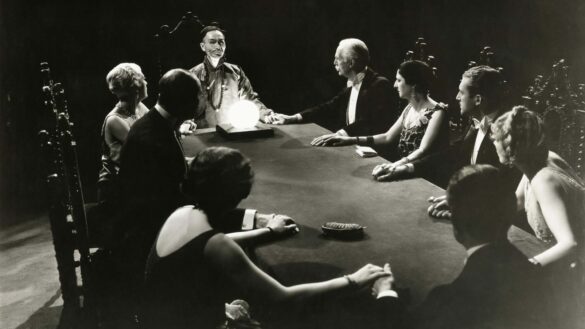
Victorian-era séances were attended by figures like Queen Victoria and Mary Todd Lincoln. Table-rattling, bells, and floating objects were common tricks—but meaningful conversation was rare.
- Rating: 4/10 – Entertaining, but not especially effective for genuine contact.
Telephone to the Dead
Alexander Graham Bell dabbled in the idea of a spirit phone, hoping electricity could transmit ghostly whispers.
- Rating: 8/10 – Hypothetically brilliant, if it worked. Modern tech hasn’t caught up.
Through a Child
Babies are sometimes jokingly said to retain a connection to the spirit world before learning language.
- Rating: 0/10 – Purely humorous speculation.
Tape Recorders, EMF Detectors, and Technology
Ghost hunters use EMF meters and tape recorders to capture EVP (electronic voice phenomena). You can try this at home with a smartphone voice memo app.
- Rating: 3/10 – Captured “voices” are usually random noise or interference.
Near-Death Experiences
Many who have been clinically dead report seeing deceased loved ones, though most revived patients report nothing at all. Extreme caution advised.
- Rating: 1/10 – Not exactly a practical method.
Read More: Today’s NYT Connections Hints (and Answer) for Thursday, May 22, 2025
In Your Mind
Prayer, meditation, or silent conversation with the dead is arguably the most common method. It’s usually one-way, but it provides comfort and a sense of guidance.
- Rating: 9/10 – Safe, flexible, and emotionally supportive. Great for reflection or settling old arguments.
Conclusion
From Ouija boards to mental conversations, the ways to “talk to the dead” range from playful and theatrical to comforting and introspective. Whether you’re a skeptic or a believer, the goal is usually the same: connection, closure, and a little comfort.
