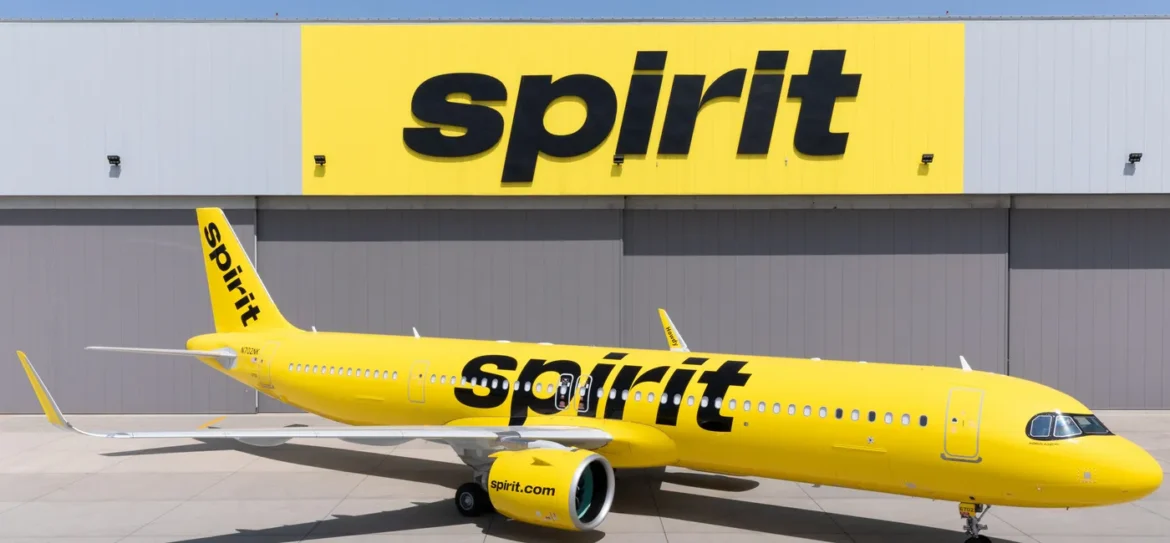
Spirit Airlines, the Florida-based ultra-low-cost carrier known for its no-frills travel model, has officially rejoined the NYSE American exchange. This transition marks a significant development in the company’s financial journey as it navigates a turbulent period in the aviation sector. The move comes after a series of financial adjustments and operational challenges that have pushed the airline to reposition itself both on Wall Street and in the skies.
Background on Spirit Airlines and Its Public Trading History
Spirit Airlines (ticker symbol: SAVE) first went public in 2011 and has since remained a notable player in the U.S. airline industry. Historically traded on the Nasdaq, the airline has attracted both supporters and critics due to its ultra-low-cost operating model, which includes unbundled fares and a strong emphasis on operational efficiency.
Following significant disruptions caused by the COVID-19 pandemic, changing consumer preferences, and rising fuel costs, Spirit has faced mounting financial pressure. The company’s shift to the NYSE American is a strategic move aimed at preserving its listing status amid tighter compliance requirements and continued losses.
Understanding NYSE American and Its Role
The NYSE American (formerly the American Stock Exchange) is a market designed for small to mid-cap companies, offering greater flexibility and support for issuers with specific growth strategies. By transitioning to this exchange, Spirit Airlines gains access to a different segment of institutional investors while maintaining public trading capabilities.
This move should not be interpreted as a delisting or a sign of collapse. Rather, it is a repositioning that reflects Spirit’s need to stay compliant with trading regulations, particularly regarding minimum share prices and market capitalization thresholds required by major exchanges like Nasdaq and NYSE.
Financial Struggles and Market Pressures
Spirit’s decision to rejoin the NYSE American exchange follows a difficult fiscal period. The airline has seen declining revenue per passenger, increasing operating costs, and a failed merger with JetBlue Airways—an acquisition that would have created a stronger competitor to the Big Four U.S. airlines.
Investors have grown concerned over Spirit’s liquidity and long-term profitability. The move to a more flexible trading platform may provide breathing room as Spirit works to restructure its operations, adjust route networks, and possibly seek strategic partnerships or financial backing.
What the Transition Means for Investors
For shareholders, the shift to NYSE American may raise questions, especially regarding stock valuation and liquidity. However, Spirit Airlines remains a publicly traded company with full transparency and reporting obligations. The transition could provide:
- Enhanced visibility among small-cap-focused investors
- Continued compliance with listing standards during restructuring
- Opportunities for strategic repositioning within the capital markets
While stock prices may experience short-term volatility, long-term investors may view this as a strategic step for survival and eventual recovery.
Operational Implications and Future Strategy
Operationally, Spirit continues to adjust its network to meet changing demand. It has scaled back service on underperforming routes while reinforcing profitable ones, especially those connecting leisure destinations across the U.S., Mexico, and the Caribbean.
Moreover, the airline is expected to enhance its fleet efficiency and customer experience while staying true to its low-cost roots. Spirit’s leadership has reiterated its commitment to delivering affordable air travel to millions of Americans, even during periods of market correction.
Industry Context and Competitive Outlook
Spirit’s repositioning occurs within a broader airline industry shift. Budget carriers across the globe are adjusting their models in response to inflation, changing labor dynamics, and a more cost-conscious traveler.
While larger airlines benefit from diversified revenue streams, regional and ultra-low-cost carriers like Spirit must balance affordability with sustainability. Spirit’s reentry into the NYSE American could position it for potential acquisition talks, debt restructuring, or a gradual return to profitability.
Conclusion
Spirit Airlines’ return to the NYSE American represents a calculated decision to stay active in capital markets while stabilizing its operations during a challenging economic period. The move underscores the airline’s determination to remain a viable low-cost option for travelers and an active participant in the U.S. aviation market.
As Spirit navigates this phase, investors, analysts, and travelers alike will be watching closely to see how the airline adapts—and whether it can soar again in a highly competitive landscape.
