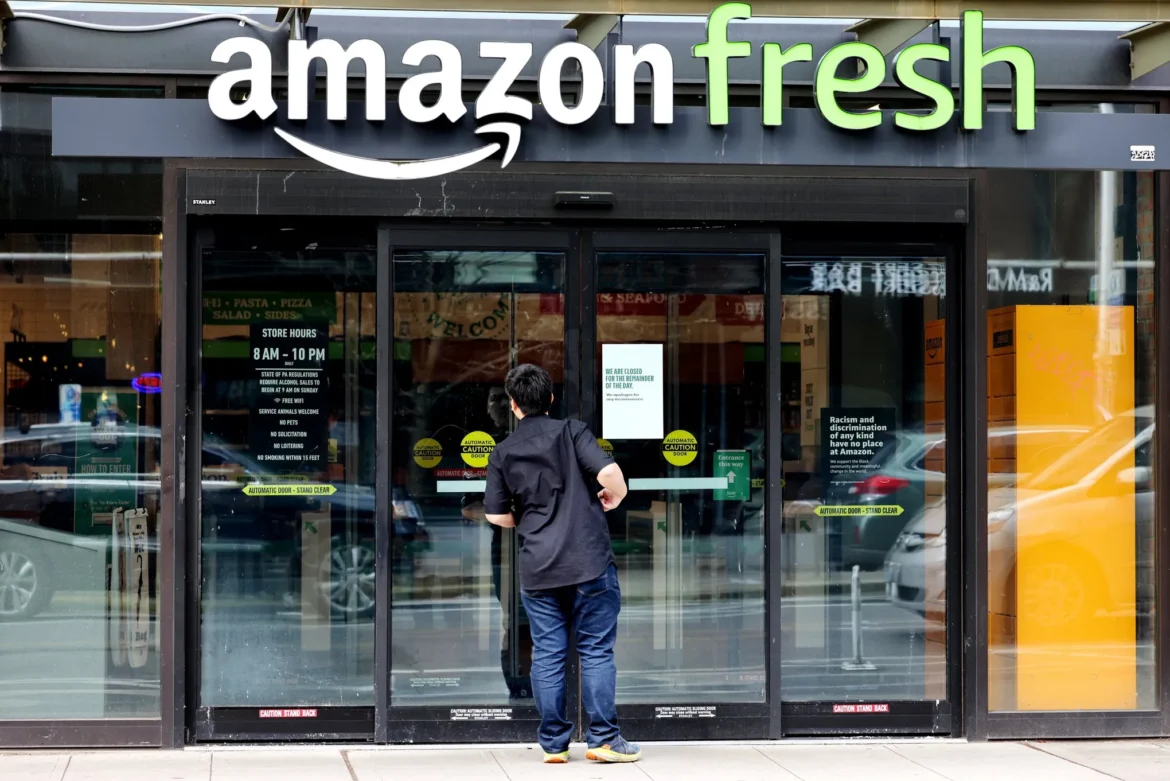
In a move that has drawn attention across the retail industry, Amazon has closed one of its Amazon Fresh grocery stores located in Federal Way, Washington. The closure marks a pivotal moment in the company’s evolving grocery business, signaling a strategic reassessment of its brick-and-mortar retail efforts. While Amazon emphasized its ongoing commitment to the grocery sector, the decision underscores the complex challenges the tech giant continues to face as it tries to carve out a more substantial role in physical food retail.
Federal Way Fresh Store Closure: A Closer Look
Amazon confirmed that its Amazon Fresh grocery store in Federal Way permanently closed its doors on Sunday, July 7, 2025. The announcement came just days earlier, with confirmation following on Monday from Amazon spokesperson Griffin Buch, who provided a statement to GeekWire.
“Certain store locations work better than others, and after an assessment of our offering, we’ve decided to close our Amazon Fresh store in Federal Way,” Buch stated.
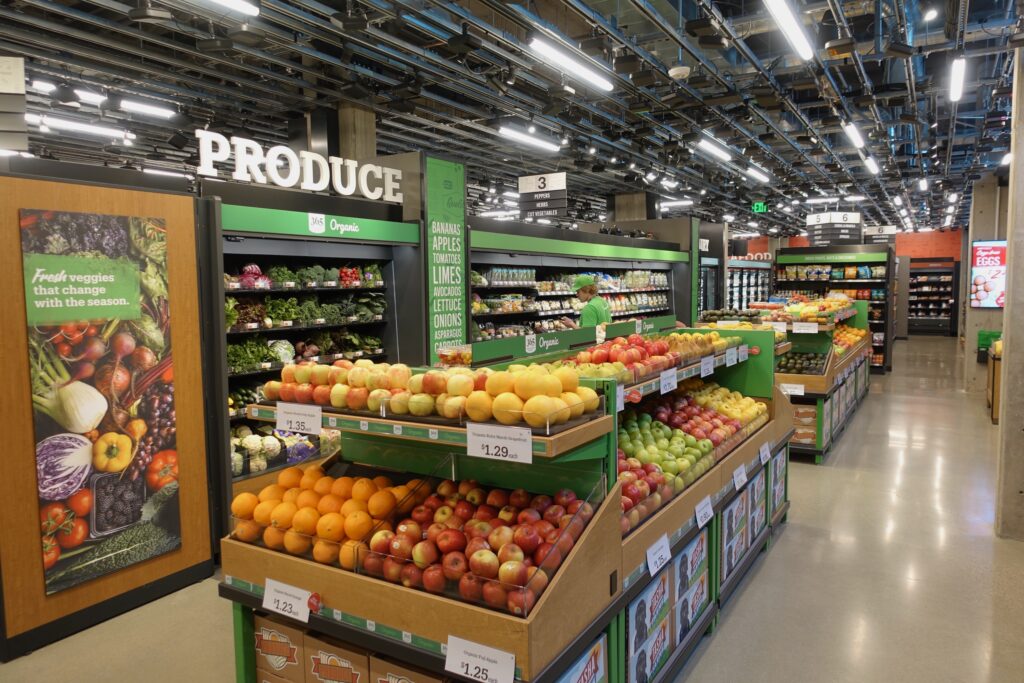
The closure was relatively abrupt, surprising customers and even some employees. According to a filing with the Washington State Employment Security Department, the shutdown will impact approximately 125 workers, with an effective separation date listed as August 19, 2025. Amazon emphasized that affected employees are being offered transition support and the opportunity to transfer to other roles at nearby Amazon facilities or stores.
Timeline: From Grand Opening to Silent Farewell
The Federal Way Amazon Fresh location opened on August 11, 2022, inside a former Sears building at The Commons, a regional shopping mall located roughly 22 miles south of Seattle. The launch was marked by enthusiasm and strong local interest. Crowds lined up early on opening day, lured by the promise of Amazon-branded tote bags and gift cards of varying amounts. For many in the area, the store symbolized the arrival of a new, tech-forward shopping experience.
However, less than three years later, the doors have closed for good.
Rumors of the impending shutdown first surfaced on Reddit late last week, when a user posted that the store was set to shutter in just four days. Despite the short notice, there were no signs of major liquidation sales or media fanfare—only quiet shelves and a closing notice.
Impacted Employees and Transition Support
The closure affects 125 Amazon workers, a significant number in the retail context of a single store. Amazon has stated that it is offering support to all impacted employees. This includes assistance in transferring to alternative roles within the company, such as positions in nearby Amazon Fresh or Whole Foods locations, Amazon warehouses, or delivery facilities.
Historically, Amazon has emphasized its internal mobility programs, allowing employees to pursue alternative roles or skill development within the company. Whether that will be sufficient to absorb the impacted Federal Way workforce remains to be seen.
A Broader Pattern of Closures in Amazon’s Grocery Strategy
This isn’t an isolated incident. Just a week earlier, Amazon also shuttered a Whole Foods location in Seattle’s Capitol Hill neighborhood. That store had been operational for seven years and was situated at the base of a luxury apartment complex at the intersection of Broadway and Madison Street.
In addition, in April 2024, Amazon closed another grocery location in the same neighborhood at 610 E. Pike Street. This store originally launched as an “Amazon Go Grocery” concept but later transitioned to the Amazon Fresh brand. These closures suggest that Amazon is actively pruning its portfolio of underperforming or non-strategic locations.
Still Committed to Grocery, But Selective in Expansion
Despite recent closures, Amazon maintains that it is still committed to its grocery ambitions. According to spokesperson Griffin Buch:
“We remain committed to our grocery offerings and will continue to refine our portfolio of stores as we learn which locations and features resonate most with customers.”
This statement aligns with Amazon’s long-standing approach of iterative learning, experimentation, and data-driven decision-making. Instead of aggressive expansion, the company is now focusing on fine-tuning its store formats, locations, and technologies.
Remaining Amazon Fresh Stores in the Seattle Region
While the Federal Way store is no longer operational, Amazon Fresh still has a presence in the greater Seattle area. As of July 2025, the remaining Amazon Fresh locations include:
- South Jackson Street (Seattle)
- Aurora Avenue North (Seattle)
- Bellevue, WA
These stores remain open and are reportedly benefiting from recent design overhauls that aim to improve customer experience and drive higher engagement.
The Evolution of Amazon Fresh
2007–2016: Online Groceries and Early Experiments
Amazon first entered the grocery space in 2007 with the online launch of Amazon Fresh, delivering fresh produce and household items to homes in select cities. The offering was initially limited and operated under the radar, as Amazon tested logistics and demand.
2017: Whole Foods Acquisition
Amazon shook the grocery industry in 2017 with its $13.7 billion acquisition of Whole Foods Market. The move was seen as Amazon’s boldest step yet into physical grocery retail. It gave Amazon instant access to over 400 stores nationwide, along with a premium grocery brand recognized for organic and high-quality products.
2018–2021: New Formats and Innovations
Following the acquisition, Amazon introduced new retail concepts like Amazon Go, a cashier-less convenience store format utilizing sensor fusion and computer vision. It also tested Amazon Go Grocery stores, larger grocery outlets built on similar tech.
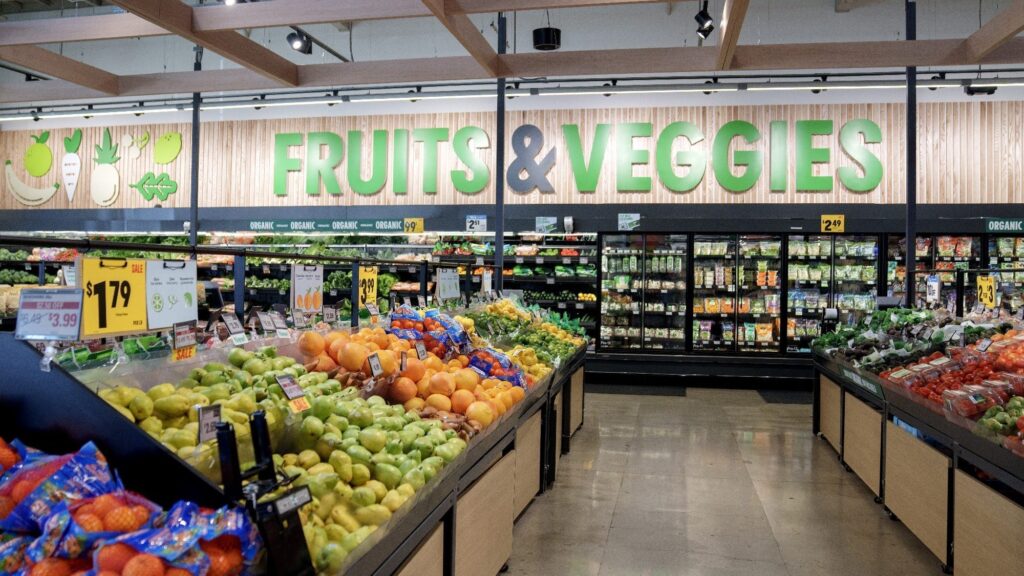
Then came Amazon Fresh stores, aimed at a more mainstream audience. These stores featured modern layouts, private-label items, and technology-forward options like the “Just Walk Out” checkout experience, where customers could skip traditional checkouts entirely.
2022–2023: Expansion and Retrenchment
During this phase, Amazon rapidly expanded its Fresh stores across the U.S., including the now-closed Federal Way location. However, not all new stores met performance expectations. By early 2023, Amazon began reassessing its physical grocery footprint, resulting in closures, project pauses, and major tech shifts.
Challenges in the Grocery Market
Despite its financial and technological muscle, Amazon has found grocery retail to be uniquely challenging. Several factors complicate its success in this space:
Thin Margins
Unlike Amazon’s core e-commerce operations, grocery is a low-margin business. High competition, spoilage, and logistical complexity make it difficult to drive profitability at scale.
Real Estate Risks
Choosing the right locations is crucial. A poorly placed store, such as one in a declining mall or hard-to-access area, can fail despite strong brand backing. The closure of the Federal Way store—located in a mall that once housed a Sears store—may be partially attributed to foot traffic or local demand challenges.
Technology Overreach
While “Just Walk Out” technology was revolutionary, it required substantial infrastructure and operational cost. In 2024, Amazon began scaling back its use of the system in larger Fresh stores, citing customer feedback and technical difficulties. Many redesigned stores now use Dash Carts, smart shopping carts that still offer convenience but at lower implementation complexity.
What’s Working: Positive Signs in Redesign and Spend
According to Amazon, recent redesigns in many of its Amazon Fresh locations have shown promising results. The company reports that average monthly customer spending has increased by more than 20% in these revamped stores.
This suggests that while not all locations have succeeded, Amazon is learning and adapting based on performance metrics and customer behavior.
- New Formats and Innovations: “Daily Shop” and Automation
- Amazon isn’t just scaling back—it’s also innovating. Two notable developments are:
Whole Foods “Daily Shop” Stores
These are smaller, urban-format stores under the Whole Foods brand, focusing on quick trips, essentials, and fresh items. They are designed to cater to city dwellers who prefer frequent, short visits over weekly bulk shopping.
Automated Fulfillment Within Stores
Amazon is testing automated micro-fulfillment centers co-located within Whole Foods stores. These use robotics and AI to quickly process online grocery orders, enhancing delivery speed and in-store pickup efficiency.
Amazon’s Grocery Performance in 2024
Despite physical store closures, Amazon’s grocery business overall continues to thrive in volume. In 2024, Amazon reported more than $100 billion in gross sales of groceries and household essentials—excluding sales from Whole Foods and Amazon Fresh physical stores. This figure primarily reflects online sales via Amazon.com and Prime Pantry.
The takeaway? Amazon continues to dominate in online grocery delivery, even if its brick-and-mortar footprint is undergoing refinement.
Customer Reactions and Community Impact
Local residents and regular shoppers of the Federal Way Fresh store have expressed disappointment over the closure. For many, the store represented not just a place to shop, but a symbol of the city’s modernization and Amazon’s expansion.
Online communities, including Reddit and local forums, featured a mix of concern and resignation. Some users speculated that the location was never well suited for long-term success due to the mall’s decline and competition from nearby grocery chains like Safeway, Trader Joe’s, and WinCo.
What This Closure Means for Amazon’s Future in Grocery
The Federal Way closure—and others like it—points to a more focused, data-informed approach from Amazon. Rather than blanketing the U.S. with Fresh stores, the company is now prioritizing profitability, strategic fit, and customer feedback. This more cautious rollout may ultimately yield a leaner, more successful brick-and-mortar operation.
Amazon’s goal isn’t necessarily to become the largest grocer overnight but to identify where its technology and logistics capabilities can provide a competitive edge in the complex grocery landscape.
Conclusion
The closing of the Federal Way Amazon Fresh store is more than just the end of one location—it’s a window into how Amazon is rethinking its grocery strategy. From initial experimentation to Whole Foods acquisitions, rapid expansion, and now careful consolidation, the company is charting a new course through one of the most competitive and operationally intense retail segments.
As Amazon continues to refine its store formats, invest in new technologies, and respond to customer behavior, its future in grocery will likely look very different from the past. Whether that future includes fewer but more profitable stores, or a renewed emphasis on online and automation remains to be seen. But one thing is clear: Amazon is still very much in the grocery game—it’s just playing smarter now.
