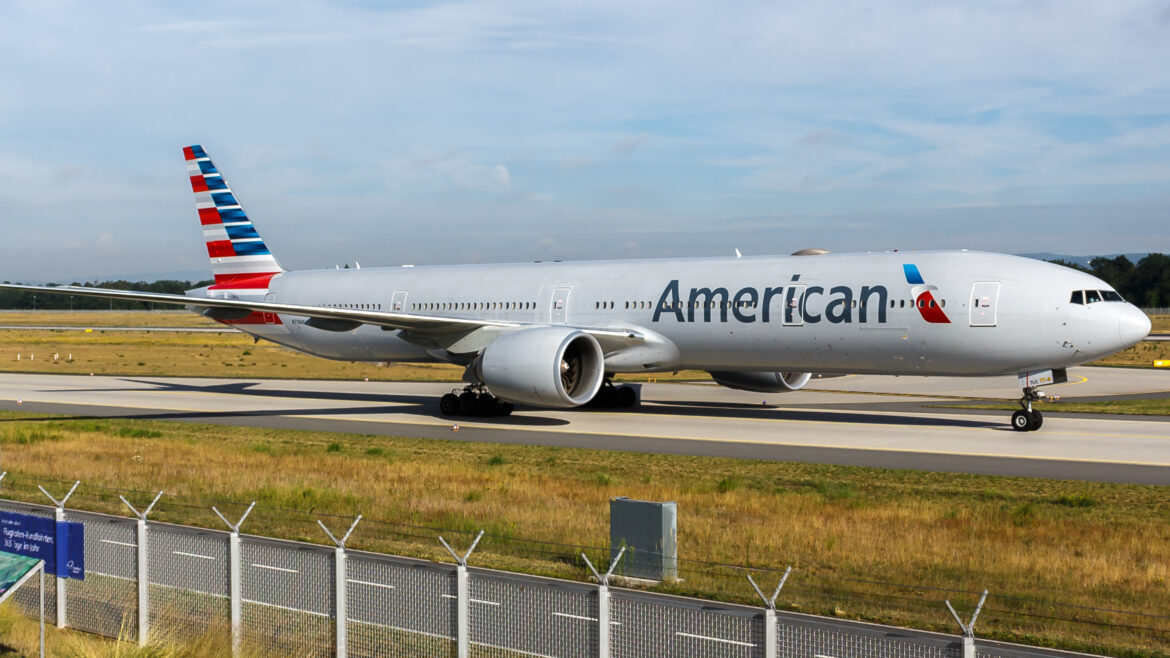
Evaluating the Premium Cabin Before Its Phase-Out in Late 2025
American Airlines Boeing 777-300ER first class, offered on select international routes like London (LHR) to Miami (MIA), represents the carrier’s most premium product, yet it falls short of the world’s top-tier first class offerings. Experienced on a recent nine-hour flight, this cabin provides a comfortable hard product with spacious seats, solid entertainment, and decent amenities, but its soft product—particularly catering and beverages—lacks the sophistication expected of a true first class. With American Airlines set to phase out international first class by late 2025, replacing it with an enhanced business class, this review explores the current offering, framing it as a “business class plus” experience that delivers value for award travelers but disappoints those expecting luxury.
Cabin Configuration and Seat Design
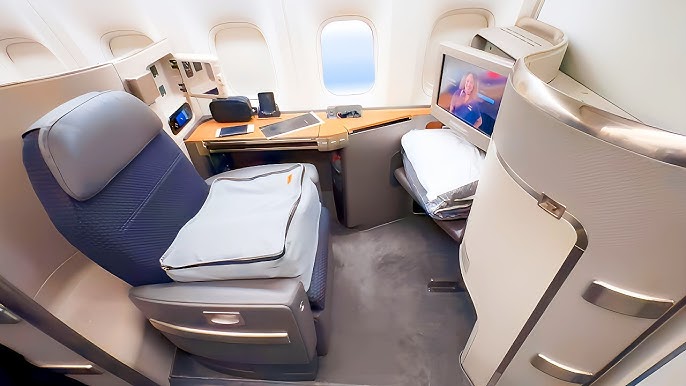
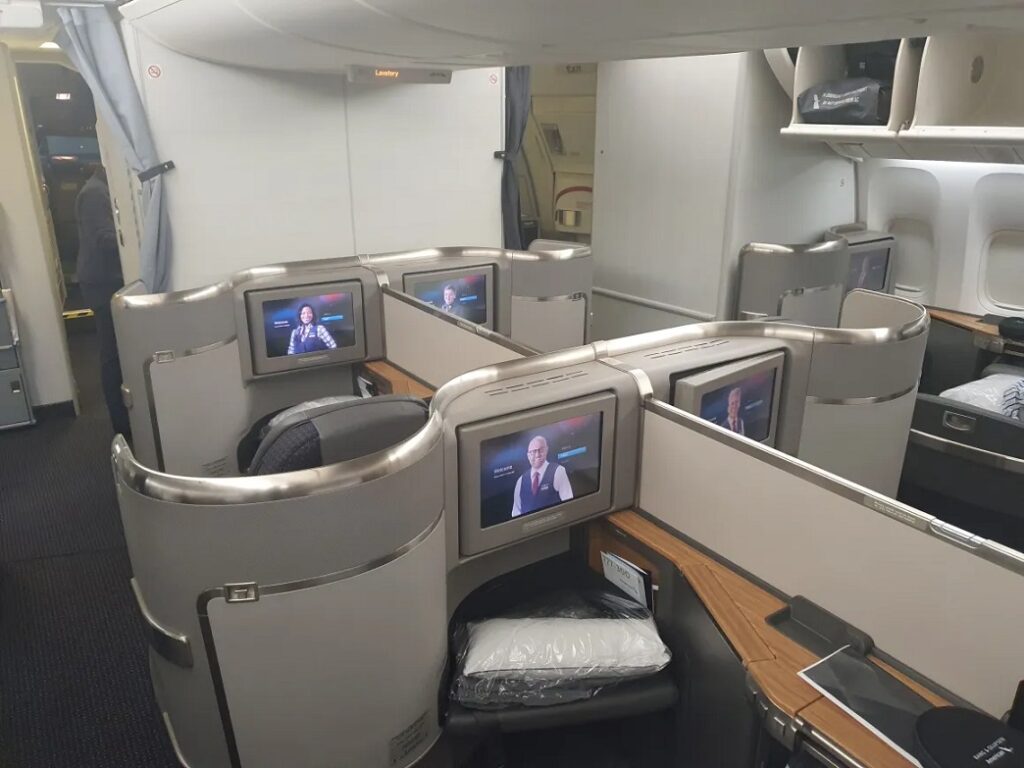
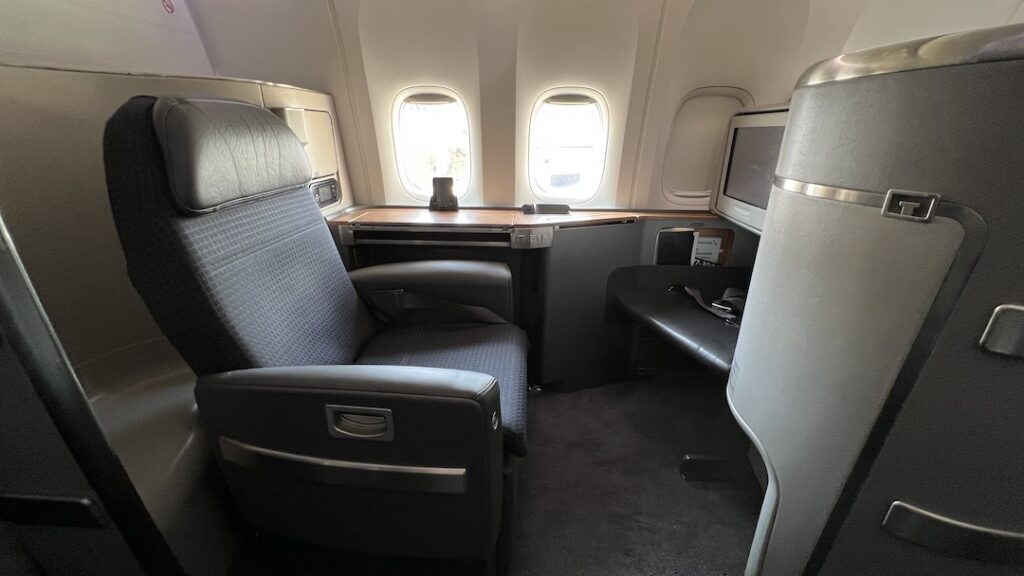
American Airlines’ Boeing 777-300ER first class cabin features eight seats arranged in a 1-2-1 configuration across two rows, offering direct aisle access for all passengers. Each seat measures 21.5 inches wide and converts into a fully flat bed up to 6 feet 7 inches long, providing ample space for lounging and sleeping. A unique feature is the swivel mechanism, allowing the seat to rotate fully toward the window, paired with a pop-out side desk for an “office with a view” experience. This innovative design enhances functionality, particularly for passengers working or dining during the flight.
Despite its spaciousness, the seat lacks privacy, a notable drawback compared to modern business class suites with sliding doors, such as Qatar Airways’ Qsuite or British Airways’ Club Suite. Introduced over a decade ago, the open design feels dated, with no partitions to shield passengers from adjacent seats or the aisle. While the hard product has aged well in terms of comfort and aesthetics, the absence of privacy contrasts with competitors like Emirates, Singapore Airlines, or Cathay Pacific, whose first class suites prioritize seclusion.
In-Flight Entertainment and Connectivity
American Airlines 777-300ER first class offers a robust in-flight entertainment (IFE) system, consistent across its long-haul fleet. The 17-inch touchscreen displays, powered by Panasonic, provide an extensive library of movies, TV shows, documentaries, and games, ensuring passengers remain engaged throughout the flight. The interface is intuitive, with responsive controls and a diverse selection catering to various tastes, from Hollywood blockbusters to international films.
Wi-Fi, also provided by Panasonic, is available for $35 per flight, a steep price but with no data caps. Recent upgrades to American’s wide-body fleet have improved connectivity speeds, enabling seamless browsing, streaming, and productivity. During the flight, consistent performance supported tasks like emailing and video calls, a marked improvement over older systems where slow loading was common. This level of connectivity aligns with industry standards, though free Wi-Fi, as offered by some carriers like Delta on select routes, would enhance the premium experience.
Amenities and Comfort Features
American Airlines differentiates its first class from business class through enhanced amenities. Each passenger receives an amenity kit featuring products from Joann Vargas and Relevant, including skincare essentials like cleanser, moisturizer, and lip balm. The kit is practical, though not as luxurious as those from carriers like Emirates, which include high-end brands like Bulgari. Nest-branded pajamas and slippers, exclusive to first class on long-haul routes, add a touch of comfort, with soft fabrics and a relaxed fit suitable for sleeping.
The bedding, provided by Casper, includes a mattress pad, a large pillow, a day blanket, and a cozy duvet, creating a restful sleep environment. A smaller pillow is available for lounging, and the turndown service ensures the bed is prepared efficiently. While not as plush as the bedding in Singapore Airlines’ first class suites, the setup is competitive with premium business class offerings, ensuring a comfortable rest on overnight flights.
Catering: A Significant Weakness
The catering in American’s 777-300ER first class is a major disappointment, barely distinguishable from the airline’s business class. Service begins with warm mixed nuts and olives, the latter being a minor differentiator from business class, which only offers nuts. The starter tray includes a mixed field greens salad with walnuts, apples, and sultanas, alongside a native lobster appetizer with fennel, grapefruit, and orange dressing. Presentation is basic, with all items served on a single tray, a practice more aligned with economy or dated business class service than a premium cabin.
The soup course, a slow-roasted tomato soup with a pesto crouton, is another first class exclusive, but its simplicity fails to impress. Main course options include organic Scottish salmon with jasmine rice, bok choy, and Asian spices, which, while flavorful, lacks the refinement expected in first class. Dessert, an ice cream sundae, is a highlight, consistent with American Airlines carriers’ strength in customizable sundaes, but it’s not enough to redeem the overall experience.
The pre-arrival snack, a Mediterranean orzo salad with feta, olives, broccolini, tomatoes, and roasted pepper puree, is fresh but unremarkable. The wine list is particularly lackluster, with Nicolas Feuillatte Brut Millesime 2015 as the champagne—a common business class offering on other airlines. Other wines retail for under $12 per bottle, a stark contrast to the premium vintages served by competitors like Lufthansa or Air France in first class. Passengers seeking a true first class dining experience will find American’s catering falls far short of expectations.
Service Quality and Crew Dynamics
Service in American’s first class varies widely based on crew assignment. On this flight, the crew operating the Miami-London route demonstrated strong teamwork, with senior members who frequently bid for this route fostering a sense of camaraderie. One flight attendant stood out for her warm, informal approach, addressing passengers with terms like “honey,” “sweetie,” and “babe,” which added a personable, if unconventional, charm. Her attentiveness and proactive checks on passengers elevated the experience, making the most of American’s limited soft product.
The purser, however, was less engaging, offering a curt boarding greeting focused solely on beverage options without a warm welcome. Another crew member, Arthur, who primarily worked in business class, made a positive impression by assisting first class passengers, showcasing professionalism and enthusiasm. Compared to past experiences, such as a lackluster Dallas-Hong Kong flight, this crew was a relative highlight, though service remains inconsistent across American’s network.
Strategic Context: The Phase-Out of First Class
American’s decision to eliminate international first class by late 2025 reflects a broader industry trend toward premium business class products. The American Airlines 777-300ER’s first class cabin, introduced in 2012, was designed to compete with global carriers but has struggled to match the innovation of competitors. The upcoming reconfiguration will introduce a new business class with enhanced privacy and amenities, aligning with products like Delta’s One Suites or United’s Polaris. This shift acknowledges that American’s first class, while comfortable, does not justify the premium pricing or mileage costs compared to modern business class offerings.
For award travelers, the current first class can be a good value, especially when redeemed for 10,000-20,000 additional miles over business class. A last-minute award ticket on the London-Miami route, for example, offered reasonable value compared to British Airways’ high carrier surcharges. However, full-fare passengers paying thousands of dollars for first class are likely to feel shortchanged, as the experience aligns more closely with business class on other airlines.
Competitive Landscape and Passenger Expectations
American’s 777-300ER first class lags behind global leaders like Emirates, Singapore Airlines, and Etihad, whose first class cabins feature private suites, gourmet dining, and onboard showers or bars. Even compared to premium business class products, such as Qatar Airways’ Qsuite or ANA’s The Room, American’s offering feels dated. The lack of privacy, uninspired catering, and budget-friendly wine list undermine the first class branding, positioning it as a “business class plus” rather than a true luxury product.
Passengers expecting a world-class experience will be disappointed, but those viewing the cabin as an upgraded business class—especially when booked with miles—may find it satisfactory. The spacious seats, quality bedding, and reliable entertainment provide a comfortable journey, particularly for transatlantic flights like London to Miami. However, American’s failure to differentiate the soft product highlights a missed opportunity to compete in the ultra-premium market.
Future Outlook for American Airlines’ Premium Cabins
As American transitions to a business class-focused model, the airline is likely to invest in modernizing its long-haul fleet with products that prioritize privacy, comfort, and consistency. The new business class, expected to debut in late 2025, will likely incorporate sliding doors, larger screens, and improved dining, drawing inspiration from competitors. This shift aligns with American’s focus on operational efficiency and cost control, as maintaining a distinct first class requires significant investment in catering, amenities, and crew training.
Passengers can expect American Airlines to enhance its premium offerings through partnerships, such as its collaboration with Nest and Casper, and potential improvements to catering inspired by its Admirals Club lounges. Integration with American’s loyalty program, AAdvantage, will remain critical, with miles-based upgrades and awards driving demand for premium cabins. The airline’s investment in Wi-Fi and entertainment systems also suggests a commitment to meeting modern traveler expectations, even as it phases out first class.
FAQS
What makes American Airlines’ Boeing 777-300ER first class different from its business class?
American’s first class offers larger seats with a swivel feature, Nest pajamas, slippers, and Casper bedding, plus exclusive soup and olives in catering. However, the overall dining and wine selection are nearly identical to business class, lacking significant differentiation.
Is American’s first class worth booking with miles or cash?
For 10,000-20,000 extra miles over business class, first class can be a good value for added comfort. Full-fare tickets are less worthwhile, as the experience aligns more with premium business class than true first class luxury.
Why is American Airlines phasing out its international first class?
American Airlines will eliminate first class by late 2025 to focus on a modernized business class with enhanced privacy and amenities, aligning with industry trends and cost efficiencies, as the current product struggles to compete globally.
How does the privacy in American’s first class compare to competitors?
The open seat design offers no privacy partitions, unlike competitors’ first class suites (e.g., Emirates, Singapore Airlines) or modern business class products (e.g., Qatar Qsuite), making it less private than many business class cabins.
What are the entertainment and Wi-Fi options in American’s first class?
The cabin features 17-inch touchscreen displays with a wide selection of movies, TV shows, and games. Wi-Fi costs $35 per flight with no data caps, offering improved speeds for browsing and streaming.
Conclusion
American Airlines’ Boeing 777-300ER first class offers a comfortable and functional experience, with spacious seats, innovative swivel functionality, and solid entertainment and amenities. However, its lack of privacy, underwhelming catering, and subpar wine selection prevent it from competing with the world’s best first class products. Positioned as a “business class plus,” the cabin appeals to award travelers seeking added comfort for a modest mileage premium but disappoints those expecting true luxury. As American Airlines prepares to retire international first class in late 2025, this product serves as a comfortable but unremarkable bridge to a new era of enhanced business class offerings. For now, passengers with realistic expectations and a focus on hard product strengths can still enjoy a pleasant journey, provided they overlook the shortcomings in dining and service consistency.
