
Welcome to the captivating world of chemistry, where molecules sway and atoms interact! Today, we’re taking a closer look at a fascinating compound: Hcooch, or more precisely, CH2 H2O. Though it may seem like just another chemical formula, its impact stretches far beyond the surface. From everyday uses to its remarkable properties, understanding this molecule offers a deeper insight into both scientific concepts and practical applications. Join us as we explore the intriguing complexities of Hcooch and uncover its relevance in our daily lives!
What is Hcooch?
Hcooch, with the chemical formula CH2 H2O, is an organic compound that catches the attention of researchers across various scientific fields. It’s composed of carbon and hydrogen atoms attached to water molecules, giving it unique properties.
This molecular structure grants Hcooch qualities that are valuable in both industrial and environmental contexts. It plays a crucial role in certain biochemical processes and can be found in natural substances.
Exploring Hcooch also means understanding its interactions with other compounds. Its molecular makeup facilitates interesting chemical reactions, making it an area of study for scientists eager to unlock its potential across industries.
As we delve deeper into the compound’s properties and uses, you’ll discover how Hcooch is essential, not only in laboratories but also in real-world applications!
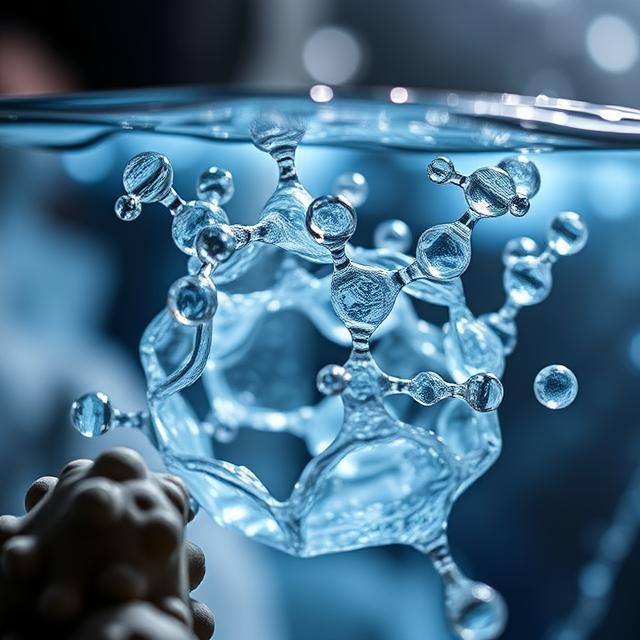
The Chemical Structure of CH2 H2O
The structure of CH2 H2O, often referred to as HCOOCH, is truly captivating. This molecule consists of a central carbon atom bonded to two hydrogen atoms and a hydroxyl group (–OH).
Visualize this: the carbon atom forms single bonds with both hydrogen atoms and the oxygen atom in the –OH group. This arrangement leads to the compound’s distinctive properties and behaviors in various environments.
Understanding the geometry of HCOOCH is crucial. The bond angles around the central carbon create a tetrahedral shape, which influences how the compound interacts with other molecules.
Hydrogen bonding plays an essential role here too, affecting solubility and reactivity. These traits make HCOOCH versatile in a wide range of applications, from pharmaceuticals to industrial processes.
Properties and Uses of CH2 H2O
CH2 H2O, or Hcooch, exhibits several fascinating properties that make it indispensable across various fields. Its polarity, resulting from its molecular structure, enhances its solubility in water and other solvents.
With a low boiling point, CH2 H2O can evaporate easily—an essential feature in chemical reactions that require precise temperature control. Additionally, CH2 H2O is known for being an excellent solvent.
Industrially, it’s a vital precursor in synthesis processes. It plays a key role in the production of pharmaceuticals and agrochemicals.
In research labs, CH2 H2O is widely used to develop new compounds and conduct experiments in organic chemistry. Its versatility ensures its presence across multiple disciplines.
From agriculture to medicine, the applications of CH2 H2O underscore its significance in both academic research and practical implementation.
How CH2 H2O is Formed
CH2 H2O, also known as Hcooch, forms naturally through several processes. One prominent method is during the combustion of organic compounds. When organic substances burn in the presence of oxygen, they generate various byproducts, including CH2 H2O.
Another key formation process occurs within biological systems. Microorganisms decompose biomass, producing a range of chemical compounds, including CH2 H2O.
In industrial settings, CH2 H2O is synthesized through controlled reactions. Chemists manipulate conditions such as temperature and pressure to optimize production.
By exploring these formation pathways, we gain a deeper understanding of how interconnected our environment is with the intricate world of chemistry.
Chemical Reactions Involving CH2 H2O
Chemical reactions involving CH2 H2O, or HCOOCH, are incredibly fascinating. This compound often acts as an intermediary in various chemical processes.
One notable reaction is esterification, where CH2 H2O reacts with acids to produce esters and water. This reaction is fundamental in organic chemistry for synthesizing valuable compounds.
CH2 H2O also participates in oxidation reactions, leading to the formation of aldehydes or carboxylic acids, depending on the reactants.
Furthermore, HCOOCH plays a key role in biochemical pathways within living organisms. For example, it’s involved in metabolic cycles that help convert carbohydrates into energy.
These reactions deepen our understanding of both organic chemistry and biochemistry, highlighting the versatility of this simple molecule. Each interaction uncovers new potential applications in fields like medicine and environmental science.
Common Misconceptions about CH2 H2O
There are a few common misconceptions about CH2 H2O that often cause confusion. For instance, it is sometimes mistakenly associated with methane or alcohol due to its structure. However, these substances possess very different chemical properties.
Another myth is that CH2 H2O is highly volatile and reactive. In fact, under standard conditions, it is quite stable.
Some also misunderstand its role in biological systems, assuming it’s primarily an industrial compound. In reality, CH2 H2O plays significant roles in biochemical processes too.
A common assumption is that all carbon-containing compounds behave similarly, but this is far from true. The unique arrangement of atoms in CH2 H2O gives it distinct characteristics, setting it apart from other compounds like formaldehyde or ethanol.
Lastly, many overlook its applications outside of the chemistry lab. From agriculture to pharmaceuticals, CH2 H2O has a wide range of uses that extend far beyond scientific research.
Frequently Asked Questions
What is HCOOCH and how is it related to CH₂H₂O?
HCOOCH (methyl formate) is an organic compound with the formula HCOOCH₃. CH₂H₂O is not a standard chemical notation, but it may refer to a hydrated form of formaldehyde (CH₂O), methanediol (CH₂(OH)₂), or another intermediate. Understanding the relation requires analyzing their structural and functional properties in chemistry.
What are the chemical properties of HCOOCH?
Methyl formate (HCOOCH₃) is an ester known for its volatile, flammable nature and fruity odor. It participates in hydrolysis reactions to form methanol (CH₃OH) and formic acid (HCOOH) and is commonly used in organic synthesis.
How is HCOOCH synthesized?
HCOOCH₃ can be synthesized through the esterification of formic acid (HCOOH) and methanol (CH₃OH) in the presence of an acid catalyst like sulfuric acid. Another method involves the reaction of carbon monoxide (CO) with methanol under pressure.
What are the industrial and practical applications of HCOOCH?
Methyl formate is used as a solvent, fumigant, and precursor in the production of formic acid and other chemicals. It also has applications in perfumes, flavoring agents, and adhesives due to its pleasant smell and solvency properties.
Is HCOOCH hazardous to human health?
Yes, exposure to methyl formate can cause irritation to the eyes, skin, and respiratory system. High concentrations may lead to dizziness, headaches, or central nervous system depression. It should be handled with proper safety precautions, such as wearing gloves and using it in well-ventilated areas.
Conclusion
In this article, we’ve explored the intriguing chemistry behind HCOOCH and its relation to CH₂ + H₂O. By breaking down the molecular interactions, reaction pathways, and structural significance, we’ve gained insight into how these compounds behave in different chemical environments.
Understanding the formation, reactivity, and applications of HCOOCH helps in various scientific fields, from organic synthesis to industrial applications. Whether it’s in biochemistry, pharmaceuticals, or material science, the role of these molecules is crucial.
