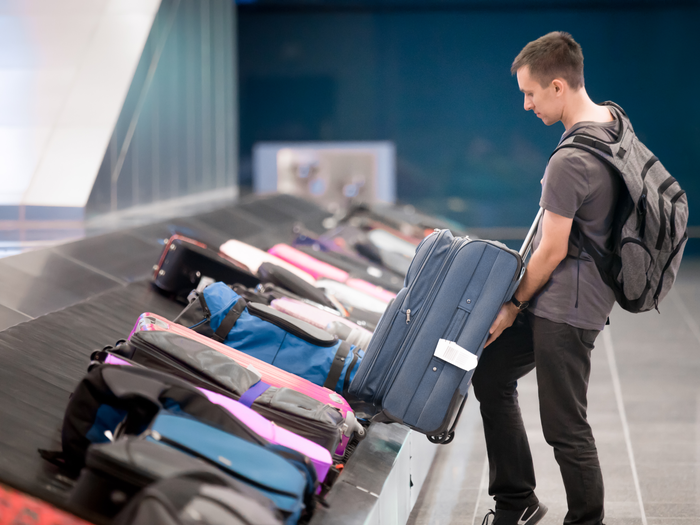
With no universal standard across Airlines, understanding checked luggage rules is essential to avoid unexpected fees. Allowances vary widely—some carriers limit by weight, others by number of bags, and many adjust policies based on your route or fare class. Cabin class also plays a major role. Always verify the details on your ticket or confirm with your airline beforehand.
Below is a detailed reference table covering checked baggage allowances for 62 major airlines. Click each airline’s name for in-depth baggage policies, including excess charges and loyalty member benefits.
Understanding Checked Luggage Basics
- Linear dimensions = length + width + height of your suitcase (e.g., 26″ + 20″ + 16″ = 62″).
- Airlines often cap checked bags at 62″ (158 cm) total.
- Some use a weight concept (e.g., total pounds per passenger), others use a piece concept (e.g., number of bags, up to a weight limit per piece).
- Route and cabin impacts: long-haul or premium tickets often include more weight or pieces in the allowance.
- Prepaying online is usually cheaper than paying at the airport.
Checked Baggage Allowances by Airline
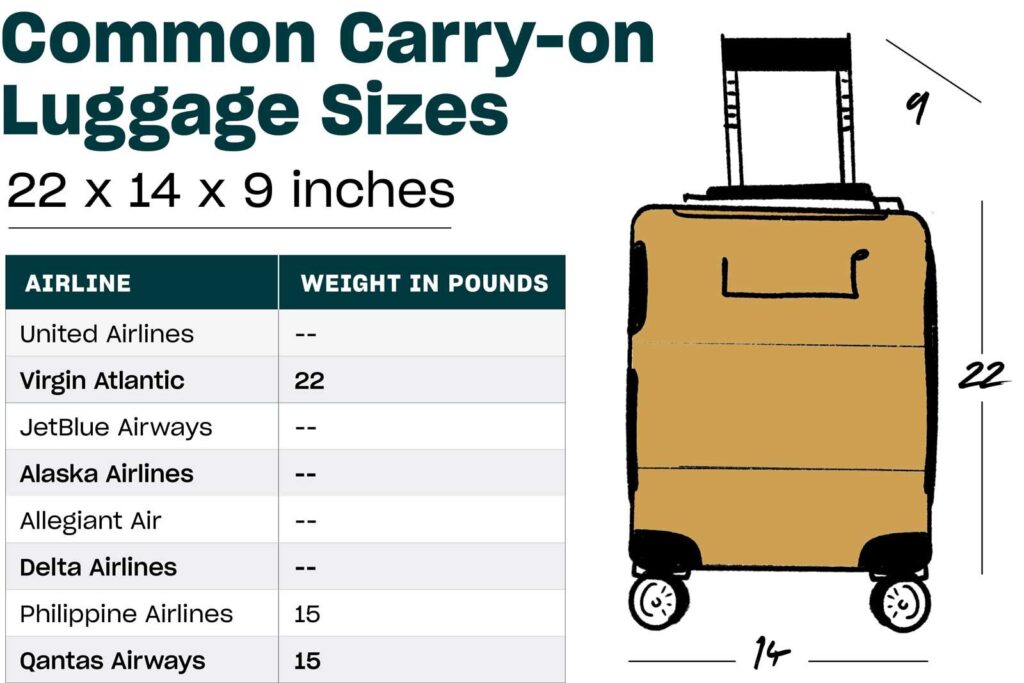
Each airline’s policy is summarized in terms of linear dimensions, bags or weight, and fees for first checked bag.
Aer Lingus
- Economy Saver: 0 bags (weight-based 20–40 kg); first bag €25–€95
- Economy Plus: 1 bag up to 20 kg; included
- Transatlantic Saver: 0 bags; first check $54.99–$64.99 online, $100 at airport
- Business: up to 3 bags, combined 69 kg
Aeroflot
- Economy Lite/Promo Lite: 0 bags, up to 23 kg; first bag $39
- Classic/Saver: 1 bag, up to 23 kg; included
- Business Basic: 1 bag, 32 kg included
AeroMexico
- Varies by route and fare
- Basic/Classic: 0–2 bags, ≤25 kg each; first bag $30–145
- Premier-class: 2 bags ≤32 kg; included
Insights on Weight vs Piece Restriction Systems
- Piece concept (e.g., US airlines, many Middle Eastern carriers): strict count of bags, each within a specified weight (commonly 23 kg economy, 32 kg premium).
- Weight concept (e.g., some Asian carriers): total weight budget (e.g., 40 kg economy, 50 kg business). Flexibility but risk of one heavy bag.
Oversize vs Overweight Guidelines
- Exceeding 62″ triggers oversize fees, often $75–$200 depending on excess.
- Overweight (23 kg to 32 kg for economy; heavier in premium) typically costs $50–$150 per bag.
- Larger weight thresholds in business/first class allow freer packing of bulkier items.
Tactics for Reducing Baggage Charges
- Pack strategically—redistribute weight across bags to avoid overage fees.
- Prepay online: discounts versus airport rates.
- Use premium loyalty status or credit card benefits that include a free checked bag.
- Compare carriers and fare families—some “premium economy” tickets include checked luggage.
- Combine route segments thoughtfully; sometimes flying via a hub on the same ticket preserves baggage allowance.
FAQs
How do airlines calculate linear dimensions?
They sum length, width, and height of the packed bag. Watch for wheels and handles—they count too.
What’s the difference between weight-based and piece-based allowances?
Weight-based gives you a total allowance; piece-based limits number of bags and weight per bag.
How much is excess baggage?
Typically $50–$150 per bag, depending on airline and fare.
Can frequent flyer status waive baggage fees?
Yes. Most airlines include at least one free checked bag for mid- to top-tier members.
Are overweight/oversize bags accepted?
Usually yes, with fees, but extremely large or heavy items may be rejected or require cargo booking.
Conclusion
Checked luggage rules vary dramatically—by airline, fare, cabin, and route. Familiarizing yourself with policies before you travel helps you avoid surprise fees and makes packing more efficient. Use the full allowance from your ticket, prepay if possible, and consider loyalty benefits or revised routing to optimize cost and convenience.
