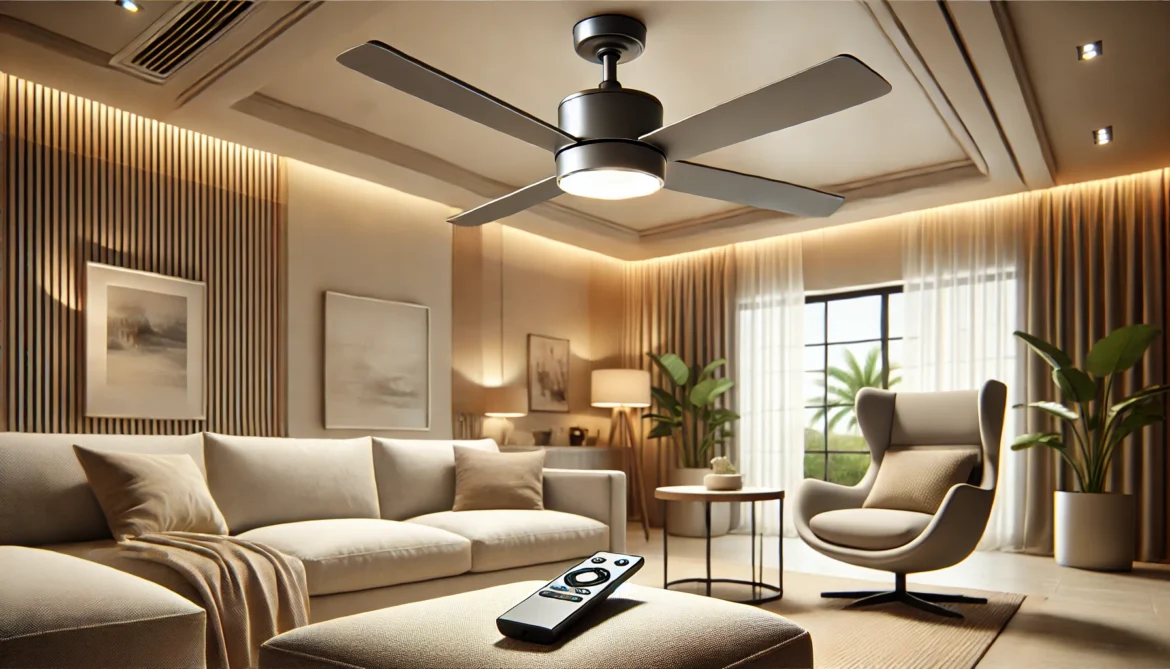
Not long ago, I was in the same boat as you—on a mission to buy new ceiling fans. My goal? Find something that keeps my home cool without turning my electricity bill into a horror story. That’s when I stumbled upon BLDC ceiling fans, which claim to be energy-efficient and ultra-modern.
But here’s the twist: while the numbers sound impressive—normal ceiling fans gulp 75W, whereas BLDC fans sip just 30W—the online reviews are a battlefield. Some people swear by them, while others scream about sudden failures and poor after-sales service. So, should you take the leap?
What Are BLDC Ceiling Fans?
BLDC vs. Normal Fans – What’s the Big Deal?
Before we move ahead, let’s break it down. BLDC (Brushless Direct Current) ceiling fans use a brushless motor instead of the traditional induction motor. This tiny change makes a world of difference.
- Traditional ceiling fans use an AC motor, which results in higher energy consumption and heat generation.
- BLDC ceiling fans run on DC motors, consuming nearly 65% less power and offering a longer lifespan.
How Much Energy Can You Save?
A normal ceiling fan running 10 hours daily will burn through 22.5 kWh per month. A BLDC fan, in the same period, will only use 9 kWh. Over a year, this could save you thousands on your electricity bill.
The Dark Side of BLDC Ceiling Fans: Are They Reliable?
Common Complaints About BLDC Fans
Let’s talk about the elephant in the room—BLDC ceiling fan reviews. While they seem like a godsend, users report some serious issues:
- Sudden failure: Many users say their BLDC fans stopped working within months.
- Complicated repairs: The PCBs (Printed Circuit Boards) inside BLDC fans are tough to fix.
- Poor after-sales service: Reaching the brand for replacements or repairs is a nightmare.
- No local repair options: Your neighborhood electrician won’t be able to fix a BLDC fan since they usually don’t repair PCBs.
This means, if your BLDC ceiling fan breaks down, you might be left waiting for weeks for a replacement.
Are These Issues a Deal-Breaker?
Not necessarily. The key is to choose a reliable brand. Let’s explore some of the best BLDC ceiling fans that actually live up to the hype.
Top 5 BLDC Ceiling Fans You Can Buy
Atomberg Renesa+
⭐ Best for Smart Features
- Power Consumption: 28W
- Speed: 340 RPM
- Warranty: 3 years
- Key Features: Remote control, LED indicators, and superior efficiency
Orient Electric Aeroslim
⭐ Best for Stylish Homes
- Power Consumption: 26W
- Speed: 370 RPM
- Warranty: 2 years
- Key Features: IoT-enabled, sleek design, and noiseless operation
Havells Efficiencia Neo
⭐ Best for Budget Buyers
- Power Consumption: 26W
- Speed: 350 RPM
- Warranty: 3 years
- Key Features: Simple design, energy efficiency, and silent operation
Crompton Energion HS
⭐ Best for Durability
- Power Consumption: 28W
- Speed: 370 RPM
- Warranty: 5 years
- Key Features: High speed, reliable performance, and wide coverage
Superfan Super X1
⭐ Best for Rural Areas
- Power Consumption: 35W
- Speed: 380 RPM
- Warranty: 5 years
- Key Features: Solar-compatible, dust-resistant, and easy to install
BLDC Ceiling Fans: Pros and Cons
| Pros | Cons |
|---|---|
| Consumes 65% less power | Expensive upfront cost |
| Runs silently | Difficult to repair locally |
| Remote control and smart features | After-sales service can be slow |
| Longer lifespan | Higher initial investment |
Step-by-Step Buying Guide for BLDC Ceiling Fans
Determine Your Room Size
- Small Rooms (up to 100 sq. ft.) → 900-1100 mm fan
- Medium Rooms (100-200 sq. ft.) → 1200 mm fan
- Large Rooms (200+ sq. ft.) → 1400 mm fan
Consider the Power Consumption
- Go for 25-30W fans for the best efficiency.
Check for Smart Features
- If you want remote control, ensure your model supports it.
Warranty Matters
- Pick brands offering 3-5 years warranty.
Read Customer Reviews
- Look for real-world user experiences.
Frequently Asked Questions
What is a BLDC ceiling fan, and how does it differ from traditional fans?
A BLDC (Brushless Direct Current) ceiling fan uses a brushless motor, which is more energy-efficient than traditional AC motor fans. It consumes significantly less power (around 28-35W compared to 70-80W in conventional fans) and offers better speed control and durability.
Are BLDC ceiling fans really more energy-efficient?
Yes, BLDC fans consume 50-65% less electricity than traditional fans. They are designed to run efficiently even at lower voltages, making them ideal for reducing electricity bills while maintaining strong airflow.
Do BLDC ceiling fans work with inverters and power backup systems?
Yes, BLDC fans are inverter-friendly and can run for longer durations on power backups due to their lower energy consumption. This makes them a great choice for areas prone to power cuts.
Are BLDC ceiling fans worth the higher price?
While BLDC fans have a higher initial cost, they save money in the long run due to lower electricity consumption, longer lifespan, and reduced maintenance costs. Many also come with remote controls and smart features for added convenience.
What are the best BLDC ceiling fan brands available?
Some of the top-rated BLDC ceiling fan brands include Atomberg, Havells, Orient, Crompton, and Usha. These brands offer various models with features like remote control, smart connectivity, and noise-free operation.
Conclusion
BLDC ceiling fans have revolutionized home cooling with their energy efficiency, silent operation, and durability. While the higher upfront cost may seem like a drawback, the long-term savings on electricity bills make them a smart investment. With features like remote control, inverter compatibility, and smart connectivity, they offer better convenience than traditional fans.
If you’re looking for a cost-effective, eco-friendly, and technologically advanced ceiling fan, BLDC fans are definitely worth the hype. However, if budget is a concern and your usage is minimal, a regular ceiling fan might still be a practical choice.
