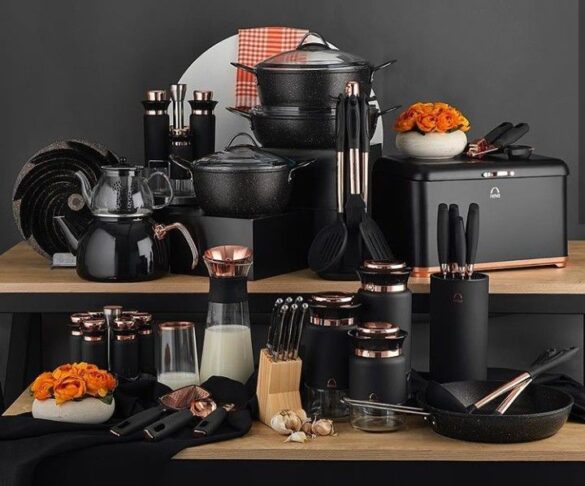
The kitchen is universally acknowledged as the heart of the home, but in Pakistan, it holds a significance that transcends mere functionality. It is a vibrant epicenter of culture, tradition, and familial love. The air is perfumed with the aroma of simmering spices, the sound of sizzling ghee is a familiar melody, and the act of cooking is an expression of care. To honor this sacred space, assembling the best kitchen collection in Pakistan becomes a thoughtful endeavor. It is not about mere acquisition but about curating tools that empower, inspire, and simplify the art of cooking, transforming daily routines into a celebration of culinary heritage.
The cornerstone of any exceptional Pakistani kitchen collection is its deep respect for traditional cuisine. Our rich culinary heritage, passed down through generations, demands specific tools to achieve authentic flavors and textures. A robust, heavy-bottomed degchi or handi is indispensable. Its design allows for perfect slow cooking, ensuring that dishes like nihari, korma, and biryani develop their complex layers of flavor through even heat distribution and gentle evaporation. Similarly, a well-seasoned tawa, often passed down as a family heirloom, is crucial for crafting the perfect roti or paratha—soft, flaky, and blistered just right. These are not merely pots and pans; they are vessels of history, connecting the contemporary cook to ancestral wisdom.
Building upon this traditional foundation, the modern Pakistani kitchen embraces a synergy of the old and the new. This is where functionality meets innovation. A powerful blender or grinder, for instance, becomes an invaluable ally. It takes on the arduous tasks of grinding whole spices, blending tough vegetables for chutneys, and pureeing lentils for smooth daals, all while preserving the robust textures essential to the cuisine. The objective is to select appliances that are engineered to handle the intensity of local ingredients, saving precious time and effort without compromising on the authenticity of the final dish.
The unsung heroes of any well-appointed kitchen are the precision tools. A set of high-quality, sharp knives is a fundamental investment. From finely dicing onions for the masala base to segmenting meat with ease, a good knife enhances safety, improves efficiency, and ensures uniformity in cooking. These should be complemented by a selection of sturdy cutting boards, ideally designated for different purposes to maintain utmost hygiene. Furthermore, an array of mixing bowls in graduated sizes, along with measuring cups and spoons, introduces a level of accuracy that is beneficial for both traditional recipes and new culinary experiments, especially in baking.
The realm of bakeware and specialty items marks the evolution of the Pakistani kitchen. The growing passion for baking, from festive cakes to everyday breads, necessitates reliable tools. Durable baking pans, muffin trays, and loaf tins that ensure even heat circulation are key to successful outcomes. Likewise, for the joyous occasions of Eid and Ramadan, specialty utensils for crafting sweets like jalebi, barfi, and gulab jamun become central to the collection. Heavy-duty kadais for deep frying and unique molds for setting desserts are those specialized pieces that elevate a collection from basic to truly comprehensive.
The materials chosen for kitchenware are a critical consideration, directly impacting durability, cooking performance, and health. There is a longstanding and well-placed trust in stainless steel for its resilience, non-reactive nature, and ease of maintenance, making it a preferred choice for pots and utensils. The advent of advanced non-stick technology has also been embraced for everyday cooking, allowing for healthier cooking with less oil. For those seeking to capture an unmatched, earthy flavor, stone and clay pots offer a connection to the traditional matka style of cooking, where heat is retained beautifully for slow-cooked dishes. A discerningly curated collection will feature a harmonious blend of these materials, each selected for its specific culinary strength.
However, the best kitchen collection in Pakistan is not complete without intelligent organization. The most exquisite tools are only effective if they are accessible and well-maintained. Investing in thoughtful storage solutions—such as tiered racks for pots and lids, elegant canisters for dry staples like flour and pulses, and drawer dividers for cutlery—transforms the kitchen from a cluttered workspace into a serene sanctuary of creativity. An organized kitchen minimizes stress, stream the cooking process, and allows the cook to focus entirely on the joy of creation.
Ultimately, building the best kitchen collection is a deeply personal and evolving journey. It is a reflection of individual cooking habits, family traditions, and culinary aspirations. It is not about possessing every gadget on the market but about intentional selection. It is about choosing the karahi that will perfect your karahi gosht, the blender that will create the creamiest mango lassi for your family, and the baking dish that will give you the confidence to try a new recipe.
The true value of this collection is measured in the memories it helps create. It is found in the satisfaction of a meal perfectly cooked, the warmth of family gathered around the table, and the pride of preserving cultural traditions. By carefully curating these tools, one does not just equip a kitchen; one nurtures the very soul of the home, ensuring that this cherished space continues to be a source of nourishment, love, and connection for generations to come.
