Expanded Access to Convenient, Cost-Effective Grocery Solutions for Prime Members
Amazon has significantly expanded its grocery delivery service, now offering Prime members in over 3,500 U.S. cities and towns free unlimited grocery delivery on orders exceeding $35 for a monthly subscription fee of $9.99. This move marks a pivotal step in Amazon’s ongoing efforts to strengthen its foothold in the grocery sector, a market where it has faced challenges despite its dominance in e-commerce and cloud computing. Initially launched in select cities in December 2024, the service is now available nationwide, providing Prime members—who pay an annual fee of $139—with seamless access to groceries from Whole Foods, Fresh, and a range of partner retailers. This expansion underscores Amazon’s commitment to enhancing customer convenience while refining its logistics and delivery infrastructure to compete with rivals like Instacart and Walmart.
Comprehensive Grocery Delivery Options for Prime Members
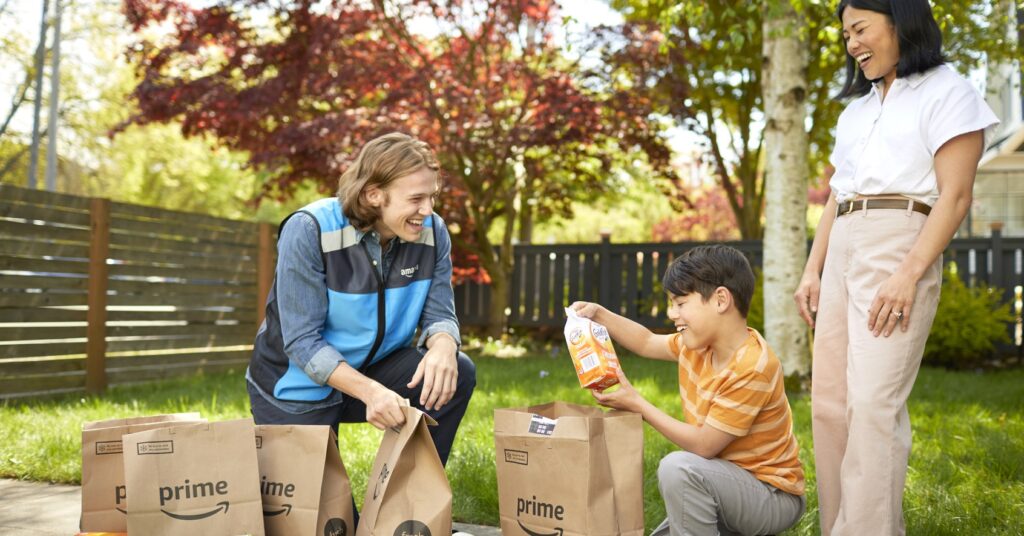
The new subscription service allows Prime members to order groceries online from Whole Foods and Fresh, with the flexibility to select one-hour delivery windows or opt for in-store pickup at physical locations. Beyond its own brands, It has partnered with retailers such as Cardenas Markets, Save Mart, Bartell Drugs, Rite Aid, Pet Food Express, and Mission Wine & Spirits, offering free delivery on orders over $35 from these stores as well. This broadens the service’s appeal, catering to diverse consumer needs ranging from everyday essentials to specialty items. Customers with registered Electronic Benefits Transfer (EBT) cards can access the service at a discounted rate of $4.99 per month, making it more inclusive for lower-income households.
Analysts from Wedbush Securities have praised the pricing structure, noting that the $9.99 monthly fee is “significantly more affordable” than previous grocery delivery fee models and competitive with peers like Instacart, which often impose per-order service fees. The absence of additional per-order charges enhances the value proposition for frequent shoppers, potentially driving higher adoption rates. Following the announcement, Instacart’s shares dropped by more than 5% on July 8, 2025, reflecting market concerns about Amazon’s aggressive pricing strategy and its potential to capture market share in the grocery delivery sector.
Evolving Grocery Strategy
Amazon’s foray into grocery delivery began in 2007 with the launch of Fresh, a service that has undergone multiple iterations over the years. Initially offered as a standalone subscription, it was later integrated into the Prime membership, with varying fee structures. In 2021, It introduced a $9.95 delivery fee for Whole Foods orders, reversing its earlier policy of free delivery for Prime members on orders over $35. Additional fees for Fresh deliveries were implemented in February 2023 and adjusted again in October of that year. In 2024, It extended grocery delivery to non-Prime members in select cities, signaling its intent to broaden its customer base. The latest $9.99/month subscription model consolidates these efforts, offering a streamlined and cost-effective solution for Prime members.
The company’s 2017 acquisition of Whole Foods for $13.7 billion marked a significant milestone in its grocery ambitions, providing a network of physical stores and a premium brand to complement its online offerings. Since then, It has experimented with innovative retail formats, including Amazon Go convenience stores and larger Fresh locations equipped with advanced technologies like Dash Carts and Just Walk Out systems. These initiatives reflect it focus on integrating technology to enhance the shopping experience, though not without challenges.
Technological Innovations and Strategic Shifts
Amazon grocery stores have served as testing grounds for cutting-edge technologies. The Just Walk Out system, which uses cameras, sensors, and artificial intelligence to track items added to carts, allows shoppers to bypass traditional checkout lines. However, in early 2025, Amazon announced it would phase out this technology in its larger grocery stores, citing scalability issues and customer feedback. The system will continue to be used in smaller Amazon Go stores and licensed to third-party retailers, such as stadiums and airports. In its place, It is prioritizing Dash Carts, which enable shoppers to scan or manually enter items as they shop, streamlining the checkout process while maintaining accuracy. The rollout of Dash Carts to Whole Foods locations began in 2024, with plans for further expansion.
These technological shifts align with Amazon broader strategy to optimize its grocery operations. In February 2023, CEO Andy Jassy announced a pause in the expansion of Fresh stores, emphasizing the need for a model that delivers both differentiation and economic value. The new subscription service addresses these concerns by offering a compelling value proposition and leveraging Amazon’s logistics expertise to ensure efficient delivery. Wedbush analysts view this as “an important step forward” in capturing market share, particularly in perishable categories where Amazon has historically lagged.
Amazon’s Broader Ecosystem: Synergies with Prime, AWS, and More
The grocery delivery expansion is deeply integrated with Amazon’s broader ecosystem, particularly its Prime membership program. With over 200 million Prime subscribers globally, the service acts as a cornerstone for customer retention, offering benefits like free shipping, streaming services, and now enhanced grocery delivery. The $9.99/month grocery subscription complements the existing Prime value proposition, encouraging members to consolidate more of their shopping with Amazon. This synergy drives higher engagement and strengthens Amazon’s position as a one-stop shop for consumer needs.
Amazon Web Services (AWS), the company’s cloud computing arm, plays a critical role in supporting its grocery operations. AWS powers the data analytics, machine learning, and logistics systems that optimize inventory management, demand forecasting, and delivery routing. For instance, Amazon’s supply chain relies on AWS to predict consumer demand for perishable goods, reducing waste and ensuring fresh deliveries. This technological backbone gives Amazon a competitive edge over traditional grocers and delivery platforms, enabling scale and efficiency.
Additionally, Amazon’s devices, such as Echo and Alexa, enhance the grocery shopping experience. Customers can use voice commands to add items to their shopping lists, reorder staples, or check delivery statuses, creating a seamless interface between digital and physical shopping. Fire TV and other Amazon devices also serve as marketing channels, promoting grocery deals to Prime members and driving adoption of the new subscription service.
Competitive Landscape and Market Implications
The grocery delivery market is highly competitive, with players like Instacart, Walmart, and DoorDash vying for dominance. Amazon’s $9.99/month subscription undercuts many competitors’ pricing models, which often include per-order fees ranging from $3 to $10. Instacart, for example, charges a delivery fee of $3.99 to $9.99 per order for non-subscribers, while its Instacart+ subscription ($99/year) includes free delivery on orders over $35 but lacks the breadth of Amazon’s partner network. Walmart+, priced at $12.95/month or $98/year, offers similar benefits but is limited to Walmart’s inventory, whereas Amazon’s service spans multiple retailers.
Amazon’s nationwide expansion positions it to capture a larger share of the $1.2 trillion U.S. grocery market, particularly in urban and suburban areas where Prime membership is prevalent. The inclusion of EBT cardholders at a discounted rate further broadens its appeal, aligning with Amazon’s goal of accessibility. However, challenges remain, including competition from brick-and-mortar grocers with established loyalty programs and consumer preferences for in-store shopping, especially for fresh produce.
Logistics and Sustainability Considerations
Amazon’s logistics network, one of the largest in the world, is a key enabler of its grocery delivery service. The company operates a fleet of delivery vans, supported by regional fulfillment centers and last-mile delivery hubs, to ensure rapid and reliable service. The one-hour delivery windows offered to Prime members rely on this infrastructure, as well as partnerships with third-party couriers for peak demand periods. Amazon’s investment in electric delivery vehicles and renewable energy aligns with its Climate Pledge to achieve net-zero carbon emissions by 2040, addressing consumer concerns about the environmental impact of delivery services.
Sustainability is particularly critical in the grocery sector, where perishable goods contribute to food waste. Amazon’s use of data analytics to optimize inventory and reduce spoilage is a step toward addressing this issue. The company also promotes reusable bags and minimal packaging for grocery deliveries, though consumer adoption of these practices varies.
Future Outlook and Strategic Implications
The $9.99/month grocery subscription service represents a strategic pivot for Amazon, balancing affordability with operational efficiency. By leveraging its Prime ecosystem, technological innovations, and logistics prowess, Amazon aims to overcome its historical challenges in the grocery sector. The service’s nationwide rollout is expected to drive incremental sales, particularly in high-margin categories like organic and specialty foods, where Whole Foods has a strong presence.
Looking ahead, Amazon may explore further integrations with its ecosystem, such as personalized grocery recommendations powered by Alexa or expanded partnerships with regional retailers. The company’s ability to iterate on its offerings, as demonstrated by its shift from Just Walk Out to Dash Carts, suggests a willingness to adapt based on customer feedback and market dynamics. Additionally, Amazon’s API services, available through x.ai, could enable third-party developers to create complementary grocery solutions, further expanding the platform’s reach.
The grocery delivery expansion also has implications for Amazon’s broader business strategy. Increased grocery adoption could boost Prime membership renewals, drive higher engagement with AWS-powered services, and create cross-selling opportunities across Amazon’s retail, entertainment, and device offerings. As Wedbush noted, the subscription model is poised to capture market share in perishable categories, where Amazon has yet to achieve the dominance seen in its e-commerce and cloud computing segments.
FAQS
What is included in Amazon’s $9.99/month grocery delivery subscription for Prime members?
The $9.99/month subscription offers Prime members free unlimited grocery delivery on orders over $35 from Whole Foods, Amazon Fresh, and partner retailers such as Cardenas Markets, Save Mart, Bartell Drugs, Rite Aid, Pet Food Express, and Mission Wine & Spirits. Subscribers can choose one-hour delivery windows or opt for in-store pickup at physical locations. Customers with a registered EBT card can access the service for a discounted rate of $4.99 per month.
Do I need to be a Prime member to use the new grocery delivery service?
Yes, the $9.99/month grocery delivery subscription is exclusive to Amazon Prime members, who pay an annual fee of $139. However, Amazon offers grocery delivery to non-Prime members in select cities, though this is separate from the subscription service and may include different fees or limitations.
How does the new subscription compare to competitors like Instacart or Walmart?
Amazon’s $9.99/month subscription is competitively priced, offering free delivery on orders over $35 without per-order service fees, unlike Instacart, which charges $3.99 to $9.99 per order for non-subscribers. Instacart+ ($99/year) and Walmart+ ($12.95/month or $98/year) provide similar free delivery benefits, but Amazon’s service includes access to a broader network of retailers, including Whole Foods and specialty stores, and integrates with its Prime ecosystem for added value.
Can I use Amazon’s grocery delivery service with Alexa or other Amazon devices?
Yes, customers can use Alexa-enabled devices, such as Echo, to add items to their grocery lists, reorder staples, or check delivery statuses. This integration enhances convenience, allowing seamless management of grocery orders through voice commands, complementing the online and app-based ordering process.
Why did Amazon shift away from Just Walk Out technology in its larger grocery stores?
Amazon announced in early 2025 that it would phase out Just Walk Out technology in larger grocery stores, such as Amazon Fresh and Whole Foods, due to scalability challenges and customer feedback. The company is focusing on Dash Carts, which allow shoppers to scan items as they shop, offering a streamlined checkout experience. Just Walk Out technology will continue to be used in smaller Amazon Go stores and third-party venues like stadiums and airports.
Conclusion
Nationwide rollout of its $9.99/month grocery delivery subscription for Prime members marks a significant milestone in its quest to redefine the grocery shopping experience. By offering free unlimited delivery on orders over $35, partnering with diverse retailers, and leveraging its technological and logistical strengths, Amazon is well-positioned to compete in a crowded market. The service’s affordability, combined with its integration into the Prime ecosystem, enhances its appeal to a broad customer base, from urban professionals to EBT cardholders. While challenges remain, including competition and consumer preferences for in-store shopping, Amazon’s relentless focus on innovation and customer convenience positions it as a formidable contender in the grocery sector. As the company continues to refine its offerings, the grocery delivery service could become a cornerstone of its broader mission to be Earth’s most customer-centric company.
