
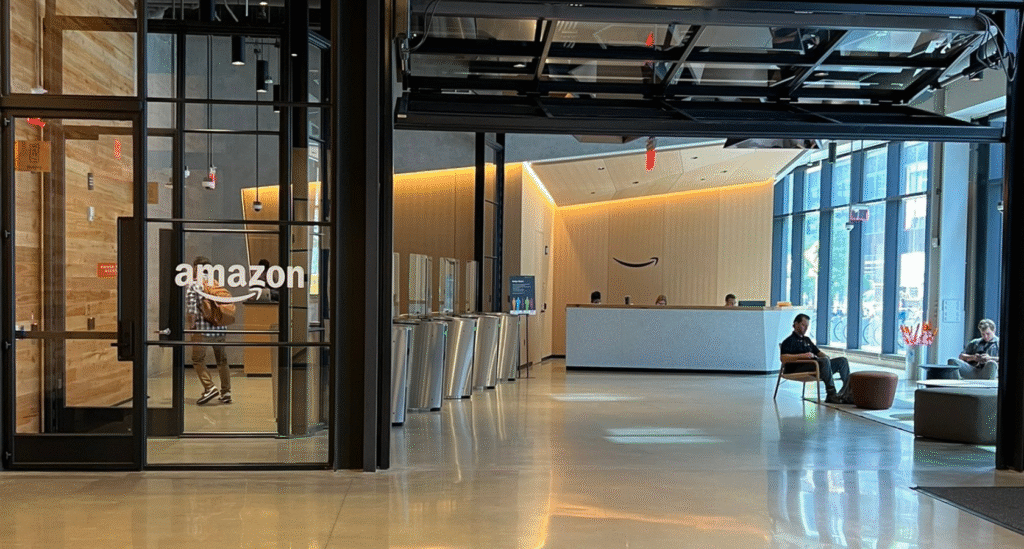
Amazon has revised its return-to-office policy, announcing that all corporate employees must work from the office five days a week starting in January 2025, unless they qualify for “extenuating circumstances.” The update was conveyed in a memo from CEO Andy Jassy, who emphasized the benefits of in-person work, including collaboration, innovation, and cultural cohesion.
This directive builds on Amazon’s previous three-day office requirement, initiated last year. At the time, Jassy argued that in-office presence strengthened Amazon’s team dynamics, and in his latest message, he reaffirmed that belief, citing internal data and cultural observations gathered since implementing the hybrid model.
The decision reopens a growing debate over remote work, employee productivity, and organizational effectiveness, especially as businesses reevaluate work structures post-pandemic.
Corporate Pushback Against Remote Work
Amazon joins a small but growing group of companies—UPS, Boeing, and others—that have rolled out full-time office return mandates. These decisions, proponents say, help improve teamwork, communication, and accountability. Jassy believes the physical office environment fosters better alignment and mentorship opportunities across teams.
However, research and expert opinions offer a more nuanced view. A Stanford University study, led by Professor Nicholas Bloom, found that hybrid schedules (two days remote) enhance productivity, performance, and retention. “Hybrid work is a win-win-win,” Bloom concluded.
Despite such findings, Amazon’s data might be telling a different internal story. Emily Cox Pahnke, a management professor at the University of Washington’s Foster School of Business, suggested that the company likely observed adverse effects on organizational communication and productivity during remote and hybrid periods.
Strategic Workforce Shift
Jassy’s memo also announced plans to reduce the ratio of managers within teams by 15% by Q1 2025. This effort is likely intended to streamline decision-making and increase the number of individual contributors relative to management layers.
However, some employees believe the new in-office requirement is a covert way to trim headcount further. Amazon previously laid off 27,000 corporate and tech workers in 2023 across two rounds of restructuring. The return-to-office policy could indirectly nudge more employees to voluntarily leave, especially those unwilling or unable to comply with the five-day mandate.
Indeed, a research paper published in May 2025 highlighted that return-to-office mandates lead to increased attrition, particularly among senior employees.
Read More: Amazon closes Fresh grocery store south of Seattle; state filing says 125 workers impacted
Employee Concerns and Cultural Impact
Amazon’s move could have long-term consequences on its recruitment, employee satisfaction, and workplace diversity. As Crystal Farh, also from UW’s Foster School of Business, noted: “Some people are truly more productive when working remotely.” The new policy may alienate potential candidates who prioritize flexibility, particularly those with caregiving responsibilities or long commutes.
Additionally, it could disrupt Amazon’s efforts to build an inclusive in-office culture. “This is one thing Amazon needs to be really careful about,” Farh warned.

Pushback is already surfacing. Last year’s three-day mandate triggered an employee protest at Amazon’s Seattle HQ. The five-day requirement may fuel further unrest as white-collar workers who adapted to remote work during the pandemic find themselves at odds with management.
Industry Reactions and Alternatives
Viviane Lopuch, executive director at Seattle University’s Albers School of Business and Economics, observed that Amazon’s decisions often set the tone for other organizations. With this new mandate, the tech giant might influence similar moves across the corporate world, although it’s uncertain whether others will follow suit.
Not all companies are heading in the same direction. Typeform, which declared itself a remote-first company in 2021, publicly criticized Amazon’s decision. Laura Daniels, Typeform’s Chief People Officer, said the shift reflects outdated corporate thinking. “The push for ‘return to office’ is corporate-centric, not employee-centric,” she remarked, noting that remote work ranks highest in Typeform’s internal engagement surveys.

A recent Morning Consult survey, cited by Axios, found that hybrid arrangements are now more popular than fully remote or fully in-office models. Even among global CEOs surveyed by KPMG, only 34% envision bringing employees back full-time within the next three years—a sharp drop from 62% in 2023.
The Broader Implications
Amazon’s five-day office mandate marks a turning point in the evolving debate around the future of work. While leadership touts benefits tied to collaboration and culture, employees and industry observers warn of potential downsides: higher attrition, lower job satisfaction, and missed recruitment opportunities.
The decision underscores the tension between executive priorities and employee preferences in a post-pandemic world still adjusting to hybrid work as the new norm. Whether this move becomes an industry benchmark or a cautionary tale remains to be seen.
